Fungating Tumor: Symptoms, Causes, Diagnosis, Treatment and Outlook — What You Need to Know

Updated: 2 days ago
Medically reviewed by Dr. Baraa Alnahhal, MD · Last reviewed: September 2026
TL;DR
A fungating tumor, also known as a fungating wound, is a cancerous mass that grows through the skin, creating a non-healing wound that often drains fluid and produces a noticeable odor. This condition is an uncommon complication occurring in approximately 5% to 10% of cancer patients, most frequently those with late-stage breast cancer, head and neck cancers, or advanced skin cancers. Treatment focuses on a multidisciplinary approach involving oncology to treat the underlying cancer and specialized wound care to manage drainage, odors, and infections. While often associated with advanced disease, some fungating tumors can be cured through surgery, radiation, or medical therapies. [1]
Quick Answer: What is a Fungating Tumor?
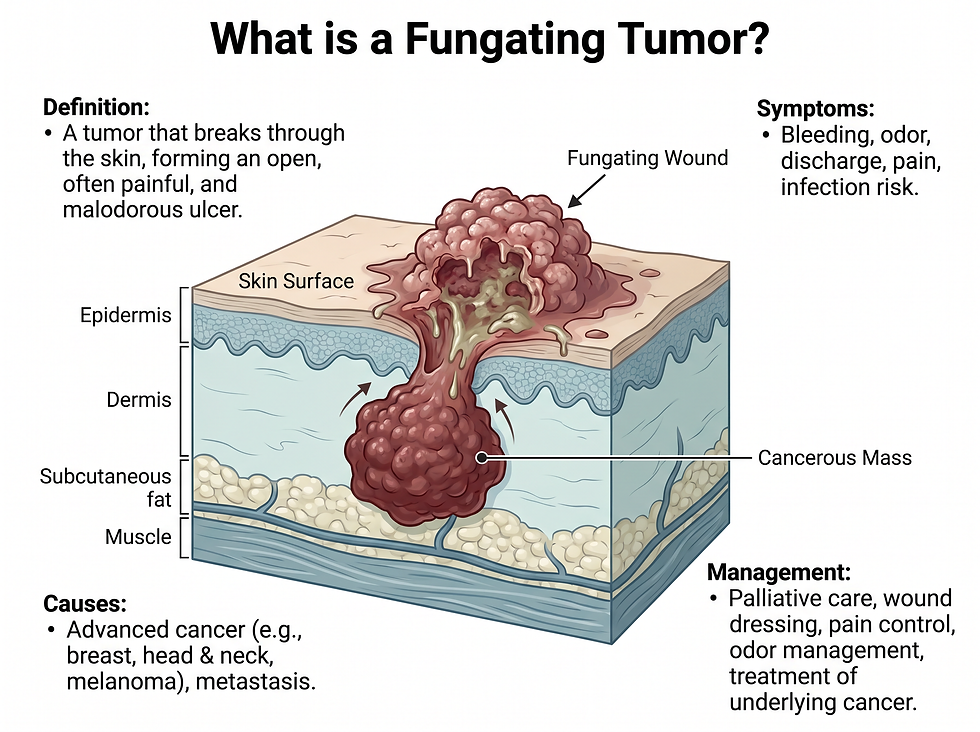
A fungating tumor occurs when a cancerous mass grows through the skin's surface, resulting in a visible, non-healing wound. It earns its name from its often irregular, fungus-like appearance, which can resemble a cauliflower or a deep crater. These wounds typically produce a foul-smelling discharge, bleed easily, and may cause significant pain or itching. They are most commonly seen in advanced breast cancers but can occur with any cancer located near the skin. Diagnosis is confirmed through clinical examination, imaging, and biopsies. Management is primarily focused on controlling the cancer and providing palliative wound care to improve the patient's quality of life. [1]
What Are Fungating Tumors?
Fungating tumors represent a unique and challenging manifestation of cancer where the malignant mass penetrates the skin barrier. The term "fungating" refers to the tumor's physical characteristics, which can mimic the varied shapes of fungi found in nature. As the tumor breaks through the skin, it creates a chronic wound that does not heal naturally because the underlying cancerous tissue continues to grow and disrupt normal skin integrity. These wounds are characterized by the drainage of fluid and the presence of bacteria, which contribute to the distinct symptoms associated with the condition. [1]
Feature | Description |
Appearance | Irregular shapes, often cauliflower-like or crater-like ulcers. |
Mechanism | Cancerous mass growing outward through the skin layers. |
Complications | Non-healing wounds, fluid drainage, and bacterial infection. |
Common Sites | Breast, head, neck, and areas affected by skin cancers. |
Prevalence and Associated Cancers
While fungating tumors are not a common occurrence for every cancer patient, they affect a significant minority of individuals. Research indicates that between 5 and 10 out of every 100 people diagnosed with cancer will develop a fungating wound. Breast cancer is the most frequent primary site for these tumors, but they are also observed in:
Head and Neck Cancers: Tumors located close to the skin of the face or neck.
Skin Cancers: Including melanoma, squamous cell carcinoma, and basal cell carcinoma.
Metastatic Cancers: Cancers that have spread from their original site to the skin. [1]
Symptoms of a Fungating Tumor
The symptoms of a fungating tumor are primarily localized to the site of the wound and can vary significantly in appearance and severity. The most common physical signs include:
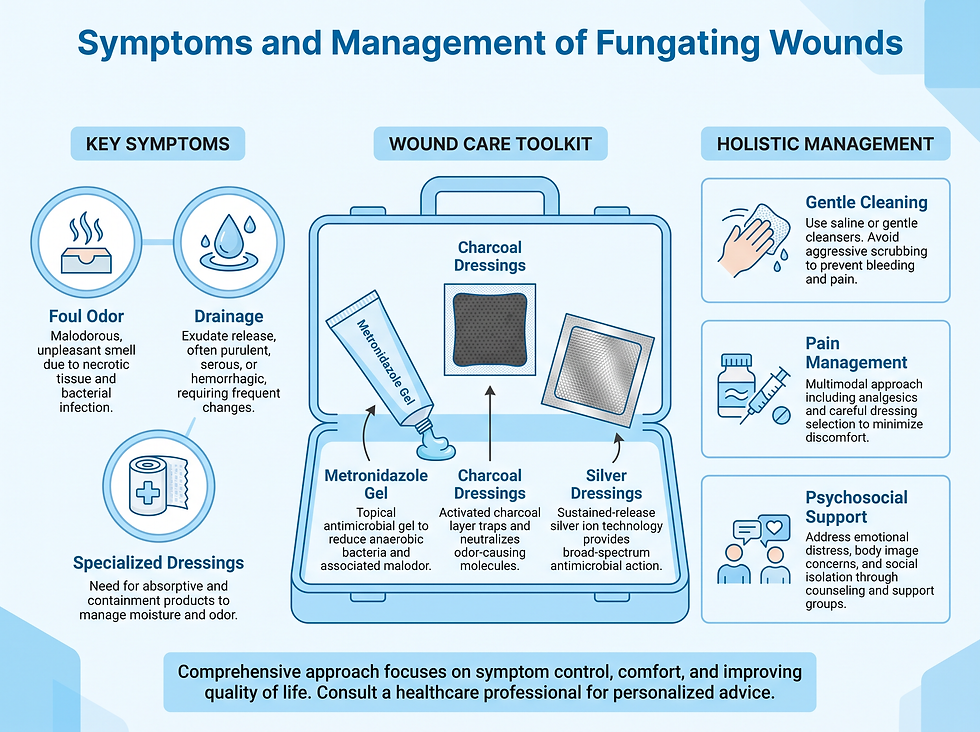
Odor: A strong, unpleasant smell often described as resembling bad cheese, eggs, or fish.
Drainage: Seeping of fluid from the wound, which may be clear, yellowish, or bloody.
Slough: The presence of white or yellowish exposed tissue within the wound bed.
Bleeding: The tumor tissue is often fragile and prone to bleeding upon contact.
Sensory Symptoms: Significant itching or pain at the site of the tumor. [1]
Causes and Risk Factors
A fungating tumor is caused by the uncontrolled growth of cancer cells that eventually breach the skin. This typically occurs in locally advanced cancers where the tumor has been growing for an extended period without successful intervention. The primary risk factor is the presence of a malignancy near the skin surface.
Why Do They Smell?
The characteristic odor of a fungating tumor is not a result of poor hygiene. Instead, it is caused by the metabolic activity of bacteria that colonize the non-healing wound. These bacteria release specific chemicals as they break down tissue, leading to the foul smells that patients and caregivers often find distressing. Metronidazole, a topical antibiotic, is frequently used specifically to target these bacteria and reduce the odor. [1]
Diagnosis and Staging
Healthcare providers often suspect a fungating tumor based on its distinct physical appearance, especially in patients with a known cancer diagnosis. However, because these wounds can sometimes be mistaken for simple abscesses or infected ulcers, a precise diagnosis is essential.
Diagnostic Tool | Purpose |
Clinical Exam | Visual assessment of the wound's shape, odor, and drainage. |
Skin Biopsy | Removal of a small tissue sample to confirm the presence of cancer cells. |
Imaging Tests | CT scans or MRIs to determine the tumor's depth and spread. |
Cancer Staging
Fungating tumors are typically associated with advanced stages of cancer. They may be classified as locally advanced, meaning the cancer has grown extensively in its original area, or metastatic, indicating the cancer has spread to distant parts of the body. Staging helps the care team determine the most appropriate balance between curative treatment and palliative care. [1]
Treatment and Management
Managing a fungating tumor requires a coordinated effort between oncologists, surgeons, and wound care specialists. The goals of treatment are to control the underlying cancer, minimize the symptoms of the wound, and ensure the patient's comfort.
Oncological Interventions
Shrinking the Tumor: Radiation therapy, chemotherapy, or targeted medical therapies may be used to reduce the size of the mass. This can make the wound easier to manage or, in some cases, small enough for surgical removal.
Surgical Removal: If the tumor is localized and the patient's health permits, a surgeon may remove the mass. This is a complex procedure due to the involvement of the skin and surrounding tissues. [1]
Specialized Wound Care
Wound care is a critical component of management, focusing on hygiene and symptom control. Caregivers and patients are instructed on how to clean the wound properly to prevent secondary infections.
Management Tactic | Action and Benefit |
Topical Antibiotics | Applying metronidazole gel to kill odor-producing bacteria. |
Oral Antibiotics | Prescribed if a systemic infection (spreading through the body) is detected. |
Specialized Dressings | Using charcoal, silver, or honey-infused dressings to absorb fluid and mask smells. |
Pain Management | Utilizing medications to address the localized pain and itching. |
Outlook and Prognosis
The outlook for an individual with a fungating tumor depends heavily on the type and stage of the underlying cancer. Because every situation is unique, patients should consult their oncology team for personalized information regarding their prognosis and life expectancy. While these tumors often indicate an advanced stage of disease, a combination of modern therapies can sometimes achieve a cure. [1]
Emotional and Social Well-being
Living with a visible and odorous wound can be emotionally taxing. Patients often report feeling self-conscious or as if their body is betraying them.
"A tumor that you (and others) can see can make the weight of a cancer diagnosis feel even heavier... It’s important to confront these emotions and care for your overall well-being." [1]
Supportive measures include:
Therapy: Talking to a mental health professional to manage the emotional impact.
Social Support: Communicating with loved ones to receive reassurance and reduce isolation.
Odor Control: Using essential oils (not on the wound) and odor neutralizers in the room to improve the environment. [1]

Conclusion and Next Steps
A fungating tumor is a serious complication that requires both medical expertise and compassionate supportive care. While it adds a layer of difficulty to a cancer diagnosis, effective management strategies are available to control symptoms and maintain quality of life.
Recommended Next Steps
Consult a Wound Specialist: Ensure you have a dedicated professional to manage the complexities of the fungating wound.
Discuss Treatment Goals: Work with your oncologist to decide whether the focus should be on curative measures or symptom-based comfort.
Seek Emotional Support: Reach out to counselors or support groups specializing in advanced cancer care.
Frequently Asked Questions
What does a fungating tumor look like?
Fungating tumors can take several forms. Some appear as raised, irregular masses that resemble a cauliflower. Others may look like a deep, ulcerated crater that has shrunken into the skin. They are typically surrounded by inflamed or discolored skin and may have visible white or yellowish tissue.
Why is it called a "fungating" tumor?
The name is derived from the Latin word for fungus. It refers to the tumor's appearance, which often mimics the unique and irregular shapes of mushrooms or fungi found in nature as it grows through the skin.
Is the smell from a fungating tumor a sign of poor hygiene?
No. The odor is caused by specific bacteria that thrive in the non-healing wound environment. It is a biological process related to the tumor and cannot be controlled through standard hygiene alone.
Can a fungating tumor be cured?
In some cases, yes. Depending on the cancer type and how far it has spread, a combination of surgery, radiation, and medical therapies can successfully treat and remove the tumor.
How do you stop a fungating tumor from smelling?
Odor is managed primarily through the use of topical antibiotics like metronidazole, which kill the odor-producing bacteria. Specialized dressings containing charcoal or silver are also highly effective at absorbing and neutralizing smells.
Are fungating tumors painful?
Yes, many patients experience significant pain or intense itching at the site of the wound. Pain management is a core part of the supportive care provided by the medical team.
What is "slough" in a fungating wound?
Slough refers to the white, yellowish, or grayish dead tissue that often accumulates in the wound bed. It is a common feature of non-healing cancerous wounds.
How common are these tumors?
They are relatively uncommon, affecting about 5% to 10% of all cancer patients. They are most frequently associated with breast cancer.
Can I cover a fungating tumor with a normal bandage?
While you can use standard dressings, specialized wound care dressings (like those containing charcoal or hydrogel) are much more effective at managing the high levels of drainage and odor typical of these tumors.
Should I apply essential oils to the wound to help with the smell?
No. You should never apply essential oils or scented products directly to the wound, as they can cause irritation or infection. Instead, use them in the surrounding room as odor neutralizers.
What causes a fungating tumor to bleed?
The tissue within a fungating tumor is often very fragile and has a high density of small blood vessels. This makes it prone to bleeding even with minor contact or during dressing changes.
Can men get fungating tumors?
Yes. While they are most common in breast cancer (which primarily affects women), men can develop fungating tumors from head and neck cancers, skin cancers, or male breast cancer.
How often should the dressings be changed?
The frequency of dressing changes depends on the amount of drainage. Some patients may need changes once a day, while others with heavy drainage may require more frequent attention from a home health nurse or caregiver.
Does a fungating tumor mean the cancer is terminal?
Not necessarily. While it often indicates an advanced or locally aggressive stage of cancer, the prognosis depends on the overall health of the patient and the cancer's response to treatment.
What is the best way to clean a fungating wound?
Your healthcare provider will provide specific instructions, but generally, it involves gentle irrigation with saline solution. Avoid harsh chemicals or scrubbing, which can cause pain and bleeding.
References
Cleveland Clinic. Fungating Tumor. https://my.clevelandclinic.org/health/diseases/fungating-tumor. Accessed 08/21/2026.
Medical Disclaimer: The information provided in this article is for educational purposes only and should not be used as a substitute for professional medical advice, diagnosis, or treatment. Always seek the advice of your physician or other qualified health provider with any questions you may have regarding a medical condition.
Comments