Friedreich’s Ataxia: Symptoms, Causes, Diagnosis, Treatment and Outlook — What You Need to Know

Updated: 2 days ago
Medically reviewed by Dr. Baraa Alnahhal, MD · Last reviewed: September 2026
TL;DR
Friedreich’s ataxia (FA or FRDA) is a rare, progressive genetic disorder that primarily impacts movement, balance, and coordination. Usually emerging in childhood between the ages of 5 and 15, the condition results from a deficiency in the frataxin protein, leading to nervous system damage and potential heart complications. While there is currently no cure, the 2023 FDA approval of omaveloxolone (Skyclarys) marks a significant milestone in management. Treatment focuses on multidisciplinary care, including physical and speech therapy, to improve quality of life and manage secondary complications like heart disease and diabetes. [1]
Quick Answer: What is Friedreich’s Ataxia?
Friedreich’s ataxia is a rare neurodegenerative condition caused by a variant in the FXN gene, which disrupts the production of the frataxin protein. This protein is essential for energy production within the mitochondria of cells. A lack of frataxin leads to oxidative stress, damaging cells in the nervous system and the heart. The condition is characterized by progressive ataxia, a loss of coordination and balance, and typically follows an autosomal recessive inheritance pattern, meaning a child must inherit two changed copies of the gene, one from each parent. [1]
Types and Onset of Friedreich’s Ataxia
While the majority of cases are diagnosed in childhood or early adulthood, the condition can manifest at different stages of life with varying rates of progression.
Typical FA (onset before age 25): The most common form; symptoms usually begin between 5 and 15 years.
Late-onset FA, LOFA (onset between 25 and 40): Generally progresses more slowly than the typical form.
Very Late-onset FA, VLOFA (onset after 40): The rarest form; typically exhibits the slowest rate of progression.

Symptoms and Early Warning Signs
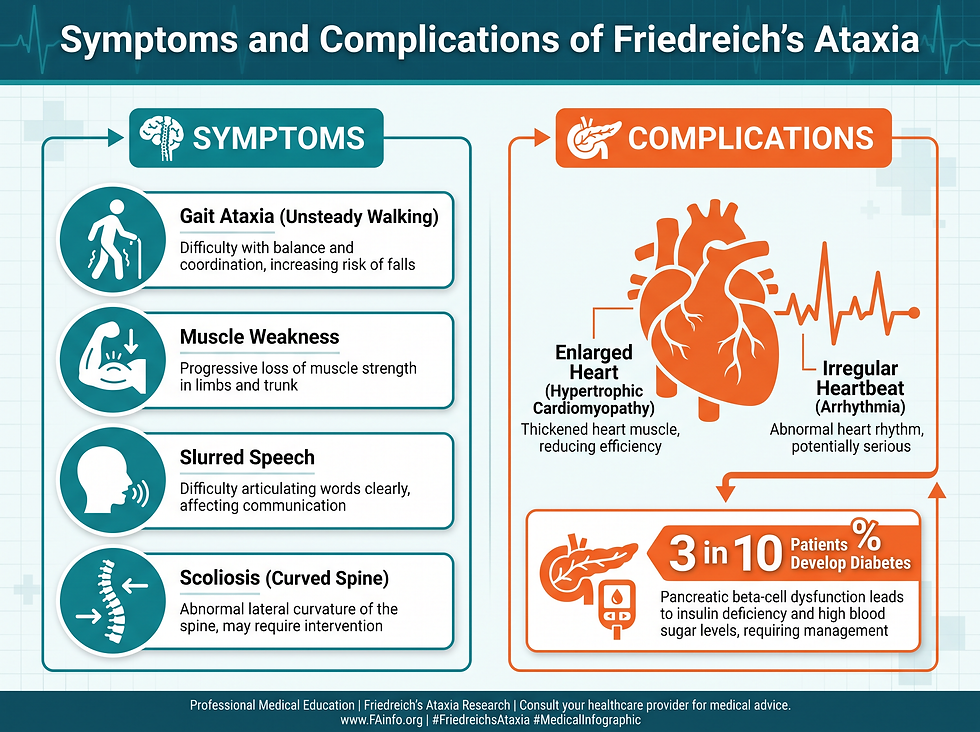
The first signs of Friedreich’s ataxia are often subtle, usually involving difficulty with balance and walking, known as gait ataxia. As the condition progresses, a wider range of neurological and physical symptoms emerge.
Neurological and Physical Indicators
Movement and Balance: Loss of coordination, muscle weakness, involuntary jerking (chorea), and decreased reflexes are hallmark signs.
Sensory Loss: Patients may lose the ability to sense their body's position (proprioception) or experience a loss of touch in the limbs and abdomen.
Speech and Swallowing: Slow or slurred speech (dysarthria) and difficulty swallowing (dysphagia) often develop as the disease advances.
Skeletal Deformities: Scoliosis and foot abnormalities, such as high arches (pes cavus) or inward-turning feet, are common.
Sensory Decline: Progressive vision and hearing loss may occur over time. [1]
Genetic Causes and Inheritance
Friedreich’s ataxia is strictly a genetic condition caused by a mutation in the FXN gene. This gene is responsible for encoding the frataxin protein, which resides in the mitochondria, the "powerhouses" of the cell.
The Role of Frataxin: Without adequate frataxin, mitochondria cannot function properly, leading to a buildup of toxic byproducts known as oxidative stress. This stress damages critical cells, particularly those in the spinal cord, peripheral nerves, and heart muscle. [1]
Inheritance Pattern
FA follows an autosomal recessive pattern. This means that both biological parents must be carriers of the changed gene. Carriers typically show no symptoms themselves, but there is a 25% chance with each pregnancy that the child will inherit both mutated genes and develop the condition. [1]
Associated Health Complications
Friedreich’s ataxia is a systemic disorder that can impact multiple organs, most notably the heart and the pancreas.
Cardiovascular Impact
Heart issues are the most common complication of FA, affecting a significant portion of the patient population.
Structural Changes: Enlarged heart muscle (hypertrophic cardiomyopathy) and myocardial fibrosis are frequent findings.
Rhythm Disorders: Irregular heartbeats, including tachycardia, atrial fibrillation, and heart block, can occur.
Function Decline: The heart may eventually struggle to pump enough blood to meet the body's needs, leading to heart failure. [1]
Metabolic and Other Risks
Approximately 30% of individuals with Friedreich’s ataxia develop diabetes. This occurs because the oxidative stress associated with the condition damages the insulin-producing cells in the pancreas, leading to chronically high blood sugar levels. [1]
Diagnosis and Clinical Testing
A healthcare provider will typically begin with a thorough neurological exam to assess balance, reflexes, and coordination. However, specialized testing is required to confirm the diagnosis.
Genetic Testing: The primary and most definitive test to confirm Friedreich’s ataxia.
Imaging: MRI or CT scans of the brain and spinal cord help rule out other neurological disorders.
Electrophysiology: Electromyograms (EMG) and nerve conduction studies assess the functional integrity of muscles and nerves.
Cardiac Monitoring: EKG and echocardiograms are essential for identifying heart structural or rhythm abnormalities.
Laboratory Work: Blood tests are used to monitor glucose levels and check for vitamin E deficiencies, which can sometimes mimic ataxia symptoms. [1]
Management and Treatment Strategies
While there is no cure for Friedreich’s ataxia, management has entered a new era with the first FDA-approved medication targeted specifically at the disease.
Targeted Medication
In 2023, the FDA approved omaveloxolone (Skyclarys) for individuals aged 16 and older. Clinical studies indicate that this medication can help improve neurological function and slow the progression of ataxia. Research is ongoing to determine its long-term efficacy. [1]
Multidisciplinary Support
Physical Therapy: Focuses on maintaining muscle strength, balance, and flexibility for as long as possible.
Speech Therapy: Assists with managing dysarthria and ensuring safe swallowing techniques.
Orthopedic Intervention: Braces or surgical procedures may be necessary to correct severe scoliosis or foot deformities.
Secondary Symptom Management: Medications for heart conditions and diabetes are prescribed as needed to manage systemic complications.
Mobility Aids: Special shoes, canes, walkers, and wheelchairs are vital for maintaining independence as coordination declines. [1]

Outlook and Prognosis
Friedreich’s ataxia is a progressive condition, meaning symptoms will worsen over time. Most individuals require a wheelchair within 10 to 20 years after the first symptoms appear. The long-term outlook is often determined by the severity of heart complications, which are the leading cause of mortality in the FA population. However, with modern multidisciplinary care and new pharmacological treatments, many individuals live into their 30s, 40s, or longer. [1]
A Note from the Care Team
"Friedreich’s ataxia is a rare genetic disorder that affects how you move and keep your balance. It usually starts in childhood and gets worse over time. While there’s no cure, new treatments and therapies can help manage symptoms and improve your quality of life for as long as possible. The best option is to see a specialist who can answer your questions and guide you through what to expect." — Cleveland Clinic [1]
FAQ: Frequently Asked Questions
Is Friedreich’s Ataxia contagious?
No. Friedreich’s ataxia is a genetic condition caused by inherited gene mutations; it cannot be spread from person to person. [1]
At what age does Friedreich’s Ataxia usually start?
Symptoms most commonly begin between the ages of 5 and 15, although onset can range from age 2 to age 50 in rare cases. [1]
Can Friedreich’s Ataxia be prevented?
Because it is a genetic condition, there is no way to prevent it. Genetic counseling is recommended for families with a history of the disorder. [1]
How rare is Friedreich’s Ataxia?
It affects approximately 1 in 50,000 people in the United States and about 1 in 40,000 people globally. [1]
What is the most common cause of death in FA?
Heart complications, such as heart failure or severe arrhythmias, are the most frequent cause of mortality in individuals with FA. [1]
Does Friedreich’s Ataxia affect intelligence?
No. Friedreich’s ataxia primarily affects physical movement, coordination, and certain sensory functions, but it does not impact cognitive ability or intelligence. [1]
What is Skyclarys?
Skyclarys (omaveloxolone) is the first FDA-approved medication specifically for Friedreich’s ataxia, designed to improve neurological function in patients 16 and older. [1]
Why does FA cause diabetes?
The condition causes oxidative stress that can damage the insulin-producing cells in the pancreas, leading to diabetes in about 30% of patients. [1]
What is gait ataxia?
Gait ataxia is a specific type of coordination loss that affects a person's ability to walk, often resulting in a wide-based, unsteady, or stumbling walk. [1]
Are there different types of FA?
Yes, they are categorized by age of onset: Typical (before 25), Late-onset (25-40), and Very Late-onset (after 40). [1]
How is FA inherited?
It is inherited in an autosomal recessive pattern, meaning a child must receive one mutated FXN gene from each parent. [1]
Can surgery help with FA?
Surgery cannot fix the neurological damage, but it is often used to correct skeletal issues like scoliosis or foot deformities. [1]
What is frataxin?
Frataxin is a protein essential for mitochondrial function; a deficiency in this protein is the underlying cause of Friedreich’s ataxia. [1]
Do all FA patients need a wheelchair?
Most patients eventually require mobility aids as the disease progresses, typically within 10 to 20 years of the initial diagnosis. [1]
Can exercise help Friedreich’s Ataxia?
Yes, physical therapy and tailored exercise programs are crucial for maintaining muscle strength and flexibility and managing symptoms. [1]
References
Cleveland Clinic. Friedreich’s Ataxia (FA). (2025, June 2).
National Institute of Neurological Disorders and Stroke (NINDS). Friedreich’s Ataxia Fact Sheet.
Friedreich’s Ataxia Research Alliance (FARA). Understanding FA.
U.S. Food and Drug Administration (FDA). FDA Approves First Treatment for Friedreich’s Ataxia.
Medical Disclaimer: The information provided in this article is for educational purposes only and should not be considered medical advice. If you or your child are experiencing symptoms of coordination loss or balance issues, consult a qualified healthcare professional immediately.
Comments