Friction Burn: Symptoms, Causes, Diagnosis, Treatment and Outlook — What You Need to Know

Updated: 2 days ago
Medically reviewed by Dr. Baraa Alnahhal, MD · Last reviewed: September 2026
TL;DR
A friction burn is a unique type of injury that combines thermal heat damage with physical tissue abrasion. It occurs when an object or surface rubs forcefully against the skin, causing damage that ranges from minor superficial redness to deep, full-thickness tissue loss. While common examples like carpet or rope burns are often minor, severe friction burns can be life-threatening without proper medical intervention. Treatment involves immediate cooling, proper bandaging, and avoiding common myths like applying ice or butter. Most minor burns heal within days, but deeper injuries require professional care to prevent infection and permanent scarring.
MEDICAL EMERGENCY WARNING: Severe or extensive friction burns can lead to life-threatening complications, including shock, respiratory distress, and hypothermia. If a burn covers a large area of the body or appears charred and deep, seek immediate emergency medical care. [1]
Quick Answer: What is a Friction Burn?
A friction burn occurs when an object or surface rubs hard enough against the skin to generate heat and forcefully damage tissue. This injury is unique because it involves two distinct types of damage: thermal (heat) damage and physical force damage, similar to an abrasion. The severity is determined by the texture of the surface, the amount of force applied, and the location on the body. While common and often minor, such as rug burns or rope burns, severe cases can strip away multiple layers of skin and damage underlying muscles or bones. [1]
Understanding Burn Severity Levels
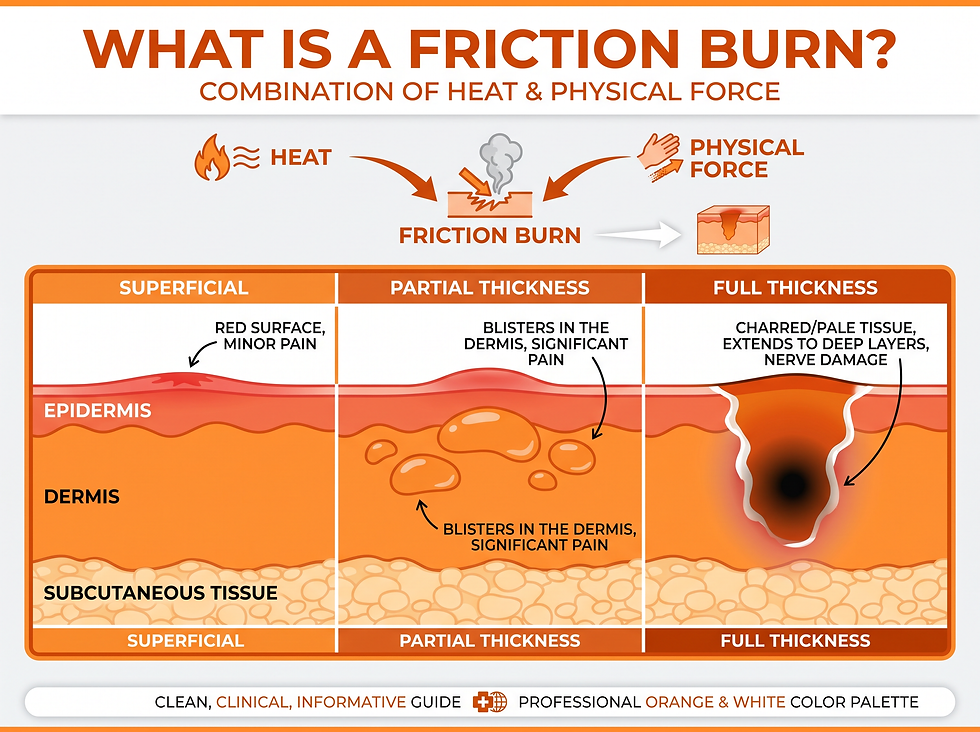
Healthcare providers classify friction burns based on the depth of the tissue damage. The modern classification system has replaced the traditional "degree" system to provide a more accurate clinical picture.
Superficial (First Degree): Damages only the skin's surface; typically pink or red.
Partial Thickness (Second Degree): Extends deeper; characterized by the formation of blisters.
Full Thickness (Third Degree): Damages nerve endings; skin may appear charred, pale, or ashen.
Deep Tissue (Fourth Degree): Extends beneath the skin to damage muscle, bone, and tendons.
Symptoms and Warning Signs
The symptoms of a friction burn depend significantly on how deep the injury penetrates and the total body surface area affected.
Common Indicators by Depth
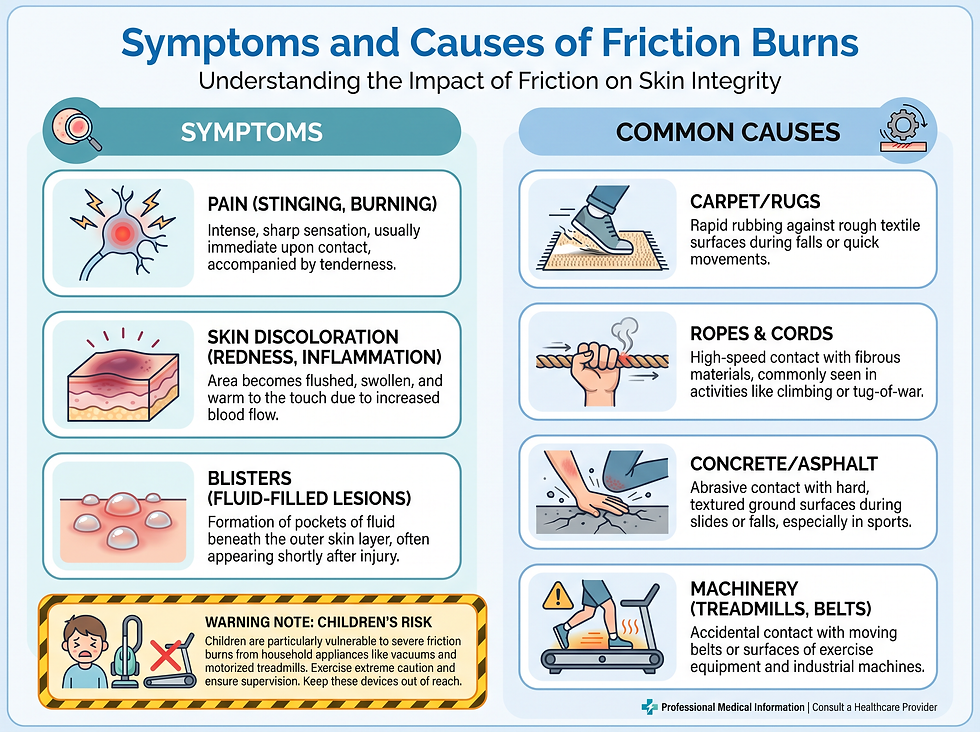
Pain and Sensitivity: Superficial and partial-thickness burns are usually very painful. Interestingly, full-thickness burns may not be painful at the site of the injury because the nerve endings have been destroyed, though the surrounding area will remain sensitive.
Color Changes: In lighter skin, burns often appear pink or red. In darker skin, they may appear lighter than the surrounding area or take on a reddish tinge. Charred or pale skin indicates a full-thickness injury.
Blister Formation: The presence of fluid-filled blisters is a primary indicator of a partial-thickness burn. These should never be intentionally popped. [1]
Causes and Common Triggers
Friction burns can result from a wide variety of daily activities, hobbies, and workplace environments where skin comes into forceful contact with moving surfaces.
Household Surfaces: Rugs, carpeting, and upholstery are common sources of minor burns.
Rough Materials: Contact with concrete, asphalt, or cement, especially during falls at high speeds, can cause significant damage.
Machinery and Tools: Spinning belts, moving parts in woodworking, or working with heavy ropes can lead to deep friction burns.
Exercise Equipment: Treadmills pose a significant risk, particularly for children who may accidentally touch the moving belt.
Footwear: Ill-fitting shoes that rub against the heels are a frequent cause of minor, repetitive friction burns. [1]
Diagnosis and Complications
A healthcare provider can usually diagnose a friction burn through a physical examination and a review of how the injury occurred.
Potential Complications
Infection: Open wounds allow debris and germs to enter the body, increasing the risk of localized or systemic infection.
Traumatic Tattooing: If debris becomes embedded in the skin and is not properly removed, it can remain visible beneath the surface after healing.
Scarring: Large or deep burns can result in heavy scar tissue that may limit the mobility of the affected body part.
Systemic Stress: Extensive burns can cause the body to lose fluid, leading to shock, or interfere with temperature regulation, resulting in hypothermia. [1]
Treatment and Management
The treatment for a friction burn is dictated by its severity. Proper first aid is critical in the minutes following the injury to prevent further damage.
First Aid and Home Care
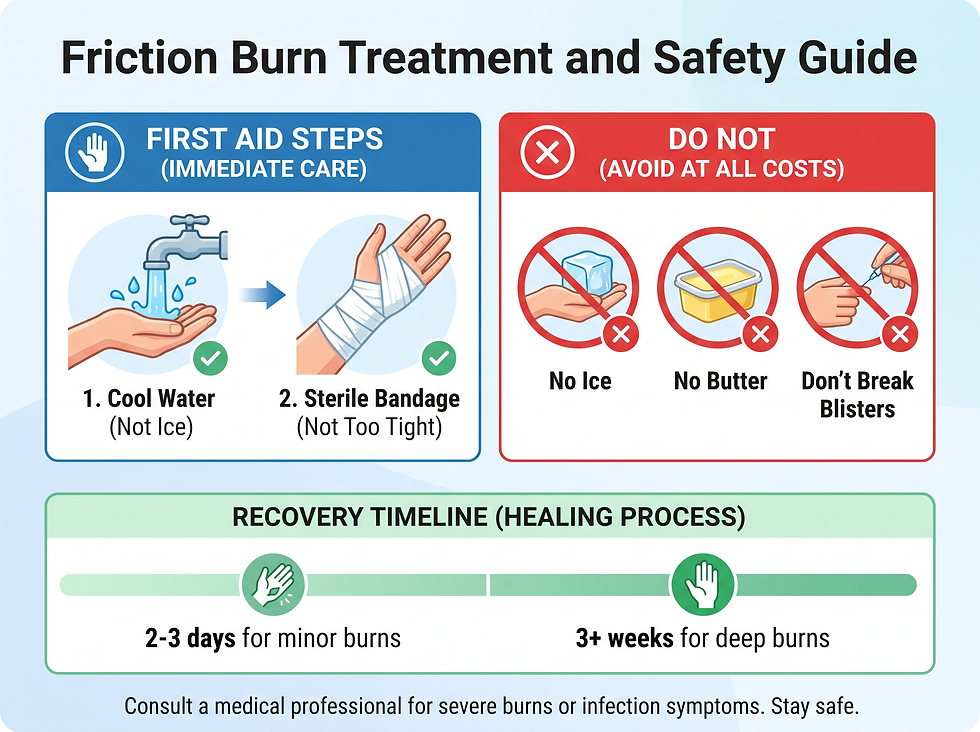
Cooling: Run cool (not cold) water over the burn for several minutes immediately after the injury.
Protection: Cover the area with a sterile bandage or clean cloth, ensuring it is not wrapped too tightly.
Pain Relief: Over-the-counter medications like acetaminophen or ibuprofen can help manage pain and swelling.
Topical Soothing: For minor superficial burns, aloe vera or cool compresses can provide relief.
Professional Medical Intervention
Debridement: A provider may need to surgically remove debris and damaged tissue from the wound.
Prescription Meds: Deeper burns may require stronger pain management and topical antibiotics to prevent infection.
Skin Grafts: In severe cases where skin has been stripped away, surgery may be required to place skin grafts to aid healing and reduce scarring. [1]
Critical "Don'ts" for Burn Care
Following traditional folk remedies can often worsen a friction burn and lead to complications.
DO NOT use ice: Extreme cold can further damage the already compromised tissue.
DO NOT use butter: This common myth can trap heat and introduce bacteria into the wound.
DO NOT break blisters: Popping blisters exposes the raw skin underneath to infection.
DO NOT apply ointments to deep burns: Creams should only be used on minor, superficial injuries. [1]
Outlook and Recovery Timeline
The recovery time for a friction burn varies based on the depth of the injury and the quality of care received.
Superficial Burns: Typically heal within two to three days.
Minor Partial-Thickness: Usually resolve within two to three weeks with proper bandaging.
Full-Thickness and Deep Burns: Often require three weeks or more to heal and may involve months of follow-up care if surgery was necessary. [1]
A Note from the Care Team
"Friction burns are common and many, like simple carpet or rug burns, are minor. But severe friction burns can be as dangerous as any flame or scalding burn without proper medical care. Knowing what to do for them can prevent serious complications and delays in healing. The physical forces that happen with friction burns can damage your skin, separate or even strip away layers, potentially causing infections or traumatic tattooing." — Cleveland Clinic [1]
FAQ: Frequently Asked Questions
Is a friction burn the same as a rug burn?
Yes. A rug burn is a common name for a minor superficial friction burn caused by the skin rubbing against carpet or fabric. [1]
Should I cover a friction burn or let it "breathe"?
Minor superficial burns may not need a covering, but any burn that is raw, weeping, or blistered should be covered with a sterile bandage to prevent infection. [1]
Why does my friction burn look white or ashen?
A white, ashen, or charred appearance typically indicates a full-thickness burn, meaning the damage has extended through all layers of the skin. You should seek medical attention immediately. [1]
Can I put Neosporin on a friction burn?
Topical antibiotics can be used on minor burns, but you should consult a doctor before applying any ointments to deep or large burns, as they can sometimes interfere with the healing process. [1]
How do I know if my friction burn is infected?
Signs of infection include increased pain, swelling, redness spreading from the wound, pus, or a fever. If these occur, see a healthcare provider right away. [1]
Can a treadmill cause a friction burn?
Yes. The rapidly moving belt of a treadmill can cause severe friction burns if a person falls or if a child's hand gets caught. [1]
What is "traumatic tattooing"?
This occurs when dirt, asphalt, or other debris gets ground into the skin during a friction burn and remains there after the skin heals, leaving a permanent mark. [1]
Why is my burn not painful?
If a burn is deep enough to be classified as full-thickness, it may have destroyed the nerve endings in that area, resulting in a lack of sensation at the site of the deepest damage. [1]
Is a rope burn a friction burn?
Yes. A rope burn is a classic example of a friction burn where the texture of the rope and the speed of the movement generate significant heat and force. [1]
Can friction burns cause shock?
Yes. If a friction burn is extensive enough, the body can lose significant amounts of fluid, leading to hypovolemic shock. [1]
Should I use a heating pad on a friction burn?
No. You should never apply heat to a burn. The goal is to cool the tissue immediately after the injury. [1]
How long do blisters take to heal?
Burn blisters typically break on their own after a few days and the skin underneath begins to heal. Do not pop them yourself. [1]
Can I go swimming with a friction burn?
You should avoid swimming in pools, lakes, or the ocean until the burn has completely closed and healed to prevent infection from bacteria in the water. [1]
What is debridement?
Debridement is a medical procedure where a doctor cleans a wound by removing dirt, foreign objects, and dead or infected tissue. [1]
Are friction burns common in children?
Yes, children often get friction burns from playing on carpets or from accidents involving household appliances like vacuums and treadmills. [1]
References
Cleveland Clinic. Friction Burn. (2025, January 24).
American Burn Association. Burn Incidence and Treatment in the United States.
Journal of Burn Care & Research. Management of Friction Injuries and Abrasions.
National Institutes of Health (NIH). Skin Anatomy and Burn Classification.
Medical Disclaimer: The information provided in this article is for educational purposes only and should not be considered medical advice. If you have a deep, large, or infected burn, consult a qualified healthcare professional immediately.
Comments