FPIES (Food Protein-Induced Enterocolitis Syndrome): Symptoms, Causes, Diagnosis, Treatment and Outlook — What You Need to Know

Updated: 2 days ago
Medically reviewed by Dr. Baraa Alnahhal, MD · Last reviewed: September 2026
Executive Summary: TL;DR
Food Protein-Induced Enterocolitis Syndrome (FPIES) is a non-IgE mediated immune reaction to specific food proteins, primarily affecting the gastrointestinal tract. Unlike typical food allergies that cause immediate reactions, FPIES symptoms—such as severe vomiting and diarrhea—are typically delayed by one to four hours after ingestion. While it most commonly affects infants, often triggered by cow's milk, soy, or grains, it can also occur in adults, frequently due to shellfish. Most children outgrow the condition by age four. Management focuses on identifying and avoiding trigger foods, while acute episodes may require medical intervention to prevent life-threatening dehydration or shock.
MEDICAL EMERGENCY WARNING FPIES reactions can lead to life-threatening conditions, including shock (severe low blood pressure) and profound dehydration. Seek immediate medical attention at an emergency room if you or your child experiences confusion, very little or no urination, sunken eyes, facial swelling, or trouble breathing or swallowing.
Quick Answer: What Is FPIES?
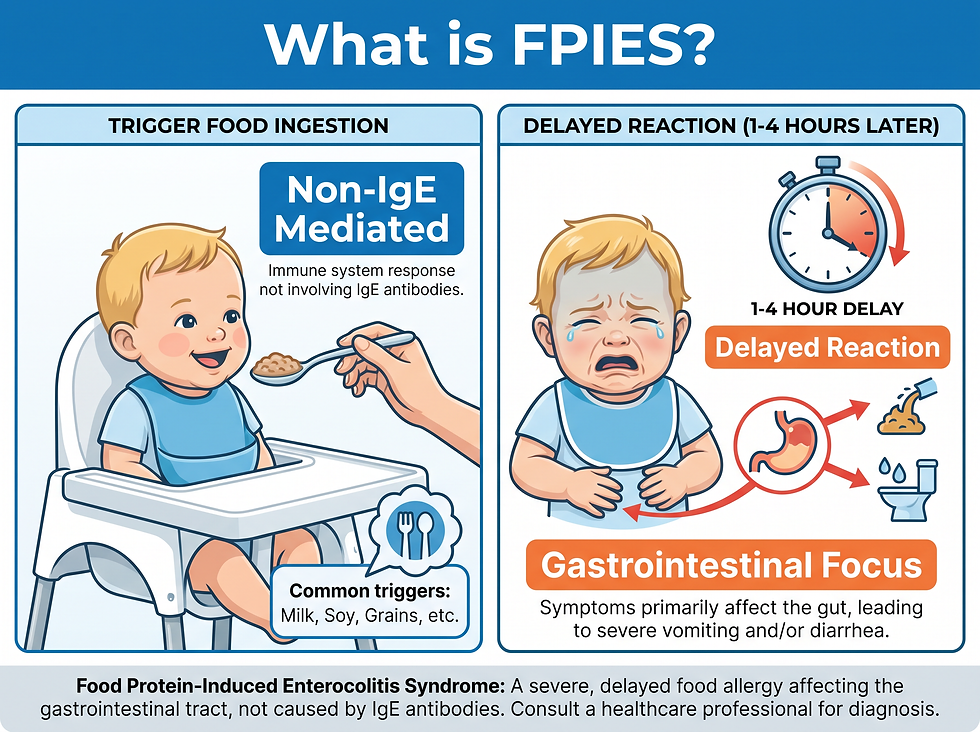
FPIES is an adverse food reaction where the immune system overreacts to proteins in certain foods, leading to significant inflammation in the stomach and intestines. Unlike common food allergies that involve IgE antibodies and can cause immediate anaphylaxis, FPIES is "non-IgE mediated," meaning it involves different immune cells and its symptoms are localized to the digestive system. The hallmark of FPIES is a delayed onset, with severe gastrointestinal distress occurring several hours after eating a trigger food. While uncommon, it is a serious condition that requires careful nutritional management and medical supervision.
Types of FPIES and Their Characteristics
FPIES manifests in two primary forms, categorized by the frequency of trigger food consumption and the resulting symptom pattern.
Acute FPIES: symptoms begin 1 to 4 hours after ingestion and include severe vomiting, diarrhea, lethargy, and pallor. Recovery usually occurs within 12 to 24 hours.
Chronic FPIES: symptoms persist with regular ingestion of the trigger food, causing long-term inflammation and milder recurring symptoms. Recovery takes 3 to 10 days after stopping the trigger food.
Common Trigger Foods
While nearly any food can technically trigger an FPIES reaction, research indicates a set of common culprits that vary slightly by age and geographic location.
Pediatric Triggers
Dairy and soy: cow's milk and soy-based infant formulas are among the most frequent triggers for infants.
Grains: oats and rice are common solid food triggers when first introduced to a child's diet.
Proteins: eggs are another significant trigger in pediatric populations.
Adult Triggers
In adults, FPIES is less common but often more persistent. The primary trigger for adult-onset FPIES is shellfish and other types of seafood. Unlike pediatric cases, adult FPIES is less likely to be outgrown.
Symptoms and Warning Signs
The symptoms of FPIES are primarily gastrointestinal but can have systemic effects due to the severity of the reaction.
Vomiting: often severe and repetitive, starting hours after the meal
Diarrhea: can be watery or occasionally contain blood
Lethargy: significant low energy or a lower level of consciousness
Pallor: noticeably pale skin during an acute episode
Weight loss: unintended weight loss is common in chronic FPIES cases
Hypothermia: a dangerous drop in body temperature during a reaction

Causes and Pathophysiology
FPIES is caused by the immune system in the digestive tract mistakenly identifying food proteins as harmful invaders. Immune cells trigger an inflammatory response that leads to swelling in the stomach and intestines. Because FPIES is non-IgE mediated, it does not typically involve the whole-body inflammation seen in anaphylaxis, meaning symptoms like airway swelling are rare unless there is a co-existing IgE allergy.
Diagnosis and Clinical Testing
Healthcare providers primarily diagnose FPIES through a detailed review of the patient's symptom history and dietary patterns. Because standard allergy tests (skin prick or blood tests) look for IgE antibodies, they often return negative results for FPIES patients.
Food challenge test: under medical supervision, the patient consumes small amounts of a suspected trigger food to observe for a reaction. This is considered the gold standard for diagnosis.
Exclusionary testing: providers may use standard allergy tests to rule out other types of food allergies that could be causing similar symptoms.
Food diary: keeping a detailed log of all food intake and subsequent symptoms can help identify elusive triggers in chronic cases.
Management and Treatment Options
Management of FPIES is divided into acute emergency care and long-term preventative strategies.
Acute Episode Treatment
During a severe reaction, the primary goal is to stabilize the patient and prevent complications from fluid loss.
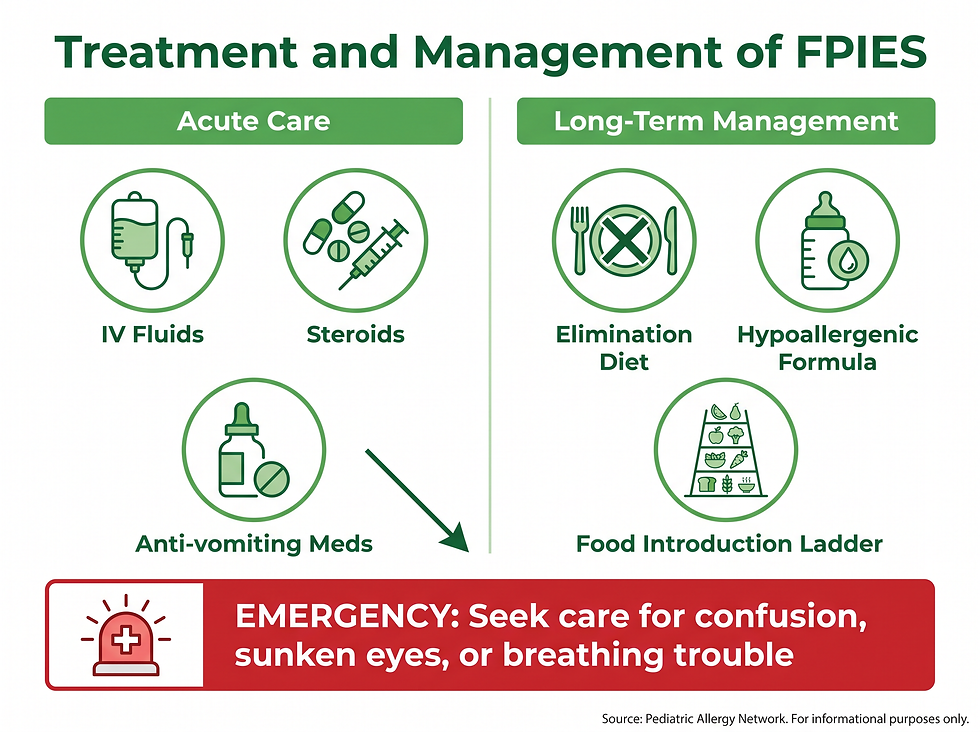
IV fluids: essential for treating or preventing severe dehydration and shock.
Steroids: used to reduce the significant inflammation in the gastrointestinal tract.
Antiemetics: medications like ondansetron (Zofran®) are administered to stop severe vomiting.
Long-Term Management and Prevention
Elimination diet: complete avoidance of known and suspected trigger foods.
Hypoallergenic formula: for infants, switching to specialized formulas that do not contain cow's milk or soy.
Food introduction ladder: a structured, medically guided plan for introducing new foods to an infant.
First solids choice: introducing fruits and vegetables before grains to minimize early grain-based triggers.
Care-Team Perspective
"FPIES is an uncommon condition that can make it difficult for you or your child to get proper nutrition. It can sometimes look like other conditions, and you might have to do some experimenting to determine what food or foods trigger it." — Cleveland Clinic
Frequently Asked Questions
Is FPIES the same as a regular food allergy? No. While both involve the immune system, FPIES is non-IgE mediated and primarily affects the gastrointestinal tract with a delayed onset. Regular food allergies often involve IgE antibodies and can cause immediate, whole-body reactions like hives or anaphylaxis.
Can a baby have FPIES if they are exclusively breastfed? It is uncommon, but possible. Small amounts of food proteins from the parent's diet can pass through breast milk, though the research on this specific transmission is not yet definitive.
What is the most common age for FPIES to start? In children, FPIES usually begins around 4 months of age or whenever trigger foods are first introduced. In adults, the onset is most common after the age of 40.
How common is FPIES in adults? It is quite rare in adults, affecting approximately 1 in 450 (0.22%) of the adult population. Shellfish is the most frequent trigger for this group.
Will my child eventually outgrow FPIES? Most children outgrow FPIES by the age of 3 or 4. However, for those who develop FPIES as adults, the condition is often permanent.
Can FPIES cause anaphylaxis? Generally, no. Because FPIES is localized to the digestive system and does not involve IgE-mediated whole-body inflammation, it does not typically cause airway swelling or other signs of anaphylaxis.
What should I do if my child has an accidental exposure? If the reaction is severe, including lethargy or excessive vomiting, seek immediate emergency care. For milder reactions, contact your healthcare provider for guidance on using prescribed anti-vomiting medications or steroids.
Why are grains like rice and oats triggers for FPIES? While usually considered "safe" starter foods, the proteins in rice and oats are common triggers for the specific immune response seen in FPIES.
How is a food challenge test performed? It is performed in a clinical setting under strict medical supervision. The patient is given increasing amounts of the food in question while being monitored for several hours for any signs of a delayed reaction.
Can FPIES be prevented? The primary prevention is the strict avoidance of known trigger foods. For high-risk infants, providers may suggest specific strategies for the order in which solid foods are introduced.
Is FPIES an autoimmune disease? No. FPIES is an immune reaction to external food proteins in the digestive tract, whereas autoimmune diseases occur when the immune system attacks the body's own healthy cells.
What is "shock" in the context of FPIES? Shock in FPIES is a medical emergency caused by severe fluid loss from vomiting and diarrhea, leading to dangerously low blood pressure and poor circulation to vital organs.
Are there any long-term effects of FPIES? If managed correctly, there are usually no long-term health impacts once the child outgrows the condition. In chronic cases, the primary concern is ensuring the child receives adequate nutrition despite multiple food restrictions.
Can FPIES look like a stomach bug? Yes, FPIES is often misdiagnosed as a bacterial or viral infection because the symptoms—vomiting and diarrhea—are very similar. The key difference is the consistent timing relative to eating specific foods.
What questions should I ask my allergist? Ask about the specific triggers for your child, how to safely introduce new foods, what the emergency action plan is for accidental exposure, and how to ensure nutritional needs are met.
External Authoritative Sources
Food Protein-Induced Enterocolitis Syndrome (FPIES) — Cleveland Clinic (2024)
FPIES — Food Protein-Induced Enterocolitis Syndrome — American Academy of Allergy, Asthma & Immunology (AAAAI)
About FPIES — International FPIES Association (I-FPIES)
International consensus guidelines for the diagnosis and management of food protein-induced enterocolitis syndrome — Journal of Allergy and Clinical Immunology
Medical disclaimer: The information provided in this article is for educational purposes only and should not be considered medical advice. If you or your child experience symptoms of a food reaction, consult a qualified healthcare provider or seek emergency medical attention if the reaction is severe.
Comments