Fourth Nerve Palsy: Symptoms, Causes, Diagnosis, Treatment and Outlook — What You Need to Know

Updated: 2 days ago
Medically reviewed by Dr. Baraa Alnahhal, MD · Last reviewed: September 2026
TL;DR
Fourth nerve palsy, also known as trochlear nerve palsy, is a rare condition that occurs when the fourth cranial nerve is damaged or dysfunctional, leading to vertical double vision and difficulties with downward eye movement. The condition can be present from birth (congenital) or acquired later in life due to head trauma, vascular diseases like diabetes, or other neurological issues. While the double vision can be disruptive, many acquired cases heal spontaneously within six months. Treatment options range from corrective prism eyeglasses and eye patches to surgical intervention for persistent cases.
Quick Answer: What is Fourth Nerve Palsy?
Fourth nerve palsy is a neurological condition resulting from issues with the fourth cranial nerve, also called the trochlear nerve. This specific nerve controls the superior oblique muscle, which is responsible for moving the eye downward and rotating it inward toward the nose. When this nerve fails to function properly, the affected eye may turn upward (hypertropia) or inward (esotropia), causing vertical or torsional double vision. It is a relatively rare condition, affecting approximately 5 per 100,000 people annually in the United States, which equates to roughly 17,100 new cases each year. [1]
Symptoms and Warning Signs
The symptoms of fourth nerve palsy are primarily visual and often lead to characteristic physical compensations as the body attempts to resolve the resulting double vision.
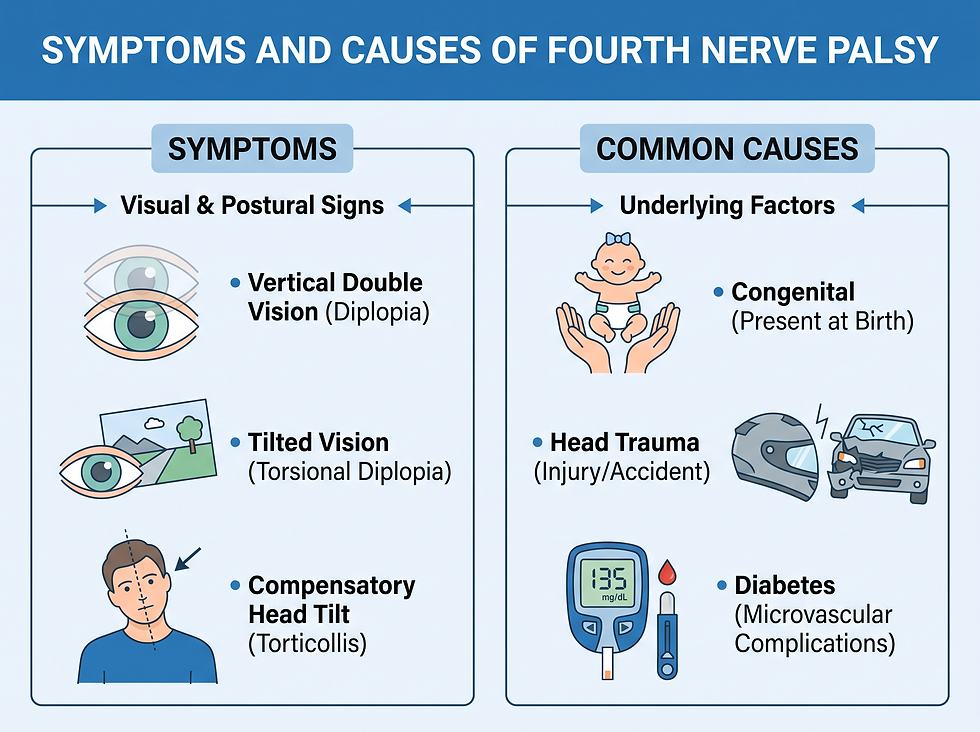
Vertical Double Vision: Seeing two images, one above the other (vertical diplopia).
Tilted Vision: Images appear rotated or tilted (torsional diplopia).
Downward Vision Issues: Difficulty looking down, especially when reading or using stairs.
Head Tilting: Compulsive tilting of the head to align vision and reduce double images.
Strabismus: Visible misalignment, such as one eye turning upward or inward.

Causes and Development
Fourth nerve palsy is categorized by its onset: congenital (present from birth) or acquired (developing later due to injury or disease). Identifying the underlying cause is essential for determining the correct management plan.
Congenital: Born without a trochlear nerve or with a weak superior oblique muscle.
Head Trauma: Whiplash, motor vehicle accidents, or boxing injuries damaging the long nerve path.
Vascular Disease: Blood vessel damage often associated with diabetes or hypertension.
Neurological Issues: Pressure from tumors (meningiomas) or increased intracranial pressure.
Infections/Syndromes: Lyme disease, shingles (herpes zoster), or Guillain-Barré syndrome.
Idiopathic: Cases where no specific cause can be identified by healthcare providers.
How Common is Fourth Nerve Palsy?
Fourth nerve palsy is considered a rare condition. Statistical data suggests an incidence rate of about 5 cases per 100,000 people each year in the United States. While it can affect individuals of any age, congenital cases are often diagnosed in childhood or early adulthood as symptoms become more noticeable. Acquired cases are frequently linked to trauma in younger populations or vascular issues in older adults. [1]
Diagnosis of Fourth Nerve Palsy
Diagnosis typically involves a specialized examination by an ophthalmologist (eye doctor) or a neurologist. The provider will assess eye alignment and the severity of double vision in different gaze directions.
Diagnostic Tools and Tests
Healthcare providers use a combination of visual assessments and advanced imaging to confirm the diagnosis and identify any underlying triggers.
Visual Assessment: Patients are asked to look at objects in various directions to track how the double vision changes.
Head Tilt Test: Observing how tilting the head affects eye alignment.
Brain MRI: Recommended if symptoms follow head trauma or if a tumor is suspected.
Neurological Exam: Assessing other cranial nerves to rule out broader neurological conditions. [1]
Treatment and Management
The treatment for fourth nerve palsy is highly dependent on the underlying cause and the severity of the vision disruption.
Non-Surgical Interventions
For many patients, especially those with acquired palsy due to minor trauma, the condition resolves on its own as the nerve heals.
Observation: Many cases heal spontaneously within approximately six months.
Prism Eyeglasses: Specialized lenses that realign the two images into one to correct double vision.
Eye Patching: Wearing a patch over the affected eye to eliminate the second image while the nerve recovers.
Surgical Options
If symptoms persist beyond six months or if the palsy is congenital and causing significant misalignment, surgery may be necessary.
Muscle Adjustment: Surgeons may weaken or strengthen other eye muscles to compensate for the weak superior oblique muscle.
Goal of Surgery: To realign the eyes, eliminate double vision in the primary gaze, and reduce the need for compensatory head tilting. [1]

Outlook and Prognosis
The prognosis for fourth nerve palsy is generally positive. Acquired cases frequently see full recovery within six months without invasive treatment. For those who require surgery, success rates for improving eye alignment and reducing double vision are high. Patients are encouraged to maintain regular follow-up appointments to monitor nerve healing and adjust vision aids as needed. [1]
Prevention Strategies
While congenital cases cannot be prevented, acquired fourth nerve palsy caused by trauma can often be avoided through safety measures.
Vehicle Safety: Always use seatbelts and ensure proper car seat installation for children.
Head Protection: Wear helmets during contact sports, cycling, or motorcycling.
Home Safety: Childproof living areas to prevent falls and secure areas for seniors with balance issues.
Manage Underlying Health: Controlling blood sugar levels in diabetes can reduce the risk of vascular nerve damage.
When to See a Healthcare Provider
You should consult a healthcare provider if you or your child experience any sudden changes in vision or eye alignment.
Sudden Double Vision: Rule out nerve damage or neurological issues.
Compulsive Head Tilting: Identifying compensatory behavior for vision loss.
Visible Eye Misalignment: Assessing for strabismus or hypertropia.
Post-Trauma Vision Changes: Ensuring no permanent damage after a head injury.
A Note from the Care Team
"Fourth nerve palsy (trochlear nerve palsy) happens when issues with your fourth cranial nerve cause vertical (up and down) eye movement and vision issues. It usually affects one eye (unilateral) but can affect both (bilateral). Having fourth nerve palsy can disrupt your life. The good news is that it’s often treatable and temporary. But it’s important to see your healthcare provider for a diagnosis and treatment sooner rather than later. They can recommend vision aids to help with double vision while your fourth nerve heals and further treatment if necessary." — Cleveland Clinic [1]
FAQ: Frequently Asked Questions
Is fourth nerve palsy permanent?
In many acquired cases, fourth nerve palsy is temporary and resolves on its own within six months. However, congenital cases or severe traumatic injuries may require surgery to achieve permanent alignment. [1]
Can I drive with fourth nerve palsy?
Double vision can significantly impair your ability to drive safely. You should consult your eye doctor before driving; they may recommend using an eye patch or prism glasses to manage the double vision while you are behind the wheel. [1]
Why does fourth nerve palsy cause head tilting?
The fourth cranial nerve controls the muscle that rotates the eye. When this nerve is weak, the eye tilts incorrectly. Patients instinctively tilt their head in the opposite direction to compensate for this rotation and align their vision. [1]
Does diabetes cause fourth nerve palsy?
Yes. Diabetes can cause microvascular damage to the small blood vessels that supply the cranial nerves, leading to "acquired" fourth nerve palsy. This is often referred to as a diabetic mononeuropathy. [1]
What is the difference between fourth and sixth nerve palsy?
Fourth nerve palsy primarily affects vertical (up and down) vision, while sixth nerve palsy affects horizontal (side to side) vision, making it difficult to look outward toward the ear. [1]
How common is fourth nerve palsy in children?
In children, fourth nerve palsy is most commonly congenital. While the exact prevalence in children isn't specified, it is a recognized cause of pediatric strabismus and head tilting. [1]
Can shingles cause fourth nerve palsy?
Yes. The shingles virus (herpes zoster) can cause inflammation and damage to the cranial nerves, including the trochlear nerve, resulting in temporary or persistent palsy. [1]
Is surgery for fourth nerve palsy safe?
Yes, eye muscle surgery is a common and generally safe procedure with high success rates for correcting the misalignment caused by fourth nerve palsy. [1]
What are prism glasses?
Prism glasses are specialized lenses that bend light before it enters the eye. This helps shift the two separate images caused by double vision so that they appear as a single, clear image. [1]
Can fourth nerve palsy be a sign of a brain tumor?
While rare, pressure from a tumor like a meningioma can damage the trochlear nerve. This is why healthcare providers may recommend an MRI if the cause of the palsy is not immediately clear. [1]
How long does it take to recover from surgery?
Most patients can return to normal activities within a week or two, although the full alignment of the eyes may take several weeks to stabilize as the muscles heal. [1]
Does fourth nerve palsy affect both eyes?
It usually affects only one eye (unilateral), but in cases of significant head trauma, both trochlear nerves can be damaged, leading to bilateral fourth nerve palsy. [1]
What is superior oblique palsy?
Superior oblique palsy is another name for fourth nerve palsy, referring specifically to the weakness of the superior oblique muscle that the fourth nerve controls. [1]
Can Lyme disease cause vision issues?
Yes. Lyme disease is a bacterial infection that can affect the nervous system and cause various cranial nerve palsies, including fourth nerve palsy. [1]
What should I do if my child tilts their head constantly?
If your child has a persistent head tilt, you should schedule an appointment with a pediatric ophthalmologist to rule out fourth nerve palsy or other vision-related causes. [1]
References
Cleveland Clinic. Fourth Nerve Palsy (Trochlear Nerve Palsy). (2024, November 1). https://my.clevelandclinic.org/health/diseases/fourth-nerve-palsy
American Academy of Ophthalmology (AAO). Trochlear Nerve (Fourth Nerve) Palsy.
Mayo Clinic. Double Vision (Diplopia).
National Eye Institute (NEI). Strabismus.
Medical Disclaimer: The information provided in this article is for educational purposes only and should not be considered medical advice. If you are experiencing sudden double vision or eye misalignment, consult a qualified healthcare provider for an accurate diagnosis and personalized treatment plan.
Comments