Forceps Delivery: Understanding Assisted Vaginal Birth

Updated: 6 minutes ago
Medically reviewed by Dr. Baraa Alnahhal, MD · Last reviewed: October 2026
TL;DR
Forceps delivery is a form of assisted vaginal birth used when labor stalls or the baby needs help moving through the birth canal. By using curved metal tools to gently cradle and guide the baby’s head, healthcare providers can often avoid a C-section. While it carries some risks, such as vaginal tearing for the parent or minor bruising for the baby, it is a valuable tool for ensuring a safe and timely delivery when medical progress slows.
Quick Answer
A forceps delivery occurs during the second (pushing) stage of labor when a healthcare provider uses specialized instruments called forceps to assist in the birth. These tools, which resemble large, curved tongs, are designed to fit around the baby’s head and the parent’s pelvis. This intervention is typically recommended if labor has stalled, the baby is in a difficult position, or there is a medical need to complete the delivery quickly to ensure the safety of both parent and child.
What the research says
Forceps succeed more often than vacuum but cause more tears. A Cochrane review of 31 trials (5,754 women) found forceps were less likely to fail than vacuum cups (RR 0.58) and caused less newborn trauma, but third- or fourth-degree tears were more likely (RR 1.83). (Verma et al., Cochrane Database Syst Rev, 2021)
A single antibiotic dose after assisted birth prevents infections. Pooling 2 trials (3,813 women), prophylactic antibiotics after forceps or vacuum birth roughly halved superficial (RR 0.53) and deep (RR 0.46) perineal wound infections and lowered serious infections (RR 0.44). (Liabsuetrakul et al., Cochrane Database Syst Rev, 2020)
How Forceps Delivery Works
The procedure is performed while the parent is lying on their back. Once consent is obtained and pain management is addressed, the provider carefully places the forceps blades one at a time on either side of the baby’s head. The blades are uniquely curved to cradle the head without applying excessive pressure.
During a contraction, the parent pushes while the provider applies gentle traction to the forceps to help guide the baby out. Most forceps deliveries are successful within three or four pulls. If the baby needs to be rotated into a better position, the provider may perform this adjustment between contractions.

Figure 1: Conceptual illustration showing the alignment of obstetrical forceps during the assisted delivery process.
Indications and Criteria for Use
Forceps are not used in every birth; they are reserved for specific situations where the benefits of a quick delivery outweigh the potential risks of waiting or undergoing a C-section.
Stalled Labor: Pushing has continued for hours with little to no progress.
Baby Position: The baby is stuck or needs to be rotated to move through the birth canal.
Medical Necessity: A quick delivery is needed due to changes in the baby's heart rate or parent's health.
Avoiding C-Section: Used as a final attempt at a vaginal birth before moving to surgery.
For a forceps delivery to be considered safe, the parent must be fully dilated, the baby's head must be low enough in the birth canal, and the baby's position must be clearly known.
Risks and Complications
While the goal of using forceps is to reduce overall risk, the procedure does carry its own set of potential complications. Healthcare teams monitor both the parent and baby closely after delivery to manage any issues.
Potential Risks to the Parent
Vaginal or perineal tears (including 3rd/4th degree).
Increased risk of urinary incontinence.
Pelvic organ prolapse due to pelvic floor strain.
Longer recovery if severe tearing occurs.
Potential Risks to the Baby
Minor surface wounds or facial bruising.
Temporary facial muscle weakness (rare).
Small, self-healing skull fractures (rare).
Rare instances of bleeding within the skull.
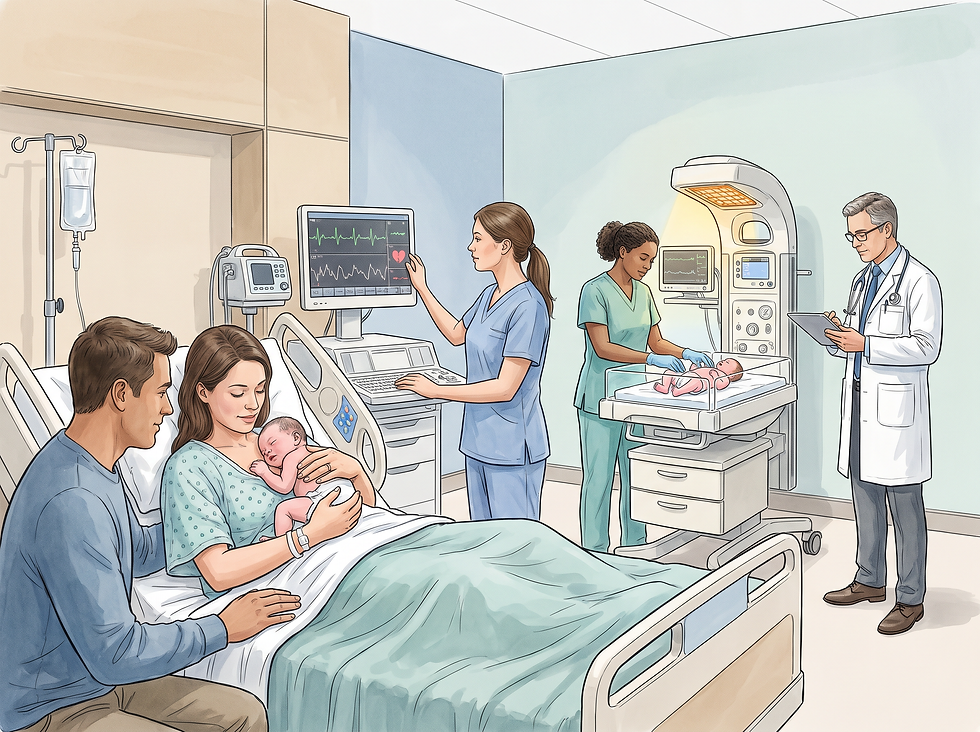
Figure 2: Representation of clinical monitoring for parent and newborn following an assisted delivery.
Recovery and Outlook
Recovery from a forceps delivery is generally similar to a standard vaginal birth, typically taking about six weeks. However, healing may take longer if significant tearing occurred. Stitches used for repairs generally dissolve within a month, and most postpartum pain can be managed with over-the-counter medications.
It is important to discuss preferences for assisted birth with a healthcare provider during pregnancy. Understanding these options ahead of time can help expectant parents feel more prepared if the need for intervention arises during labor.

Figure 3: Illustration of the supportive care and recovery environment following childbirth.
Conclusion
Forceps delivery is a time-tested medical intervention that can provide a safe path to a vaginal birth when labor becomes difficult. While the prospect of an assisted birth can be daunting, the primary goal is always the safety of both the parent and the baby. By understanding the process, risks, and recovery, families can feel more empowered as they navigate the complexities of childbirth.
Next Steps
Discuss with Your Provider: Talk to your obstetrician or midwife about their experience with forceps and their criteria for using them.
Include in Your Birth Plan: Note your preferences regarding assisted delivery in your birth plan, while remaining flexible for medical needs.
Ask About Pain Management: Understand your options for anesthesia or pain relief should an assisted delivery become necessary.
Pelvic Floor Health: Consider seeing a pelvic floor physical therapist after recovery to help strengthen the muscles affected by delivery.
Monitor Healing: Keep your follow-up appointments to ensure that any tears or stitches are healing correctly.
FAQ
What is a forceps delivery?
It is a form of assisted birth where tools are used to guide the baby out of the birth canal.
Why are forceps used?
They are used if labor stalls, the baby is stuck, or a quick delivery is medically necessary.
Are forceps deliveries common?
No, they occur in about 0.5% of vaginal births in the United States.
Can forceps help avoid a C-section?
Yes, they are often a successful alternative to surgical delivery.
When are forceps considered unsafe?
They should not be used if the parent isn't fully dilated or if the baby is preterm.
Do forceps hurt the baby?
Most risks are minor, such as temporary bruising or small surface marks on the face.
What are the risks to the parent?
The most common risks are vaginal tearing and a longer recovery time for pelvic muscles.
How long does the procedure take?
It usually happens quickly, often within three to four gentle pulls during contractions.
Will I need stitches?
Stitches are common if tearing occurs during the assisted delivery.
How long is the recovery?
Most people heal within six weeks, similar to a standard vaginal birth.
Can forceps rotate a baby?
Yes, providers can use them to gently turn the baby into a better position for birth.
Is consent required?
Yes, your healthcare provider will explain the risks and benefits and ask for your consent.
What happens if forceps don't work?
If the intervention isn't successful, the healthcare team will typically recommend a C-section.
Will my baby be monitored after?
Yes, the care team will check the baby for any wounds or signs of complications.
Can I still have a vaginal birth next time?
Yes, a forceps delivery does not automatically mean you will need assistance in future births.
References
Verma GL, et al. Instruments for assisted vaginal birth. Cochrane Database of Systematic Reviews. 2021;9(9):CD005455. PMID 34559884. https://doi.org/10.1002/14651858.CD005455.pub3
Liabsuetrakul T, et al. Antibiotic prophylaxis for operative vaginal delivery. Cochrane Database of Systematic Reviews. 2020;3(3):CD004455. PMID 32215906. https://doi.org/10.1002/14651858.CD004455.pub5
Medical Disclaimer: This content is for informational purposes only and does not constitute medical advice. Always seek the advice of a qualified healthcare provider with any questions regarding a medical condition or treatment.



Comments