Foot Tendonitis: Symptoms, Causes, Diagnosis, Treatment and Outlook — What You Need to Know

Updated: 2 days ago
Medically reviewed by Dr. Baraa Alnahhal, MD · Last reviewed: September 2026
TL;DR
Foot tendonitis is the inflammation or irritation of the strong connective tissues (tendons) in the foot, most commonly caused by repetitive stress or overuse. The condition frequently affects the Achilles, peroneal, extensor, and posterior tibial tendons, leading to localized pain, swelling, and stiffness. While anyone can develop foot tendonitis, it is particularly prevalent among athletes and active individuals. Most cases respond well to conservative treatments like the RICE method (Rest, Ice, Compression, Elevation), physical therapy, and orthotics. Early intervention is key to preventing complications such as tendon ruptures, which may require surgical repair.
Quick Answer: What is Foot Tendonitis?
Foot tendonitis (also spelled tendinitis) occurs when one or more tendons in the foot become inflamed or irritated. Tendons are tough, fibrous bands of tissue that anchor muscles to bones, allowing for movement and stability. When these tissues are subjected to repeated stress—often from sudden increases in physical activity, improper footwear, or biomechanical issues like flat feet—they can develop micro-tears and inflammation. The most common type is Achilles tendonitis, which affects the strongest tendon in the body. Symptoms typically include pain that worsens with activity and stiffness after periods of rest. [1]
Types of Foot Tendonitis
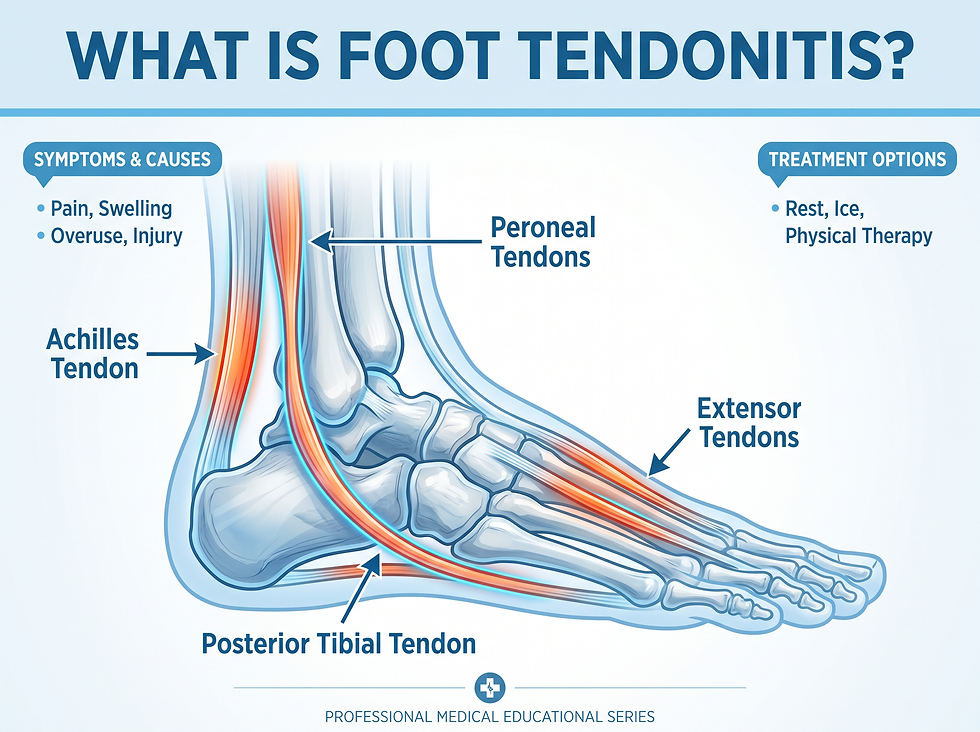
While the foot contains numerous tendons, four primary types of tendonitis account for the majority of clinical cases. Each type is defined by the specific tendon affected and the location of the resulting pain.
Achilles Tendonitis: Tendon Location: Back of the ankle, connecting calf to heel; Primary Function: Running, jumping, and rising on toes.
Extensor Tendonitis: Tendon Location: Along the top of the foot; Primary Function: Attaches leg bones to the toes.
Peroneal Tendonitis: Tendon Location: Outer ankle bone, connecting to midfoot; Primary Function: Provides stability to the foot and arch.
Posterior Tibial Tendonitis: Tendon Location: Inside of the foot, connecting calf to arch; Primary Function: Supports the arch of the foot.
How Common is Foot Tendonitis?
Foot tendonitis is a frequent occurrence, particularly in sports medicine settings. Achilles tendonitis stands as the most prevalent form, with studies suggesting it affects between 1% and 9% of both elite and recreational athletes. The incidence is higher among individuals who engage in high-impact activities that involve frequent jumping or running. While specific statistics for other types of foot tendonitis are less documented, they are widely recognized as common overuse injuries in the general population. [1]
Symptoms and Warning Signs
The symptoms of foot tendonitis can vary depending on the specific tendon involved, but they generally follow a predictable pattern of localized discomfort and physical changes in the tissue.
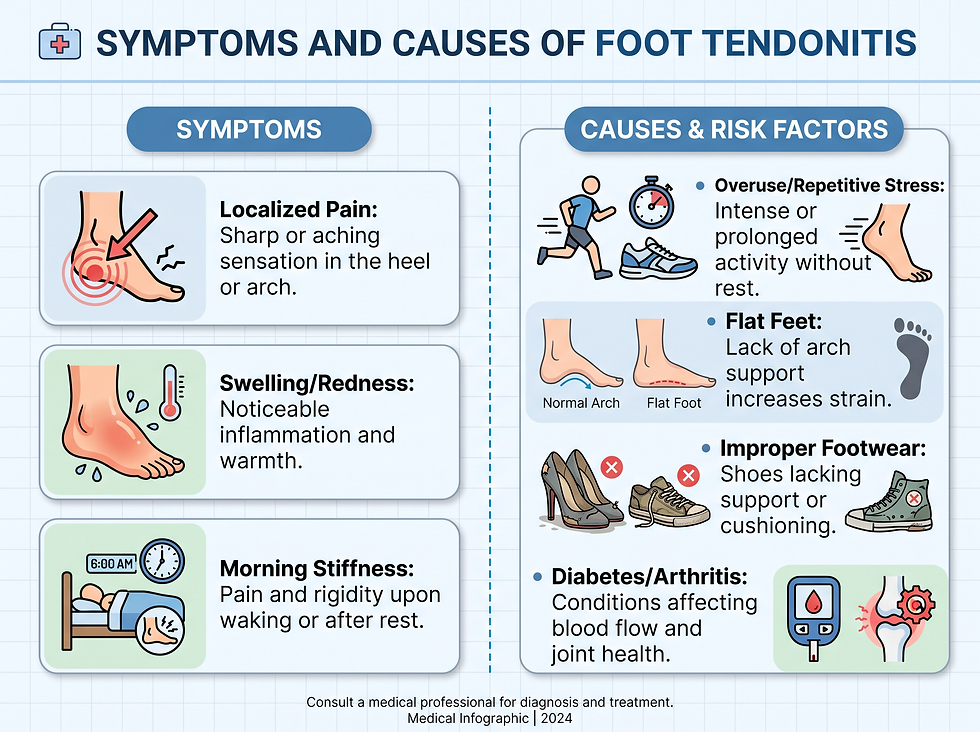
Localized Pain: Discomfort along the tendon length or at its attachment point.
Activity-Related Pain: Pain that intensifies during or after physical exertion.
Morning Stiffness: Tightness in the tendon after periods of inactivity.
Swelling and Redness: Visible inflammation or warmth around the affected area.
Tendon Thickening: A physical change where the tendon feels larger or firmer.
Bone Spurs: Small extra bone formations near the irritated tendon.
Causes and Risk Factors
Most cases of foot tendonitis are chronic, developing gradually due to repetitive stress. However, acute injuries can also occur from sudden overstretching or trauma. Understanding the underlying drivers helps in both treatment and prevention.
Overuse: Repetitive stress from sports or high-impact work.
Improper Technique: Poor form during running, jumping, or pivoting.
Biomechanical Issues: Conditions like flat feet or tight leg muscles.
Health Conditions: Arthritis, gout, diabetes, or thyroid disease.
Lifestyle Factors: Obesity, smoking, or inadequate stretching routines.
Footwear: Wearing unsupportive or ill-fitting shoes.
Potential Complications: Tendon Rupture
If foot tendonitis is ignored and the stress continues, the tendon may eventually rupture. A rupture is a partial or complete break in the tissue that requires immediate medical attention. You should contact a healthcare provider immediately if you experience a snapping or popping sensation followed by severe pain and an inability to bear weight on the foot. [1]
Diagnosis of Foot Tendonitis
Healthcare providers typically diagnose foot tendonitis through a combination of physical examination and medical history review. During the exam, the provider will palpate the area for tenderness and swelling and assess your range of motion and strength.
Imaging and Diagnostic Tests
While a physical exam is often sufficient, imaging may be required to rule out fractures or assess the extent of tendon damage.
Ultrasound: Often the test of choice to see tendon movement and degeneration.
X-ray: Used to rule out bone fractures or identify bone spurs.
MRI: Provides detailed images of soft tissues and internal tears.
CT Scan: Offers cross-sectional views of complex foot structures.
Treatment and Management
The primary goal of treatment is to reduce inflammation and allow the tendon to heal. Most individuals find relief through conservative, at-home measures and non-invasive therapies.
The RICE Method
The RICE method is the standard first-line treatment for managing foot tendon pain and swelling.
Rest: Cease physical activities that strain the affected tendon.
Ice: Apply cold packs for up to 20 minutes (avoid direct skin contact).
Compression: Use a bandage or wrap to stabilize the area and reduce swelling.
Elevation: Keep the foot raised above heart level when resting.
Additional Conservative Treatments
Orthotics: Special shoe inserts to support the foot and reduce stress.
Physical Therapy: Exercises to regain strength, flexibility, and stability.
Medication: Non-narcotic pain relievers to manage discomfort.
Immobilization: Using a soft cast or walking boot to allow for healing.
Surgical Options
Surgery is rarely necessary but may be considered if symptoms persist after six months of conservative care. Options include gastrocnemius recession to lengthen calf muscles, tenosynovectomy to clean damaged tissue, or tendon transfers for severe injuries. An office-based procedure called TenJet may also be used to debride degenerative tissue under ultrasound guidance. [1]

Outlook and Prognosis
The prognosis for foot tendonitis is generally excellent. Most people achieve a full recovery within a few months using conservative treatments. If surgery is required, the recovery timeline extends to six to twelve months, typically involving significant physical therapy. Once a tendon has been injured, the risk of future injury in that area increases, making ongoing prevention efforts essential. [1]
Prevention Strategies
Proactive measures can significantly reduce the risk of developing or re-injuring a foot tendon.
Listen to Pain: Do not push through discomfort; let it guide your activity levels.
Gradual Progression: Increase the intensity of workouts slowly over time.
Proper Footwear: Wear supportive shoes that fit well, including prescribed orthotics.
Stretching: Maintain a consistent routine before and after physical activity.
Lifestyle Adjustments: Maintain a healthy weight and avoid tobacco products.
When to See a Healthcare Provider
Early medical consultation can prevent minor irritation from becoming a chronic problem or a complete rupture.
Contact a Provider If You Experience:
Persistent swelling in the foot or ankle.
Inability to bend or flex your toes.
Pain that interferes with daily activities.
Stiffness that does not improve with rest.
Seek Immediate Care (Possible Rupture) If:
You hear a snapping or popping sound.
You experience sudden, severe pain.
You are completely unable to bear weight.
Visible deformity or severe bruising appears.
A Note from the Care Team
"Foot tendonitis occurs when you overstretch the tough bands of connective tissue in your foot. It’s a fairly common overuse injury in athletes, but it can also affect older individuals with conditions like flat feet or arthritis. For most people, it’s an injury that heals on its own with a combination of conservative treatments such as rest, ice, stretching or physical therapy. In rare cases, foot tendonitis requires surgery. Let pain be your guide. If your foot hurts, don’t push through it. Take a break and talk to your healthcare provider." — Cleveland Clinic [1]
FAQ: Frequently Asked Questions
What is the fastest way to heal foot tendonitis?
The most effective way to accelerate healing is early intervention using the RICE method (Rest, Ice, Compression, Elevation) combined with avoiding activities that aggravate the tendon. Consistency with physical therapy and stretching is also vital. [1]
Can I walk with foot tendonitis?
Walking is generally permissible if it does not cause pain. However, if walking intensifies your symptoms, you should rest and consult a provider. In some cases, a walking boot may be prescribed to protect the tendon while allowing for mobility. [1]
How do I know if my foot tendon is ruptured?
A rupture often involves a sudden "pop" or "snap" sound, immediate severe pain, and an inability to push off with the foot or bear weight. If you suspect a rupture, seek emergency medical care immediately. [1]
Is heat or ice better for foot tendonitis?
Ice is typically recommended for acute inflammation and new injuries to reduce swelling and numb pain. Heat may be used later in the recovery process to relax tight muscles, but consult your provider for a specific recommendation. [1]
Can flat feet cause foot tendonitis?
Yes. Flat feet (fallen arches) can place abnormal stress on the tendons, particularly the posterior tibial tendon, leading to chronic irritation and inflammation. [1]
Does foot tendonitis ever go away on its own?
While minor irritation may improve with rest, most cases require active management like stretching, proper footwear, and physical therapy to fully resolve and prevent recurrence. [1]
What kind of shoes should I wear?
You should wear supportive, well-cushioned shoes that fit correctly. Depending on your foot structure, a provider may recommend specific orthotic inserts to correct biomechanical issues. [1]
How long does physical therapy take?
The duration varies by individual, but many people participate in physical therapy for several weeks to months to ensure they have regained full strength and flexibility before returning to high-impact sports. [1]
Are there specific stretches for foot tendonitis?
Yes, calf stretches and toe-strengthening exercises are commonly recommended, especially for Achilles and posterior tibial tendonitis. Always perform stretches under the guidance of a professional to avoid further injury. [1]
Can diabetes affect my tendons?
Yes, certain systemic conditions like diabetes and thyroid disease can affect the health of connective tissues, making you more susceptible to tendonitis and other inflammatory conditions. [1]
Is surgery common for foot tendonitis?
No, surgery is considered a last resort and is only recommended if conservative treatments fail to provide relief after six months or if a complete rupture has occurred. [1]
What is the TenJet procedure?
TenJet is a minimally invasive, office-based procedure that uses a high-pressure stream of saline to remove degenerative tissue (tendinosis) from a tendon under ultrasound guidance. [1]
Can smoking slow down my recovery?
Yes, smoking and tobacco use can impair blood flow and slow the body's natural healing processes, potentially extending the time it takes for tendons to recover. [1]
What is the difference between tendonitis and tendinosis?
Tendonitis refers to acute inflammation of the tendon, while tendinosis is a chronic condition involving the degeneration of the tendon's collagen due to long-term overuse. [1]
Why does my foot hurt more in the morning?
Stiffness and pain are common in the morning because the tendons tighten during periods of inactivity. The pain often eases slightly as the tissue warms up with gentle movement. [1]
References
Cleveland Clinic. Foot Tendonitis. (2021, October 26). https://my.clevelandclinic.org/health/diseases/22378-foot-tendonitis
American Academy of Orthopaedic Surgeons (AAOS). Achilles Tendinitis.
American Podiatric Medical Association (APMA). Tendonitis.
Journal of Foot and Ankle Research. Management of common foot and ankle tendonitis.
Medical Disclaimer: The information provided in this article is for educational purposes only and should not be considered medical advice. If you are experiencing persistent foot pain or suspect a tendon injury, consult a qualified healthcare provider for an accurate diagnosis and personalized treatment plan.
Comments