Follicular Conjunctivitis: Symptoms, Causes, Diagnosis, Treatment and Outlook — What You Need to Know

Updated: 2 days ago
Medically reviewed by Dr. Baraa Alnahhal, MD · Last reviewed: September 2026
TL;DR
Follicular conjunctivitis is a common type of pink eye characterized by the inflammation and swelling of immune follicles located on the inner surface of the eyelids. Primarily caused by viral infections—most notably adenovirus—it can also stem from bacterial infections, allergies, or toxic reactions to medications. While approximately 80% of cases are acute and resolve without medical intervention, chronic cases can last for several weeks and require specialized treatment. Symptoms typically include red, itchy eyes, watery discharge, and a sensation of a foreign object in the eye. Early diagnosis by an eye care specialist is essential to prevent potential long-term vision damage from more severe viral strains.
Quick Answer: What is Follicular Conjunctivitis?
Follicular conjunctivitis is a specific form of eye inflammation where the immune cells (follicles) in the conjunctiva—the thin membrane lining the eyelid and the white of the eye—become swollen and irritated. It is most frequently triggered by viruses, such as those that cause the common cold or shingles, but can also be caused by bacteria like chlamydia. The condition is named after the visible "follicles" or small, pale bumps that appear on the inside of the eyelids during an exam. Most patients experience redness, swelling, and a watery discharge in both eyes. While often self-limiting, it remains highly contagious and requires proper hygiene to prevent spreading. [1]
Understanding the Conjunctiva and Follicles
The conjunctiva serves as a protective barrier for the eye, covering both the sclera (the white part) and the interior of the eyelids. Within this membrane are follicles, which are clusters of immune system cells. When the eye encounters an irritant or pathogen, these follicles react by swelling, leading to the clinical presentation of follicular conjunctivitis.
Unlike other forms of pink eye that may only affect one eye, follicular conjunctivitis frequently presents in both eyes simultaneously. This widespread immune response is a hallmark of the condition, particularly when a systemic virus is the underlying cause. [1]
Feature | Follicular Conjunctivitis | General Pink Eye |
Primary Target | Immune follicles in the eyelid | General conjunctival membrane |
Common Cause | Viral (Adenovirus) | Bacterial, Viral, or Allergic |
Typical Presentation | Both eyes (Bilateral) | Often starts in one eye |
Key Physical Sign | Small, pale bumps (follicles) | General redness and discharge |

Symptoms of Follicular Conjunctivitis
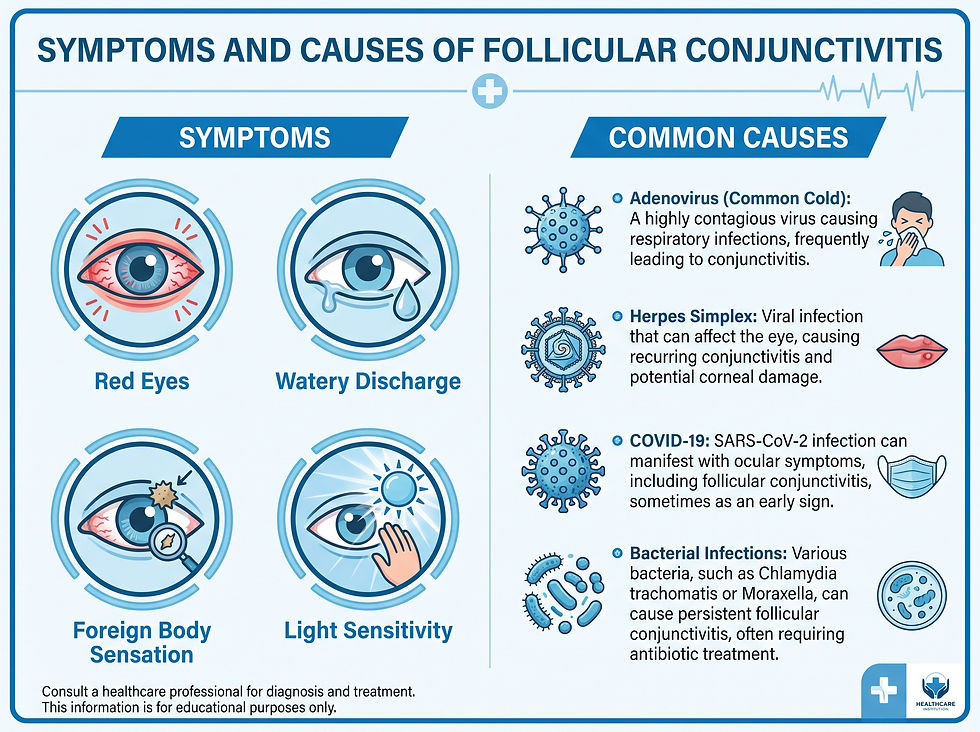
The symptoms of follicular conjunctivitis are often uncomfortable and can interfere with daily activities. While the severity varies based on the cause, most patients report a combination of the following:
Physical Changes in the Eye
Redness: The white of the eye appears bloodshot or pink. [1]
Swollen Eyelids: Also known as blepharitis, the lids may appear puffy or inflamed. [1]
Watery Eyes: Excessive tearing or watery discharge (epiphora). [1]
Follicle Formation: Small, pale elevations on the inner eyelid surface, visible to a provider. [1]
Sensory Discomfort
Foreign Body Sensation: A persistent feeling that something is stuck under the eyelid. [1]
Burning or Itching: Intense irritation or a stinging sensation in the eyes. [1]
Light Sensitivity: Discomfort when exposed to bright lights (photophobia). [1]
Eye Pain: General aching or sharp pain in the affected eye(s). [1]
Causes and Types
The vast majority of follicular conjunctivitis cases are viral, though other factors can trigger the immune response. Understanding the specific cause is critical for determining the appropriate treatment path.
Viral and Bacterial Infections
Adenovirus: The most frequent cause, often associated with respiratory infections. [1]
Herpes Simplex and Zoster: Viruses that cause cold sores and shingles can infect the eye. [1]
COVID-19: The SARS-CoV-2 virus can present as follicular conjunctivitis. [1]
Chlamydia: A bacterial infection that can spread to the eyes, leading to chronic symptoms. [1]
Allergies and Toxins
Allergens: Pollen, pet dander, and mold can trigger a follicular response in sensitive individuals. [1]
Toxic Reaction: An allergic reaction to specific eye drops or medications, known as toxic follicular conjunctivitis. [1]
Classification by Duration
Type | Duration | Characteristics |
Acute | < 3-4 weeks | Most common (80%); often self-limiting and viral. |
Chronic | > 4 weeks | Often requires treatment; linked to chlamydia or toxins. |
Diagnosis and Treatment
A healthcare provider or eye care specialist typically diagnoses the condition through a comprehensive eye exam. They will examine the eyelid's inner surface for the presence of follicles and review the patient's medical history for recent illnesses.
Treatment Options
Treatment is tailored to the underlying cause. While many acute cases resolve on their own, others require medical intervention to prevent complications.
Antiviral Medications: Prescribed for specific viral infections like herpes or shingles. [1]
Antibiotics: Necessary if a bacterial infection like chlamydia is detected. [1]
Corticosteroids: Used to reduce severe inflammation and swelling. [1]
Supportive Care: Over-the-counter eye drops for lubrication and cool compresses for comfort. [1]
Prevention and Outlook
The outlook for follicular conjunctivitis is generally excellent, with most patients returning to normal within a few weeks. However, because many causes are highly contagious, strict hygiene is required to prevent outbreaks.
Prevention Checklist
Hand Hygiene: Wash hands frequently and avoid touching or rubbing the eyes. [1]
No Sharing: Avoid sharing towels, makeup, or contact lens supplies with others. [1]
Sexual Health: Use protection (condoms/dental dams) to prevent the spread of STIs that can affect the eyes. [1]
Medication Awareness: Inform your doctor if you experience eye irritation after starting new drops. [1]

FAQ: Frequently Asked Questions
Is follicular conjunctivitis contagious?
Yes, most cases caused by viruses or bacteria are highly contagious and can spread through direct contact or shared items. [1]
How long does it take to clear up?
Acute cases usually resolve within two to three weeks, while chronic cases can last a month or longer without treatment. [1]
Can I wear contact lenses with follicular conjunctivitis?
No. You should stop wearing contacts until your eye care specialist confirms the infection has cleared to avoid further irritation or damage. [1]
Is it the same as a regular pink eye?
It is a specific type of pink eye. The main difference is the presence of swollen immune follicles on the inside of the eyelids. [1]
Can I treat follicular conjunctivitis at home?
While you can use cool compresses for comfort, you must see a doctor to determine if the cause is a serious virus that requires prescription medication. [1]
Does it cause permanent vision loss?
In rare cases, untreated severe viral infections (like herpes) can cause permanent damage, but most cases resolve without affecting vision. [1]
Why do my eyes feel like they have sand in them?
This is known as a foreign body sensation, caused by the swollen follicles rubbing against the surface of your eye. [1]
Can children get follicular conjunctivitis?
Yes, it is common in children, often spreading quickly in schools or daycare centers due to viral infections. [1]
What is "toxic" follicular conjunctivitis?
This occurs when the eye has an allergic or inflammatory reaction to a medication, most commonly long-term eye drops. [1]
Should I stay home from work or school?
Yes, if your infection is contagious, you may need to stay home for several days until the risk of spreading it has passed. [1]
Can chlamydia cause this condition?
Yes, chlamydia is a common cause of chronic follicular conjunctivitis and requires specific antibiotic treatment. [1]
What do the "follicles" look like?
They appear as small, pale, or yellowish bumps on the red, inflamed tissue of the inner eyelid. [1]
Is light sensitivity normal?
Yes, photophobia is a common symptom of the inflammation associated with this condition. [1]
Can I use old eye drops to treat it?
No. Never use old or someone else's eye drops, as they may be contaminated or the wrong medication for your specific cause. [1]
When should I see a doctor immediately?
Seek immediate care if you experience severe eye pain, sudden vision changes, or if symptoms do not improve after a few days. [1]
References
Cleveland Clinic. Follicular Conjunctivitis. (2024, October 8). https://my.clevelandclinic.org/health/diseases/follicular-conjunctivitis
American Academy of Ophthalmology. Conjunctivitis (Pink Eye). (2023).
CDC. Conjunctivitis (Pink Eye) Prevention. (2024).
Medical Disclaimer: The information provided in this article is for educational purposes only and should not be considered medical advice. If you experience persistent eye redness, pain, or vision changes, consult a qualified healthcare provider or eye care specialist for diagnosis and treatment.
Comments