Fibrous Papule of the Nose: Symptoms, Causes, Diagnosis, Removal and Outlook — What You Need to Know

Updated: 2 days ago
Medically reviewed by Dr. Baraa Alnahhal, MD · Last reviewed: September 2026
TL;DR: The Essentials
What it is: A small, firm, noncancerous (benign) bump that typically appears on or around the nose.
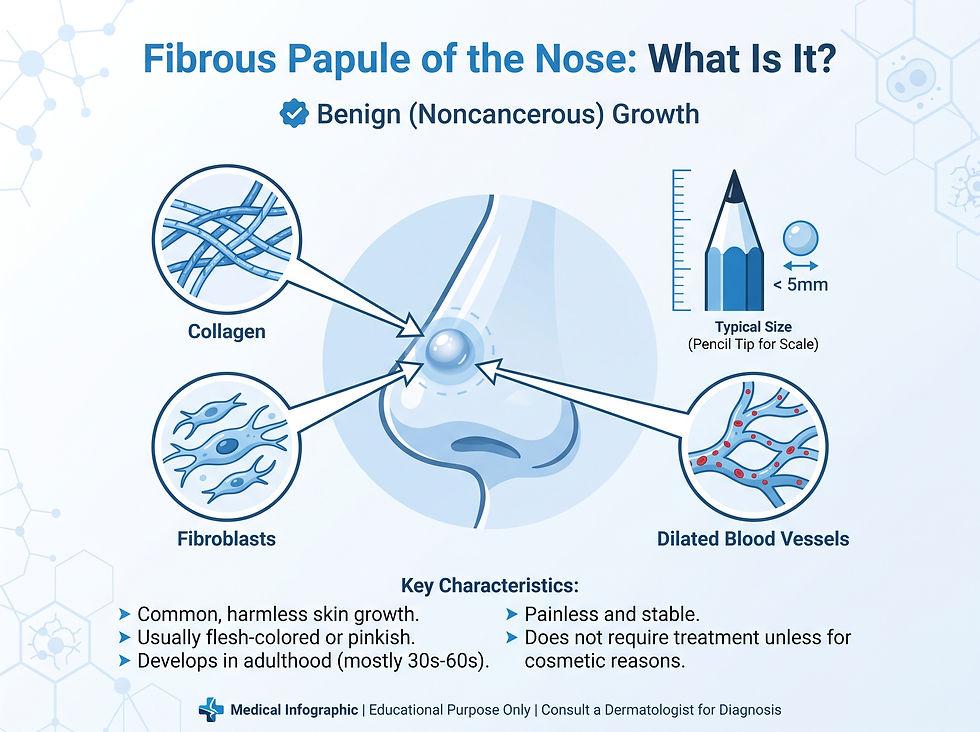
Appearance: Smooth, shiny, dome-shaped, and usually less than 5 millimeters in diameter.
Cause: An unknown overgrowth of blood vessels, connective tissue cells (fibroblasts), and collagen.
Risk Factors: Most common in adolescents during puberty; multiple papules may indicate underlying genetic syndromes.
Treatment: Medically unnecessary as they are harmless, but can be removed via excision, cryotherapy, or laser for cosmetic reasons.
Outlook: Excellent; they are not cancerous, do not lead to cancer, and rarely return after professional removal.
Quick Answer: What is a fibrous papule of the nose?
A fibrous papule of the nose is a small, firm, and harmless skin growth that typically develops on the tip or sides of the nose. These bumps are benign (noncancerous) and are composed of an overgrowth of blood vessels, collagen, and fibroblast cells. They are usually skin-colored, white, red, or brown, and measure less than 5 millimeters. While they can look similar to certain types of skin cancer, they are entirely harmless and do not cause symptoms like pain or itching. Most people only seek removal if they are unhappy with the appearance of the bump on their face.
Important: When to See a Healthcare Provider
While fibrous papules are harmless, you should consult a dermatologist or healthcare provider if you notice any of the following:
A new bump on your skin that is changing in size, shape, or color.
A growth that bleeds, crusts, or refuses to heal.
A bump that becomes painful, itchy, or swollen.
Multiple bumps appearing suddenly, which may require screening for genetic conditions.
You want a bump removed for cosmetic reasons to ensure it is done safely and correctly.
What is a fibrous papule of the nose?
A fibrous papule of the nose is a specific type of skin growth characterized by a firm, dome-shaped bump. Although the name specifies the nose, these papules can occasionally appear on other parts of the face. In medical terms, they are sometimes referred to as solitary angiofibromas.
These growths are not a sign of a serious disease. They are made up of common skin components that have grown more than usual in a localized area. Because they are firm and persistent, they often last for months or even years without changing.
Medical Type: Benign (noncancerous) tumor
Alternative Name: Solitary angiofibroma
Common Location: Tip or sides of the nose
Composition: Blood vessels, fibroblasts, and collagen
Typical Size: Less than 5 millimeters (mm)
Symptoms: Asymptomatic (no pain or itching)
What does a fibrous papule look and feel like?
Most people first notice a fibrous papule when looking in the mirror. Because the nose is a prominent facial feature, even a small bump can be noticeable. These papules have a very distinct set of physical characteristics that help dermatologists distinguish them from other skin issues like acne or moles.
The bump is typically firm to the touch and does not feel like a fluid-filled cyst or a soft skin tag. It is usually smooth and may have a slight shine under bright light.
Shape: Dome-shaped and well-defined
Texture: Smooth, shiny, and firm
Color: Skin-colored, white, red, or brown
Diameter: Small, usually under 5 mm
Pain Level: None (unless scratched or irritated)
What causes a fibrous papule of the nose to form?
The exact reason why some people develop these overgrowths is currently unknown. Medical research has identified that the bump is caused by a localized overgrowth of three specific components within the skin: dilated blood vessels, fibroblast cells (which create connective tissue), and collagen.
This overgrowth is not caused by bacteria, viruses, or poor hygiene. It is simply a cluster of normal skin cells and tissues that have multiplied in a small area.
Dilated Blood Vessels: Provide the red or pinkish hue
Fibroblasts: Connective tissue cells that build the structure
Collagen: The protein that provides the bump's firmness
Who is at risk for developing fibrous papules?
Fibrous papules can affect individuals of any age, gender, or skin type. However, they are most frequently observed in adolescents during puberty. For most people, only a single papule develops.
If an individual develops multiple fibrous papules, it may be a sign of an underlying genetic condition. In these rare cases, the papules are a symptom of a broader syndrome that affects various systems in the body.
Tuberous Sclerosis: Can cause multiple angiofibromas on the face
Multiple Endocrine Neoplasia Type 1 (MEN1): Linked to an increased risk of multiple skin growths
Birt-Hogg-Dubé Syndrome: A rare condition that involves multiple skin bumps

How is a fibrous papule of the nose diagnosed?
A healthcare provider or dermatologist can usually diagnose a fibrous papule simply by looking at it during a physical examination. Because these papules can look similar to basal cell carcinoma (BCC), a common type of skin cancer, your provider must be certain of the diagnosis.
If there is any doubt about whether the growth is benign or cancerous, the provider may perform a skin biopsy. This involves removing a small piece of the tissue (or the entire bump) to examine it under a microscope.
Physical Exam: Visual assessment of shape, color, and texture
Medical History: Reviewing how long the bump has been present
Dermoscopy: Using a specialized magnifying tool to see skin structures
Skin Biopsy: Laboratory testing to rule out skin cancer (BCC)
How is a fibrous papule of the nose removed?
Because fibrous papules are harmless, medical treatment is not required. However, many people choose to have them removed for cosmetic reasons. It is critical that removal is performed by a professional; attempting to "pop" or cut a papule at home can lead to permanent scarring or infection.
It is also important to note that salicylic acid, a common over-the-counter acne treatment, is ineffective against fibrous papules. Since the papule is made of solid tissue and collagen rather than trapped oil and bacteria, acne medications will not work.
Excision: Cutting the papule off with a surgical scalpel
Shave Biopsy: Shaving the bump down to the level of the surrounding skin
Cryotherapy: Freezing the growth with liquid nitrogen
Laser Therapy: Using medical-grade light to vaporize the tissue
Electrosurgery: Using a specialized electric current to remove the bump

What is the difference between a fibrous papule and skin cancer?
One of the most common reasons people visit a doctor for a fibrous papule is the fear that it might be skin cancer. Specifically, basal cell carcinoma (BCC) often appears as a firm, shiny bump on the nose, making the two conditions easy to confuse.
Cancerous?: Fibrous Papule: No (Benign); Basal Cell Carcinoma (BCC): Yes (Malignant)
Growth Rate: Fibrous Papule: Very slow or stable; Basal Cell Carcinoma (BCC): Continues to grow over time
Symptoms: Fibrous Papule: None; Basal Cell Carcinoma (BCC): May itch, bleed, or form a sore
Appearance: Fibrous Papule: Smooth and shiny; Basal Cell Carcinoma (BCC): Often has a "pearly" look with visible vessels
Treatment: Fibrous Papule: Optional (Cosmetic); Basal Cell Carcinoma (BCC): Mandatory (Medical)
What is the outlook for someone with a fibrous papule?
The prognosis for a fibrous papule of the nose is excellent. These growths do not become cancerous and do not indicate any internal health problems for the vast majority of people. Once a papule is professionally removed, it is uncommon for it to return in the same spot.
In some cases, fibrous papules may even shrink or disappear on their own over several months or years, though this is not guaranteed. If you choose to leave the bump alone, it will likely remain unchanged for a long time without causing any physical harm.
A Note from the Care Team
You may wonder why you have a bump on your nose that isn't going away. A fibrous papule isn't the same as acne, so it won't resolve with the same at-home treatments. Your nose is a very prominent feature of your face, so you may not like the way this bump looks on your skin. A healthcare provider can remove this papule for you. But don't worry, it's harmless. You don't need to have a provider remove a fibrous papule unless you don't like how it looks. Let your provider know if you have any questions about how to keep your skin clear.
Conclusion: Managing Your Skin Health
A fibrous papule of the nose is a common, benign growth that serves as a reminder of how complex our skin truly is. While its appearance on the center of the face can be frustrating, knowing that it is harmless provides significant peace of mind. If the bump affects your self-confidence, modern dermatological procedures offer quick and effective removal options.
Next Steps for Managing a Nose Bump
Monitor the Growth: Keep an eye on any bump for changes in size, color, or the development of symptoms like bleeding.
Consult a Professional: Visit a dermatologist for a definitive diagnosis, especially to rule out basal cell carcinoma.
Discuss Removal: If the bump bothers you, ask your provider which removal method (laser, excision, or cryotherapy) is best for your skin type.
Frequently Asked Questions (FAQ)
What is a fibrous papule of the nose?
It is a small, firm, harmless bump made of blood vessels, collagen, and connective tissue.
Is a fibrous papule a type of cancer?
No, it is entirely benign and will not become cancerous.
Are fibrous papules common?
Yes, they are common skin growths, particularly appearing during or after puberty.
Can I have more than one fibrous papule?
Most people have only one, but having multiple papules is possible and sometimes linked to genetic syndromes.
Do fibrous papules only appear on the nose?
While most common on the nose, they can occasionally appear on other parts of the face.
Does a fibrous papule hurt?
No, they are asymptomatic and do not cause pain unless they are irritated or scratched.
How big do these bumps get?
They are usually very small, typically measuring less than 5 millimeters in diameter.
What color are they?
They can be skin-colored, white, red, or brown.
Are they soft or hard?
They are notably firm to the touch, unlike a soft skin tag.
Do they bleed?
They do not bleed on their own, but they may bleed if you scratch them.
What causes the overgrowth in a fibrous papule?
The exact cause is unknown, but it involves an overgrowth of normal skin components.
Is it caused by poor hygiene?
No, hygiene plays no role in the development of a fibrous papule.
Are they contagious?
No, you cannot spread them to others or to other parts of your own body.
Is there a genetic link?
Multiple papules can be linked to syndromes like Tuberous Sclerosis or MEN1.
Does sun exposure cause them?
There is no direct evidence that sun exposure causes fibrous papules, though sun protection is always recommended for skin health.
How do doctors know it’s not skin cancer?
They use visual exams, dermoscopy, and sometimes a biopsy to confirm it is benign.
Can I use acne cream to get rid of it?
No, salicylic acid and other acne treatments are ineffective because the bump is not a pimple.
Can I remove it at home?
No, you should never attempt to remove it yourself due to the risk of infection and scarring.
What is the best way to remove a fibrous papule?
Common professional methods include surgical excision, laser therapy, and cryotherapy.
Does removal leave a scar?
Professional removal minimizes scarring, but any procedure that breaks the skin carries a small risk.
Do they go away on their own?
They can shrink or disappear over months or years, but many remain indefinitely.
Will it grow back after removal?
It is uncommon for a fibrous papule to return once it has been professionally removed.
Do I need to cover it with a bandage?
No, unless it has been irritated or you have just had a removal procedure.
Can I wear makeup over it?
Yes, you can safely apply makeup over a fibrous papule.
Are there any foods I should avoid?
No, diet does not affect the growth or prevention of fibrous papules.
What happens if I scratch it?
It may bleed, swell, or become mildly painful, but it will not become dangerous.
Is it the same as a mole?
No, moles are made of pigment-producing cells, while papules are made of connective tissue and vessels.
How is it different from a wart?
Warts are caused by a virus (HPV) and have a different texture; fibrous papules are not viral.
Can it affect my breathing?
No, because they are small and on the surface of the skin, they do not interfere with breathing.
Should I be worried if I have one?
No, they are medically harmless and only a cosmetic concern.
Related Guides on Rinnit
References and Further Reading
Medical Disclaimer: The information provided in this article is for educational purposes only and is not intended as medical advice. Always seek the advice of your physician or other qualified health provider with any questions you may have regarding a medical condition. Never disregard professional medical advice or delay in seeking it because of something you have read in this article.
Comments