Fibrinoid Necrosis: Symptoms, Causes, Complications, Diagnosis, Treatment and Outlook — What You Need to Know

Updated: 2 days ago
Medically reviewed by Dr. Baraa Alnahhal, MD · Last reviewed: September 2026
Fibrinoid necrosis is a serious condition involving the death of cells within the lining of small blood vessels, particularly small arteries. This damage is typically triggered by an overactive immune system or extreme physical stress, such as malignant hypertension. As the vessel lining breaks down, it causes harmful inflammation and the buildup of fibrin, a protein involved in blood clotting. This process results in vascular lesions, internal bleeding, and potential organ damage. Common causes include autoimmune diseases like lupus and rheumatoid arthritis, hypertensive crises, and infections such as endocarditis. While there is no universal treatment for the necrosis itself, the underlying conditions are treatable through blood pressure management and immunosuppression. Early detection is critical, as untreated cases can lead to severe complications like kidney failure or a significantly reduced life expectancy.
Quick Answer: What is Fibrinoid Necrosis?
Fibrinoid necrosis occurs when the internal lining of small arteries is damaged and destroyed due to injury, trauma, or a lack of blood supply. This cell death is often caused by an overactive immune system that releases inflammatory substances into the blood vessels. The hallmark of the condition is the accumulation of fibrin—a protein that builds up in the damaged vessel walls, giving them a "fibrin-like" appearance under a microscope. Symptoms primarily involve various forms of bleeding, such as blood in the stool, nosebleeds, and bruising. Diagnosis requires a tissue biopsy examined by a pathologist. Treatment focuses on managing the underlying cause, such as lowering blood pressure or suppressing the immune system to prevent further vascular damage.
URGENT CARE WARNING
Fibrinoid necrosis is often a sign of a severe underlying medical crisis, such as a hypertensive emergency (blood pressure of 180/120 or higher) or a systemic autoimmune flare. If you experience sudden, unexplained internal bleeding, severe bruising, or symptoms of organ distress, seek emergency medical attention immediately. In cases of untreated malignant hypertension, life expectancy can be as short as two years without prompt intervention.
What Is Fibrinoid Necrosis?
Fibrinoid necrosis is a specific form of cell death that targets the walls of small blood vessels. It is characterized by the leakage of plasma proteins, including fibrin, into the damaged vascular tissue. This process creates distinct lesions that can disrupt blood flow and weaken the structural integrity of the circulatory system.
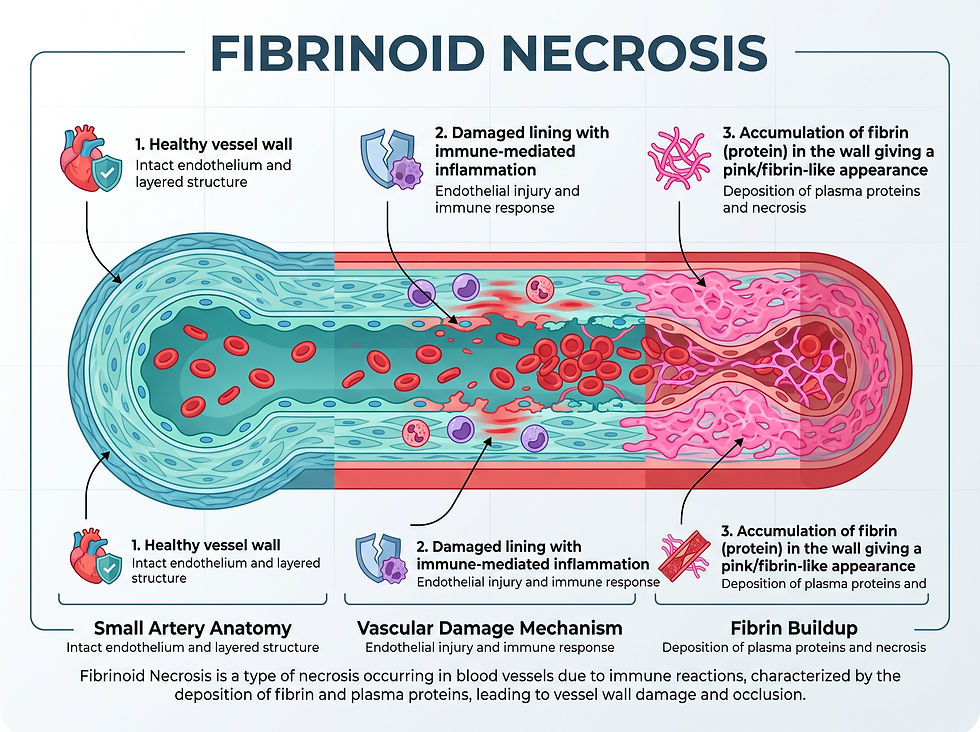
Key Facts: Fibrinoid Necrosis Overview
Primary Target: Small arteries and blood vessel linings
Mechanism: Immune-mediated inflammation or extreme pressure
Hallmark Sign: Fibrin protein buildup in vessel walls
Main Consequence: Vessel breakdown, lesions, and bleeding
Seriousness: High; indicates severe underlying disease
Causes and Risk Factors
Fibrinoid necrosis is not a standalone disease but rather a pathological response to other serious health conditions. Anything that causes significant, acute damage to the blood vessel walls can trigger this type of necrosis.
Common Causes of Vascular Damage
Hypertension: Malignant hypertension or hypertensive crisis (BP ≥ 180/120)
Autoimmune: Systemic lupus erythematosus, rheumatoid arthritis, rheumatic fever
Vasculitis: Polyarteritis nodosa, IgA vasculitis (Henoch-Schönlein purpura)
Infection: Subacute bacterial endocarditis (infection of the heart lining)
Pregnancy: Preeclampsia (high blood pressure during pregnancy)
Symptoms and Warning Signs
Because the condition involves the breakdown of blood vessels, the most prominent symptoms are related to hemorrhage and the inability of the circulatory system to contain blood within the vessels.
Signs of Vascular Breakdown
Surface Bleeding: Frequent or severe nosebleeds and bleeding gums.
Excretory Bleeding: The presence of blood in the stool or urine (hematuria).
Skin Manifestations: Unexplained or easy bruising and visible skin lesions.
Internal Distress: Signs of internal bleeding, which may manifest as pain or organ dysfunction depending on the location.
Complications and Organ Impact
The complications of fibrinoid necrosis are closely tied to the specific organ systems affected by the underlying cause. When small vessels in vital organs die, the organs themselves begin to fail.
Potential Organ Complications
Kidneys: Kidney failure (common in malignant hypertension)
Heart: Heart muscle damage or valve problems (common in lupus/endocarditis)
Brain: Stroke or neurological damage due to hypertensive crisis
Skin: Chronic lesions and tissue death
Diagnosis and Pathological Testing
Fibrinoid necrosis is diagnosed by examining tissue samples under a microscope. Pathologists look for the specific "fibrinoid" (fibrin-like) appearance that occurs when cell death and protein leakage coincide.
The Diagnostic Process
Clinical Review: Evaluation of symptoms like bleeding and high blood pressure.
Biopsy: Collection of tissue via skin shave, punch tool, or internal needle/endoscope.
Microscopy: A pathologist identifies the buildup of fibrin in the vessel walls.
Underlying Screen: Tests for autoimmune markers, blood pressure, or infections.
Treatment and Management
There is no "standard" treatment for fibrinoid necrosis itself; instead, healthcare providers must aggressively treat the condition that is causing the blood vessels to die.
Management Strategies
Bleeding Control: Providers treat active bleeding based on its location and severity in the body.
Blood Pressure Control: For hypertensive causes, medications are used to rapidly but safely lower blood pressure to under 130/80.
Immune Suppression: For autoimmune causes, medications are used to dampen the immune response and limit further inflammatory damage.
Infection Control: Antibiotics or other treatments are used if the cause is an infection like endocarditis.

Outlook and Prevention
The prognosis for individuals with fibrinoid necrosis depends entirely on the severity and manageability of the underlying disease. Early intervention is the single most important factor in improving the outlook.
Prognosis and Prevention Stats
Hypertension Risk: Life expectancy may be only 2 years if malignant HTN is untreated.
Quality of Life: Autoimmune causes can lead to chronic, life-altering complications.
Prevention: Regular check-ups to detect high blood pressure or autoimmune flares early.
Adherence: Following provider instructions for known conditions is essential.
Conclusion: A Note from the Care Team
Fibrinoid necrosis indicates that your blood vessels have sustained serious damage. The conditions that cause this process are significant and require close, expert monitoring by a healthcare provider. By seeing your doctor regularly and following a personalized treatment plan, you can effectively manage your health and prevent the most dangerous complications of vascular damage.
Next Steps for Vascular Health
Monitor Blood Pressure: Ensure your blood pressure remains within the healthy range (under 130/80).
Report Bleeding: Immediately tell your provider about any new bruising, nosebleeds, or blood in your stool or urine.
Manage Autoimmune Health: If you have lupus or RA, strictly follow your immunosuppression regimen to protect your vessels.
Frequently Asked Questions (FAQ)
What is fibrinoid necrosis?
It is a specific type of cell death that occurs in the lining of small blood vessels, usually caused by inflammation or extreme pressure.
Is fibrinoid necrosis a disease?
No, it is a pathological process or a "finding" that indicates an underlying serious condition like lupus or malignant hypertension.
What does "fibrinoid" mean?
It means "fibrin-like." It refers to the buildup of fibrin protein in the damaged walls of blood vessels.
What are the main causes of fibrinoid necrosis?
The primary causes are malignant hypertension, autoimmune diseases (lupus, RA), preeclampsia, and certain infections like endocarditis.
What is malignant hypertension?
It is a hypertensive crisis where blood pressure reaches 180/120 or higher, causing immediate damage to organs and blood vessels.
Can autoimmune diseases cause this?
Yes. Conditions like lupus and rheumatoid arthritis cause the immune system to attack the lining of blood vessels, leading to necrosis.
What are the symptoms of fibrinoid necrosis?
The main symptoms are related to bleeding, including nosebleeds, bleeding gums, blood in the stool or urine, and easy bruising.
How is it diagnosed?
It is diagnosed by a pathologist who examines a tissue biopsy under a microscope to look for fibrin buildup.
What is a biopsy?
A biopsy is a procedure where a small sample of tissue is removed from the skin or an internal organ for testing.
Is there a specific treatment for fibrinoid necrosis?
There is no standard treatment for the necrosis itself; treatment focuses on the underlying cause and managing any active bleeding.
Can fibrinoid necrosis be cured?
The vascular damage can be halted and managed by successfully treating the underlying cause, such as high blood pressure.
What happens if it is left untreated?
Untreated fibrinoid necrosis can lead to organ failure (especially kidney failure), internal hemorrhage, and a significantly shortened life expectancy.
How does it affect the kidneys?
In cases of high blood pressure, it damages the small vessels in the kidneys, which can lead to rapid kidney failure.
Is it common in pregnancy?
It can occur during preeclampsia, a serious pregnancy complication characterized by high blood pressure.
What is vasculitis?
Vasculitis is the general term for inflammation of the blood vessels, which is a common precursor to fibrinoid necrosis.
What is polyarteritis nodosa?
It is a rare form of vasculitis that causes inflammation and necrosis in small and medium-sized arteries.
Can infections cause this condition?
Yes, subacute bacterial endocarditis, an infection of the heart's lining and valves, is a known cause.
What is the outlook for someone with this condition?
The outlook depends on the cause. With prompt treatment of conditions like high blood pressure, the prognosis improves significantly.
Can I prevent fibrinoid necrosis?
Prevention focuses on managing risk factors like high blood pressure and following treatment plans for autoimmune diseases.
What is the normal range for blood pressure?
Normal blood pressure is generally considered to be under 130/80.
Why is fibrin buildup a problem?
Fibrin is a clotting protein; when it builds up inside vessel walls instead of just at a wound site, it indicates severe vascular injury.
Who is a pathologist?
A pathologist is a medical doctor who specializes in diagnosing diseases by studying cells and tissues under a microscope.
What are skin lesions?
Lesions are areas of abnormal tissue; in this condition, they represent spots where blood vessels have broken down under the skin.
Can it cause a stroke?
Yes, if the necrosis occurs in the blood vessels of the brain due to a hypertensive crisis, it can lead to a stroke.
Is fibrinoid necrosis painful?
The necrosis itself may not be felt, but the resulting internal bleeding or organ damage can cause significant pain.
How long can you live with untreated malignant hypertension?
Without treatment, the life expectancy for someone with malignant hypertension and vascular damage is approximately two years.
What medications are used?
Medications include those to lower blood pressure (antihypertensives) and those to suppress the immune system (immunosuppressants).
Can children get fibrinoid necrosis?
Yes, especially in cases of IgA vasculitis (Henoch-Schönlein purpura), which is a common form of vasculitis in children.
What should I do if I have blood in my urine?
You should contact a healthcare provider immediately, as this can be a sign of vascular damage or other serious issues.
Is follow-up care important?
Yes, regular monitoring is essential to ensure the underlying cause is controlled and to prevent further vessel death.
Related Guides on Rinnit
References and Further Reading
Cleveland Clinic: Fibrinoid Necrosis Overview (Updated 11/21/2022).
StatPearls: Systemic Lupus Erythematosus Pathophysiology (2021).
StatPearls: Necrosis Types and Mechanisms (2021).
StatPearls: Malignant Hypertension Clinical Review (2021).
Medical Disclaimer: This article is for informational purposes only and does not constitute medical advice, diagnosis, or treatment. Always seek the advice of your physician or other qualified health provider with any questions you may have regarding a medical condition.
Comments