Female Pattern Baldness: Symptoms, Causes, Stages, Diagnosis, Treatment and Prevention — What You Need to Know

Updated: 2 days ago
Medically reviewed by Dr. Baraa Alnahhal, MD · Last reviewed: September 2026
Quick Answer: What Is Female Pattern Baldness?
Female pattern baldness, medically known as androgenic alopecia or female pattern hair loss, is a common condition characterized by gradual thinning on the scalp. Unlike male pattern baldness, which often involves a receding hairline, female pattern hair loss typically begins as a widening gap at the center part and thinning throughout the top of the head. It is caused by a combination of aging, genetics, and hormonal changes, particularly the influence of dihydrotestosterone (DHT) on hair follicles. While the condition is permanent without intervention, it is treatable. Options include over-the-counter medications like minoxidil, prescription drugs like finasteride, hair transplants, red light therapy, and specialized styling techniques to restore hair density and confidence.
TL;DR: Female Pattern Hair Loss at a Glance
Female pattern baldness is the most significant cause of hair loss in women, affecting approximately 30 million individuals in the United States alone. It involves the gradual shrinking of hair follicles, leading to thinner, shorter strands that eventually stop growing altogether. While it does not impact physical health, the psychological and psychosocial effects, including stress, anxiety, and depression, can be significant. Early diagnosis through a physical exam and specialized tools like a densitometer allows for the implementation of treatments that can slow hair loss or stimulate new growth.
U.S. prevalence: affects approximately 30 million women.
Lifetime risk: impacts about 1/3 of all women at some point.
Post-menopause: affects approximately 2/3 of women.
Primary cause: genetics, aging, and hormonal changes (DHT).
Treatment status: treatable and reversible with medical intervention.

What Is Female Pattern Baldness?
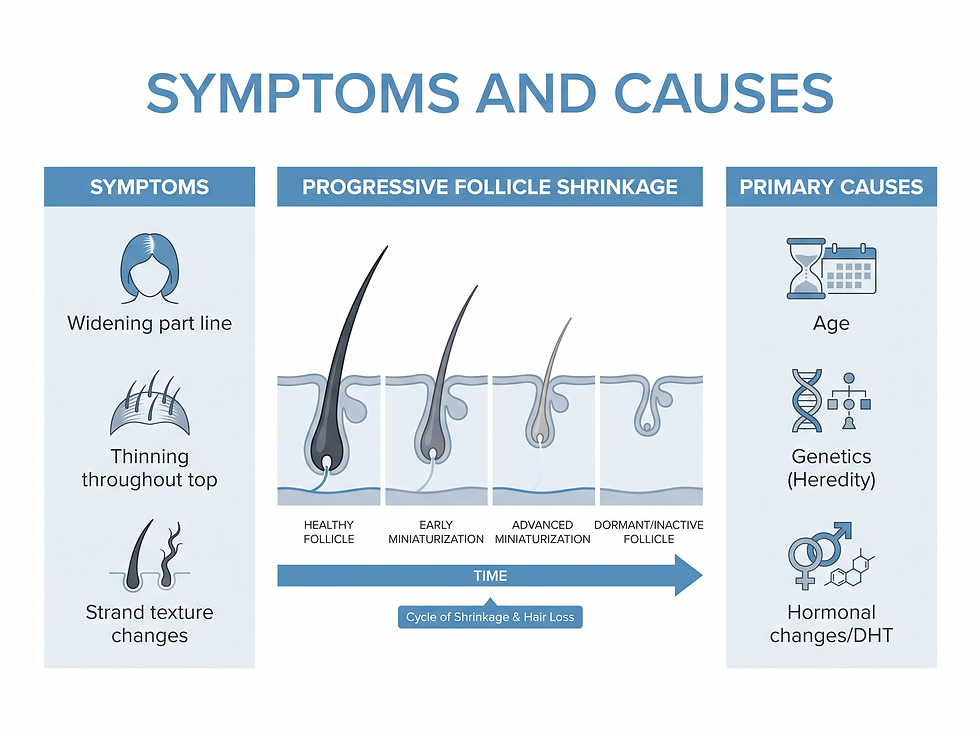
Female pattern baldness is a specific type of hair loss that primarily affects the skin covering the head (scalp). While it shares the medical name "androgenic alopecia" with male pattern baldness, the presentation in women is distinct. It is a progressive condition where hair follicles, the small, tube-like structures that grow hair, gradually shrink over time. As these follicles diminish in size, the individual hairs they produce become thinner and shorter until they eventually cease to grow entirely.
The Sinclair Scale: 5 Stages of Hair Loss
Stage 1: little to no visible hair loss.
Stage 2: a slight gap begins to appear in the center hair part.
Stage 3: a wider gap in the center part with thinning on both sides.
Stage 4: bald spots begin to appear toward the front of the hairline.
Stage 5: advanced hair loss throughout the top of the scalp.
What Are the Symptoms of Female Pattern Baldness?
The most recognizable sign of female pattern baldness is a change in the appearance of the hair part. Because the condition begins in the top-middle portion of the head, it is most visible where the hair naturally separates. Even for those who do not wear a center part, changes in hair texture and density near the center of the head will eventually become apparent as the condition progresses.
Part line changes: a noticeable widening of the center hair part.
Thinning patterns: loss of density on either side of the part line.
Scalp coverage: thinning or hair loss throughout the top of the head.
Hair texture: individual strands becoming thinner, shorter, or finer.
Advanced signs: bald spots appearing toward the front of the scalp.
What Causes Female Pattern Baldness?
While the exact trigger is not always clear, medical researchers have identified three primary contributing factors. The condition is largely driven by biological processes rather than external factors like hygiene or hair products.
Aging: the risk increases significantly as women age.
Hormones: drops in hormone levels after menopause affect DHT.
DHT influence: dihydrotestosterone is linked to follicle shrinkage.
Genetics: higher risk if first-degree relatives have hair loss.
Menopause: two-thirds of women experience thinning after this transition.
How Is Female Pattern Baldness Diagnosed?
Healthcare providers can often recognize female pattern baldness through a simple physical examination of the scalp. However, they may use specialized tools to confirm the diagnosis and rule out other potential causes of hair loss, such as infections or skin diseases.
Physical exam: assessing the width of the part and thinning areas.
Medical history: reviewing family history and onset of symptoms.
Densitometer: measuring the thickness of individual hair follicles.
Scalp biopsy: checking for skin diseases or underlying conditions.
Blood tests: ruling out hormonal imbalances or nutritional deficiencies.
Hair lab analysis: examining hair samples for signs of infection.
How Is Female Pattern Baldness Treated?
If left untreated, female pattern baldness is permanent. However, multiple medical and styling interventions can stop the progression and, in many cases, help regrow lost hair. Treatment effectiveness varies by individual, and healthcare providers often recommend a combination of approaches.
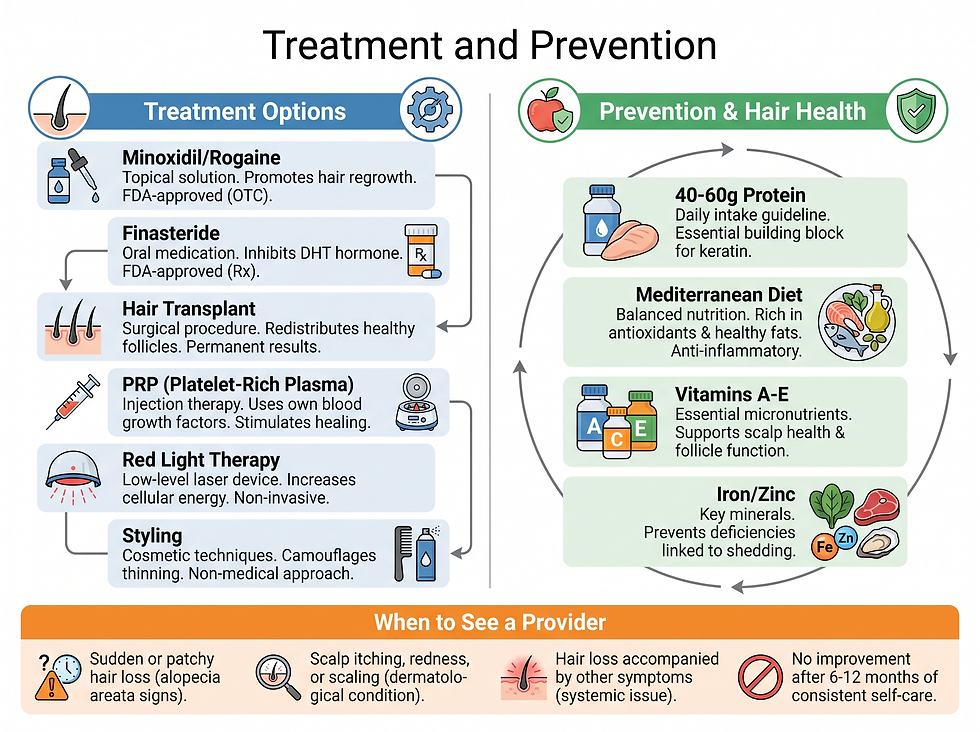
Topical medication: minoxidil (Rogaine®) applied directly to the scalp.
Oral medication: prescription finasteride (Propecia®) to block DHT.
Specialized wash: ketoconazole 2% shampoo used with other medications.
Hair transplant: moving healthy follicles to thinning or bald areas.
PRP therapy: injecting processed blood to stimulate growth.
Red light therapy: using low-wavelength light to improve follicle health.
Styling aids: wigs, hair weaves, and specific camouflage styles.
Can Female Pattern Baldness Be Prevented?
There is no known way to completely prevent the genetic or age-related onset of female pattern baldness. However, maintaining overall hair health through nutrition can support the follicles and potentially minimize the impact of thinning.
Protein intake: 40 to 60 grams daily (crucial for hair structure).
Dietary pattern: following a Mediterranean diet rich in fruits and protein.
Vitamin support: ensuring adequate levels of vitamins A, B, C, D, and E.
Mineral balance: monitoring iron and zinc levels to support growth.
Scalp care: treating infections early to prevent secondary loss.
What Is the Outlook for Female Pattern Baldness?
The prognosis for female pattern baldness depends largely on how early treatment begins. While the condition is progressive and permanent without medical intervention, many women successfully manage the thinning through a combination of medication and styling. It is important to note that many individuals are comfortable with their appearance and choose not to seek treatment. However, for those who experience emotional distress, seeking support from both a medical provider and a mental health professional is highly recommended.
When to See a Healthcare Provider
You should consult a healthcare provider or a dermatologist as soon as you notice:
A sudden increase in hair shedding or thinning.
A noticeable widening of your hair part.
Changes in hair texture that make it feel finer or shorter.
Significant emotional stress, anxiety, or depression related to hair loss.
Signs of scalp infection, such as redness, itching, or sores.
Female pattern baldness is a common condition that affects many women after menopause. Many with female pattern baldness accept it as part of the aging process and don’t see a healthcare provider. However, it can negatively affect your mental health. Reach out to your healthcare provider as soon as you notice signs of female pattern baldness, especially if it causes stress, anxiety or depression. Medications and treatments are available that can stop or reverse female pattern baldness.
Conclusion and Next Steps
Female pattern baldness is a natural but often distressing part of the aging process for millions of women. By understanding the stages of the Sinclair scale and recognizing the early signs of a widening part, you can take proactive steps to manage the condition. Whether you choose medical treatment to regrow hair or styling techniques to maintain your confidence, support is available.
Recommended next steps:
Schedule a scalp evaluation: consult a dermatologist to confirm the diagnosis and measure follicle thickness with a densitometer.
Review your nutrition: ensure you are meeting the 40–60 gram daily protein requirement and consider a Mediterranean-style diet.
Discuss treatment options: talk to your provider about starting topical minoxidil or exploring prescription options like finasteride.
Frequently Asked Questions
What is the difference between female pattern baldness and telogen effluvium?
Telogen effluvium is usually temporary hair loss triggered by sudden stress or hormonal changes, whereas female pattern baldness is a gradual, permanent thinning caused by genetics and aging.
Does female pattern baldness affect the hairline?
While it primarily causes thinning at the top and center of the head, advanced stages (Stage 4 and 5) can involve bald spots toward the front of the hairline.
Is female pattern baldness reversible?
Yes, with proper treatment such as minoxidil or finasteride, the condition can be reversed or slowed, though it will not grow back on its own without intervention.
How common is this condition in younger women?
While most common after menopause, female pattern baldness can affect women in their 20s and 30s, especially if there is a strong family history of hair loss.
What is the Sinclair scale?
The Sinclair scale is a five-stage system used by healthcare providers to categorize the severity of female pattern hair loss, ranging from no loss to advanced balding.
Does dihydrotestosterone (DHT) cause hair loss in women?
Yes, medical experts believe there is a strong link between DHT levels and the shrinking of hair follicles in women, particularly after the hormonal shifts of menopause.
Can a Mediterranean diet help with hair loss?
Yes, the Mediterranean diet is rich in fruits, vegetables, and proteins that provide the necessary nutrients to support hair follicle health and minimize loss.
How much protein do I need for healthy hair?
You generally need between 40 and 60 grams of protein per day to maintain the tube-like structures of the hair follicles and promote growth.
What is a densitometer?
A densitometer is a specialized medical tool used by dermatologists to measure the thickness and density of hair follicles on the scalp.
Are wigs and hair weaves recommended?
Yes, for many women, styling techniques like wigs, weaves, or specific haircuts are effective ways to manage the appearance of thinning hair.
Can red light therapy really regrow hair?
Low-wavelength red light therapy is a clinically recognized treatment that can improve follicle health and stimulate hair growth in some individuals.
Is minoxidil safe for all women?
Minoxidil is generally the first course of treatment and is considered safe, but you should always consult a provider to ensure it is appropriate for your specific health profile.
What happens if I stop using Rogaine®?
If you stop using minoxidil (Rogaine®), any hair that regrew due to the medication will likely be lost, and the progression of female pattern baldness will resume.
Does female pattern baldness cause physical pain?
No, the condition itself is painless. If you experience scalp pain, it may be a sign of a different condition or infection.
Can genetics come from either side of the family?
Yes, female pattern baldness is hereditary and can be inherited from either the mother's or father's side of the family.
Is a scalp biopsy always necessary?
No, a biopsy is usually only performed if the healthcare provider suspects the hair loss is caused by a skin disease rather than pattern baldness.
Can stress make female pattern baldness worse?
While stress is the primary cause of telogen effluvium, it can exacerbate the emotional impact and potentially accelerate the thinning process in pattern baldness.
What is the best vitamin for hair growth?
A balance of vitamins A, B, C, D, and E, along with minerals like iron and zinc, is essential for optimal hair health.
How long does a hair transplant last?
Hair transplants are generally considered a long-term solution because the moved follicles are typically resistant to the shrinking process.
Can ketoconazole shampoo treat baldness?
Ketoconazole 2% shampoo is often used as a supportive treatment alongside other medications to help manage the scalp environment and support growth.
Why does hair thinning increase after menopause?
The drop in estrogen and progesterone levels after menopause allows androgens like DHT to have a more significant impact on the hair follicles.
Can I still dye my hair if I have thinning?
Yes, you can generally continue to dye your hair, though you should be gentle to avoid further breakage of the already thinning strands.
Does wearing a hat cause female pattern baldness?
No, wearing hats does not cause or worsen female pattern baldness; it is driven by internal biological and genetic factors.
How soon will I see results from treatment?
Most hair loss treatments require at least three to six months of consistent use before noticeable results in regrowth or density appear.
Is female pattern baldness the same as alopecia areata?
No, alopecia areata is an autoimmune condition that causes patchy hair loss, whereas female pattern baldness is a gradual thinning at the top of the head.
Can pregnancy cause female pattern baldness?
Pregnancy-related hair loss is usually a form of telogen effluvium (temporary shedding), whereas pattern baldness is a separate, progressive condition.
Should I see a mental health professional for hair loss?
If the hair loss is causing significant anxiety, depression, or stress, speaking with a therapist can be a vital part of your overall management plan.
What is the most common age for onset?
Most women begin to notice the early stages of thinning after menopause, though it can begin at any age after puberty.
Are there any surgical options besides transplants?
Hair transplants are the primary surgical intervention for pattern baldness, though other scalp procedures may exist for different types of hair loss.
Can iron deficiency look like pattern baldness?
Yes, iron deficiency can cause thinning that mimics pattern baldness, which is why blood tests are often used during the diagnostic process.
Sources and External References
Medical Disclaimer: This article is for informational purposes only and does not constitute medical advice. Always seek the advice of your physician or other qualified health provider with any questions you may have regarding a medical condition. Never disregard professional medical advice or delay in seeking it because of something you have read in this article.
Comments