Eustachian Tube Balloon Dilation: A Minimally Invasive Treatment for Ear Pressure

Updated: 17 minutes ago
Medically reviewed by Dr. Baraa Alnahhal, MD · Last reviewed: September 2026
Quick Answer:
Eustachian tube balloon dilation is a clinical procedure used to open blocked eustachian tubes that do not respond to medical therapy. During the 10-to-15-minute process, an ear, nose, and throat (ENT) specialist guides a balloon catheter through the nose into the affected tube. The balloon is briefly inflated to expand the passageway, improving ear pressure regulation and fluid drainage. Most patients return home the same day with minimal downtime.
TL;DR: Balloon Dilation at a Glance
Eustachian tube balloon dilation is a minimally invasive procedure designed to treat chronic obstructive eustachian tube dysfunction (ETD). By using a small, saline-inflated balloon to gently expand the eustachian tube, specialists can restore proper pressure regulation and fluid drainage in the middle ear. This procedure offers a quick recovery and serves as an effective alternative to traditional ear surgeries.
What Is Eustachian Tube Dysfunction?
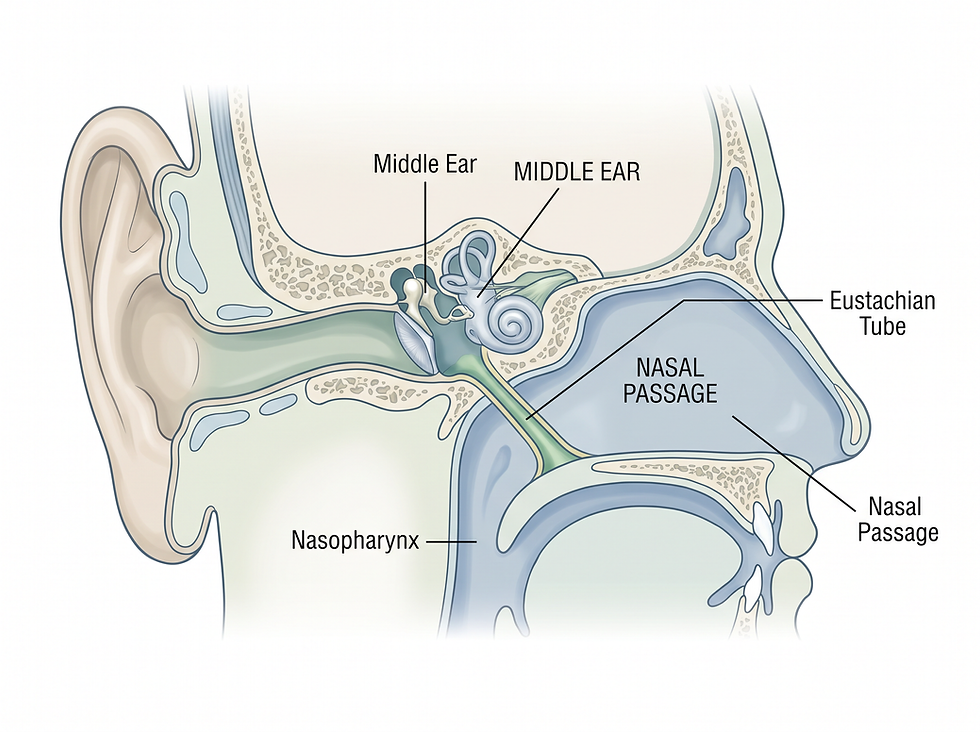
Eustachian tube dysfunction occurs when the tiny passages connecting the middle ear to the back of the throat become inflamed or blocked. These tubes are essential for maintaining equalized air pressure and draining natural fluids from the ear. When they fail to open properly, individuals often experience ear pain, a feeling of fullness, muffled hearing, or dizziness.
The Procedure Overview
The dilation procedure is typically performed in an outpatient setting by a specialized surgeon. It is specifically recommended for chronic obstructive ETD that has not improved with standard medical treatments like nasal sprays or decongestants. The goal is to physically widen the tube's opening by applying gentle pressure to the surrounding cartilage.
Feature | Details |
Specialist | Ear, Nose, and Throat (ENT) Surgeon |
Duration | 10 to 15 minutes |
Anesthesia | Local or General |
Incision | None (Minimally Invasive) |
Step-by-Step Clinical Process
Depending on the patient's needs, the procedure may be performed under local numbing or general anesthesia. The clinical steps are precise and designed to minimize discomfort while maximizing the opening of the airway.
Endoscopic Guidance: The surgeon inserts a thin, flexible tube with a camera (endoscope) through the nostril to visualize the opening of the eustachian tube.
Catheter Placement: A small catheter containing a deflated balloon is guided through the nasal passage and into the eustachian tube.
Balloon Inflation: Saline is used to expand the balloon to a diameter of approximately 3 to 6 millimeters.
Dilation Period: The balloon remains inflated for about two minutes to apply steady pressure to the tube walls.
Removal: The saline is withdrawn, and the catheter and endoscope are removed.

Clinical Benefits and Risks
This procedure is widely recognized for its high success rate in restoring ear function. However, as with any medical intervention, patients should be aware of both the potential outcomes and the associated risks.
Category | Potential Outcomes |
Benefits | Restored pressure regulation, improved fluid drainage, vertigo relief, and avoidance of major surgery. |
Common Risks | Nosebleeds, temporary infection, or failure to fully open the blocked tube. |
Rare Risks | Ear fullness (autophony), facial swelling due to air buildup, or injury to nearby blood vessels. |
Recovery and Aftercare
Recovery from eustachian tube balloon dilation is generally rapid. Patients who receive local anesthesia can often leave the facility immediately, while those under general anesthesia require a short monitoring period. A nasal spray is typically prescribed to maintain moisture and support healing within the nasal passages.

Most patients experience a stuffed or sore nose for one to two days. About a week after the procedure, healthcare providers may recommend performing Valsalva maneuvers (gently pushing air against closed nostrils and mouth) to help equalize pressure in the middle ear.
Conclusion
Eustachian tube balloon dilation represents a significant advancement in treating chronic ear pressure issues. By providing a minimally invasive way to physically restore the function of the eustachian tubes, it offers long-term relief for patients who previously had few options beyond traditional surgery.
Call to Action
If you are experiencing persistent ear fullness, muffled hearing, or chronic earaches that have not responded to over-the-counter treatments, consult with an ear, nose, and throat specialist. A professional evaluation can determine if balloon dilation is the right solution to restore your hearing health and comfort.
Frequently Asked Questions
1. What is eustachian tube balloon dilation?
It is a minimally invasive procedure that uses an inflated balloon to open blocked eustachian tubes.
2. Is this procedure a type of surgery?
While performed by a surgeon, it is considered a minimally invasive alternative to traditional ear surgery because it requires no incisions.
3. How long does the procedure take?
The entire process usually takes between 10 and 15 minutes.
4. Will I be awake during the dilation?
The procedure can be performed under either local anesthesia (awake) or general anesthesia (asleep).
5. Is the procedure FDA-approved?
Yes, it has received U.S. Food and Drug Administration approval for treating obstructive eustachian tube dysfunction.
6. How long is the recovery period?
Most patients feel back to normal within one to two days, though some nasal stuffiness is common initially.
7. When can I return to work?
Most people can return to their normal routine the day after the procedure.
8. What is the success rate?
Clinical studies have concluded that the procedure is an effective and reliable treatment for chronic ETD.
9. Can both ears be treated at once?
Yes, if both eustachian tubes are affected, the surgeon can perform the dilation on both sides during the same session.
10. What is a Valsalva maneuver?
It is a technique where you hold your nose and mouth closed while gently pushing air out to equalize ear pressure.
11. Are there any age restrictions?
The procedure is used for both adults and children, depending on the specific clinical situation.
12. Will my hearing improve immediately?
While some notice relief quickly, full benefits are often realized as the inflammation subsides during the first week.
13. What are the most common side effects?
Minor nosebleeds and temporary nasal soreness are the most frequently reported side effects.
14. Is the procedure painful?
Anesthesia is used to ensure the patient is comfortable; most report only a sensation of pressure rather than sharp pain.
15. What if the procedure doesn't work?
If the blockage persists, your ENT specialist will discuss alternative surgical or medical management options.
Additional Resources
Related reading on Rinnit:
References
Medical Disclaimer
The information provided is for educational purposes only and should not be used as a substitute for professional medical advice, diagnosis, or treatment. Always seek the advice of your physician or other qualified health provider with any questions you may have regarding a medical condition.
Comments