Dysphoric Milk Ejection Reflex (D-MER): Symptoms, Causes, Coping Strategies and When to Get Help

Updated: 2 days ago
Medically reviewed by Dr. Baraa Alnahhal, MD · Last reviewed: September 2026
Quick answer
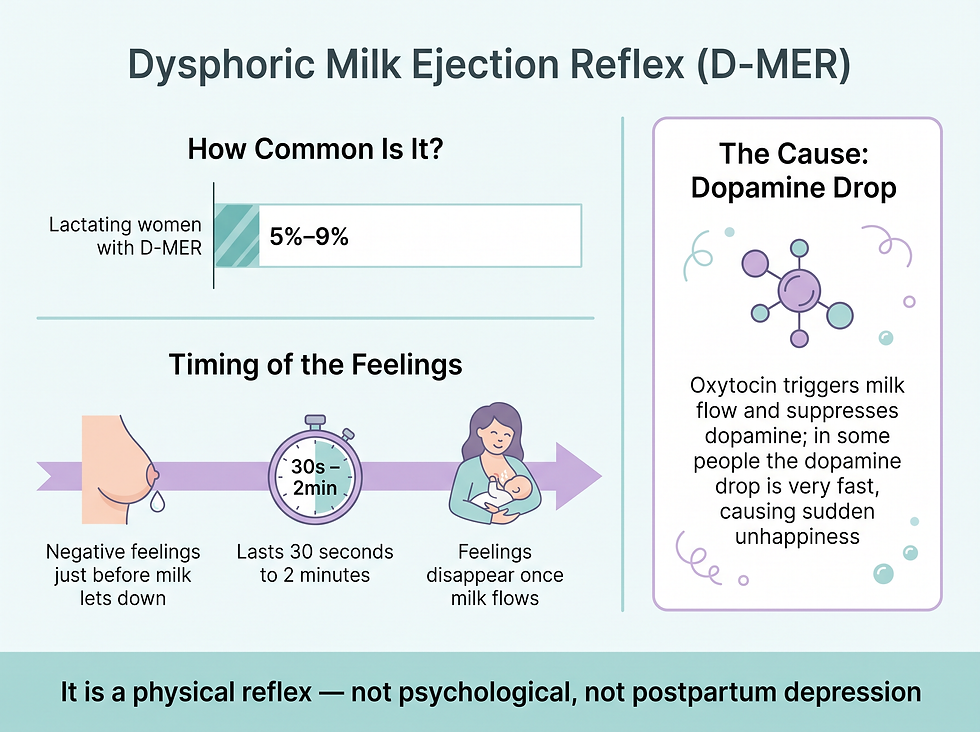
Dysphoric milk ejection reflex (D-MER) is a condition affecting women who breastfeed or pump milk. It causes sudden, intense negative emotions (sadness, hopelessness, agitation or dread) that arrive just before milk lets down and disappear within about a minute or two after milk begins to flow. It is driven by a rapid drop in dopamine, a mood-related hormone, and is a physical reflex, not a psychological problem or a sign of postpartum depression. There is no cure, but coping strategies such as skin-to-skin contact, deep breathing, relaxation, distraction and support groups help most people manage symptoms, and D-MER usually resolves within about three months.
TL;DR
D-MER affects women who breastfeed or pump milk. It causes sudden and intense negative emotions just before milk lets down, or releases. The episode is quick, lasting only a minute or two, and the negative feelings disappear once milk begins to flow.
D-MER is a reflex the person cannot control. Research is limited but suggests it is hormonally driven, specifically by an abrupt decrease in dopamine, the hormone associated with reward and mood. It is physical, not psychological, has nothing to do with not wanting to breastfeed or nipple pain, and is not the same as postpartum depression, though the two can coexist.
What this guide can and cannot tell you: Research on D-MER is still limited and evolving. The prevalence estimate below comes from a single study cited by the source page, and there is no official diagnostic test. All figures here reflect only what the source page reports; no additional statistics are included.
Key fact | What the evidence shows |
Prevalence | One study estimates 5% to 9% of lactating women experience D-MER |
Timing | Occurs just before milk lets down; feelings vanish once milk flows |
Duration of feelings | Anywhere from 30 seconds to two minutes |
Cause | An abrupt decrease in dopamine triggered as oxytocin suppresses it |
Outlook | For most, resolves within about three months, getting less severe as the child gets older |
Prevention | Not preventable; support is available and nothing the person did caused it |

What is dysphoric milk ejection reflex (D-MER)?
Dysphoric milk ejection reflex, or D-MER, is a condition that affects women who breastfeed or pump milk. It causes sudden and intense negative emotions just before milk lets down, or releases. It is quick and lasts just a minute or two, but it can cause intense unhappiness (dysphoria) and other unpleasant emotions. It can also happen if the breasts accidentally have a let down at any other time, which is common during lactation.
As the name suggests, this condition is a reflex and something that cannot be controlled. Research is limited, but suggests it is hormonally driven, related to the chemicals in the body. It is physical, not psychological, and has nothing to do with not wanting to breastfeed or with having nipple pain. Rather, it is the body reacting to the release of milk due to a sudden decrease in specific hormones.
Treatment for D-MER involves using different coping strategies to promote relaxation and calming thoughts. Often, people find they are able to manage symptoms after several weeks.
How common is D-MER?
Researchers are still learning more about D-MER. One study estimates that between 5% and 9% of lactating women experience D-MER. It is unrelated to postpartum depression (PPD) and postpartum anxiety, although women may have D-MER in addition to those conditions.
What are the symptoms of D-MER?
There are several common symptoms of D-MER, but all revolve around negative thoughts. The negative feelings come quickly and leave quickly, lasting anywhere from 30 seconds to two minutes. They occur only just before milk lets down. After milk begins to flow, the negative emotions disappear.
Symptom | Description |
Sadness or hopelessness | Sudden low mood just before milk lets down |
Self-hate or low self-esteem | Intense negative feelings about oneself |
Sinking feeling or dread | A sinking feeling in the stomach or feelings of dread |
Anger or agitation | Anger, sadness or agitation that appears abruptly |
Anxiety or irritability | Anxiety or irritability tied to the let-down moment |
D-MER has nothing to do with nipple pain, engorgement or other irritations associated with breastfeeding or pumping. However, the feelings may be so intense that they lead a person to stop breastfeeding or pumping.
When do the feelings happen and disappear?
D-MER only occurs just before milk lets down during feedings or pumping sessions. The negative feelings are temporary and subside once prolactin and oxytocin levels return to normal. Most women report their mood stabilizes again within minutes.
Can D-MER cause severe thoughts?
It is important to note that some symptoms are severe and may lead to suicidal thoughts. If you experience thoughts of wanting to hurt yourself or others, please seek medical attention immediately. People with postpartum depression may find it harder to manage symptoms of D-MER.
What causes D-MER?
The dopamine drop: why D-MER happens
Little is known about the condition. But most studies show that hormones (specifically, an abrupt decrease in a hormone called dopamine) cause D-MER. Dopamine is a hormone associated with reward and mood. Many studies show low dopamine levels can have a negative effect on mood and emotions.
The hormonal chain works like this: when a person breastfeeds, the body releases prolactin (a hormone necessary for milk production) and oxytocin. Oxytocin is the hormone that triggers the flow, or ejection, of milk from the breasts when the baby suckles or pumping begins. Oxytocin suppresses dopamine, which means dopamine levels decrease. For reasons researchers do not completely understand, some people's dopamine levels drop very quickly and cause a sudden feeling of unhappiness and other negative emotions. This is D-MER.
Hormone | Role in D-MER |
Dopamine | Mood and reward hormone; drops abruptly at let-down, triggering negative emotions |
Prolactin | Necessary for milk production; released during breastfeeding |
Oxytocin | Triggers milk flow (ejection); suppresses dopamine during let-down |
Is D-MER psychological or physical?
It is important to remember that D-MER is a physical response and not a psychological response. It does not mean a person is depressed or angry at their baby or that they hate breastfeeding. If you think you have D-MER, talking to a healthcare provider, midwife or lactation consultant can help.
How is D-MER diagnosed?
There is not a lot of research about D-MER, so there is not an official way to diagnose it. A healthcare provider will talk to the person about their symptoms, when they feel them and how intense they are. D-MER only occurs during feedings or pumping sessions and goes away shortly after. Describing the symptoms and when they happen can help the provider understand what is going on.
How is D-MER managed and treated?
What are the coping strategies for D-MER?
There is not a treatment for D-MER because researchers do not fully understand it yet. Managing symptoms and finding ways to cope are both options to manage D-MER. The most common techniques are:
Coping strategy | How it helps |
Increase skin-to-skin contact | Bringing the baby closer during breastfeeding can lower cortisol levels and decrease heart rate, almost like a calming effect |
Practice meditation or deep breathing | Relaxation lowers anxiety and reduces stress; breathe in through the nose and out through the mouth |
Find other ways to relax | A massage, listening to music or soaking in a warm tub just before feedings can help relax and calm you |
Distract yourself | Eat, watch TV or do other activities during milk let-down as a distraction |
Find support | Seek support from a partner, friend or online support group: people who will listen, talk and care for you |
How long does D-MER last?
It varies. For most people, D-MER resolves within about three months, getting less severe as the child gets older. But there have been cases where a person experiences D-MER until they are done breastfeeding.
Is D-MER a sign of postpartum depression?
No, D-MER is not a sign of postpartum depression or a postpartum mood disorder. While some of the symptoms overlap, D-MER comes and goes quickly and is specific to when milk is about to release. However, it is possible to have both D-MER and a postpartum mood disorder. If negative thoughts and emotions intensify or occur at times other than when nursing or pumping, speak with a healthcare provider.
Can D-MER be prevented?
No, D-MER cannot be prevented. However, it is important to know that support is available and that nothing the person did caused the condition.

How do you take care of yourself with D-MER?
While some may not understand it, D-MER is a real condition. Fortunately, it is temporary and there are methods to help cope. Following the techniques above helps manage symptoms of D-MER. Sometimes, just knowing you have a real condition, and that others have it too, can bring peace.
D-MER may make a person want to stop breastfeeding. If the condition takes a toll on mental health and well-being, it may be for the best for both the parent and baby to switch to formula. This is OK. There is no need to feel ashamed if breastfeeding does not work.
When should you see your healthcare provider?
It is OK to ask for help. If the feelings are intense and you are struggling to cope, talking to a healthcare provider or a lactation specialist can help. It is important to have open and honest conversations about how you are feeling. It may help to write down your feelings and share them with your provider. Support is available and you are not alone.
Situation | What to do |
Intense feelings that are hard to cope with during feedings or pumping | Talk to a healthcare provider or lactation specialist; write down feelings to share |
Negative thoughts intensify or happen outside nursing/pumping times | This may suggest a postpartum mood disorder; speak with a provider |
Thoughts of hurting yourself or others at any point | Seek medical attention right away |
Conclusion: why D-MER deserves recognition and support
D-MER is a real, physical, hormonal condition: not a character flaw, not a sign of poor mothering, and not postpartum depression. Its hallmark pattern (negative feelings arriving just before milk lets down and vanishing within minutes once milk flows) distinguishes it from other postpartum mood problems, but because the research base is still young, many women experience it alone and confused. Naming the condition, using relaxation and distraction techniques, and leaning on providers, lactation consultants and support communities makes symptoms manageable for most people, and for the majority, the reflex fades within about three months.
Not everyone has a positive experience with breastfeeding. If you feel negative emotions like anger or sadness when your milk lets down, you may have D-MER, or dysphoric milk ejection reflex. You're not alone, you did nothing to cause it and there's nothing "wrong" with you. Let your healthcare provider know how you feel so they can discuss the best ways to cope with what you're experiencing. Sometimes, just knowing there's a name for what you feel can help you feel less alone.
Your next step: If sudden sadness, dread or agitation strikes every time your milk lets down, tell a healthcare provider or lactation consultant. Bring notes about when the feelings happen and how intense they are, and remember that support is available and nothing you did caused this. Switching to formula is also a valid choice if the condition takes a toll on your well-being. If you ever have thoughts of hurting yourself or others, seek medical attention right away.
Frequently asked questions
What does D-MER stand for?
D-MER stands for dysphoric milk ejection reflex, a condition that affects women who breastfeed or pump milk and causes intense negative emotions just before milk lets down.
What does dysphoric milk ejection reflex feel like?
It can cause sadness or hopelessness, self-hate or low self-esteem, a sinking feeling in the stomach or dread, anger or agitation, and anxiety or irritability.
When do the negative feelings happen?
They occur only just before milk lets down, during feedings or pumping sessions, and also if the breasts accidentally let down at other times during lactation.
How long do the feelings last?
The feelings are quick, lasting anywhere from 30 seconds to two minutes, and disappear once milk begins to flow.
How common is D-MER?
One study estimates that between 5% and 9% of lactating women experience D-MER, though researchers are still learning more about the condition.
What causes D-MER?
Most studies show hormones cause it, specifically an abrupt decrease in dopamine, a hormone associated with reward and mood.
How does the dopamine drop happen?
Breastfeeding releases prolactin and oxytocin; oxytocin triggers milk flow and suppresses dopamine, and in some people dopamine levels drop very quickly, triggering sudden unhappiness.
Is D-MER physical or psychological?
It is a physical response, not a psychological one. It does not mean you are depressed, angry at your baby or that you hate breastfeeding.
Can I control D-MER?
No. As the name suggests, it is a reflex and something you cannot control.
Is D-MER the same as postpartum depression?
No. D-MER is unrelated to postpartum depression and postpartum anxiety, though some symptoms overlap and it is possible to have both conditions at the same time.
How is D-MER different from postpartum mood disorders?
D-MER comes and goes quickly and is specific to when milk is about to release; mood disorders persist beyond feeding times.
What if my negative feelings happen outside of feedings?
If negative thoughts and emotions intensify or occur at times other than nursing or pumping, speak with a healthcare provider, as this may suggest a postpartum mood disorder.
Is there a test or official way to diagnose D-MER?
There is not an official diagnostic test because research is limited. A provider will ask about your symptoms, when you feel them and how intense they are.
What helps with D-MER symptoms?
Common techniques include increasing skin-to-skin contact, meditation or deep breathing, other relaxation like massage or a warm bath, distracting yourself during let-down, and finding support from loved ones or online groups.
How does skin-to-skin contact help?
Bringing the baby closer during breastfeeding can lower cortisol levels and decrease heart rate, creating a calming effect.
How should I do deep breathing for D-MER?
Take deep breaths in through your nose and out through your mouth; trying to relax is key because it lowers anxiety and reduces stress.
Is there a medication or cure for D-MER?
There is not a treatment for D-MER because researchers do not fully understand it yet; management focuses on coping strategies.
How long does D-MER last overall?
For most, it resolves within about three months, getting less severe as the child gets older, though some people experience it until they stop breastfeeding.
Will D-MER make me stop breastfeeding?
The feelings may be so intense they lead some people to stop breastfeeding or pumping, but this is a personal choice, and switching to formula is OK if the condition takes a toll on mental health and well-being.
Does D-MER have anything to do with nipple pain?
No. D-MER has nothing to do with nipple pain, engorgement or other irritations associated with breastfeeding or pumping.
Could D-MER cause thoughts of self-harm?
Some symptoms are severe and may lead to suicidal thoughts. If you have thoughts of wanting to hurt yourself or others, seek medical attention immediately.
Can I prevent D-MER?
No, you cannot prevent it, but support is available and you did nothing to cause the condition.
Who can I talk to about D-MER?
A healthcare provider, midwife or lactation consultant can help, as can partners, friends and online support groups.
Am I alone in experiencing this?
No. Others experience D-MER too, and knowing the condition has a name and that nothing you did caused it can bring real peace.
External references
Disclaimer: This article provides general educational information and is not a substitute for professional medical advice, diagnosis, or treatment. Always seek the advice of a qualified healthcare provider with any questions about a medical condition.
Comments