Dressler's Syndrome Explained: Causes, Symptoms, and How It's Treated

Updated: 2 days ago
Medically reviewed by Dr. Baraa Alnahhal, MD · Last reviewed: September 2026
Dressler's syndrome is swelling and irritation of the sac around the heart (pericarditis) that develops weeks to months after damage to the heart muscle, such as a heart attack, heart surgery, or a serious chest injury. Experts believe the body's immune response to the injured tissue triggers the inflammation. Symptoms include chest pain that can feel like a heart attack, fever, and shortness of breath, and sudden or ongoing chest pain always needs emergency care. Diagnosis combines a physical exam, blood tests, an ECG, chest X-ray, echocardiogram, and sometimes cardiac MRI. Treatment focuses on managing pain and reducing inflammation, usually with NSAIDs such as aspirin, ibuprofen, or colchicine, with procedures for rare complications like fluid buildup around the heart.
Quick Answer
What is Dressler's syndrome? Swelling and irritation of the sac around the heart (pericarditis) that starts after damage to the heart muscle, likely triggered by the immune system's response to the injury.
When does it appear? Symptoms usually start weeks to a few months after a heart attack, heart surgery, or a serious chest injury.
What are the main symptoms? Chest pain that may worsen with deep breaths, fever, and shortness of breath.
Is it an emergency? Sudden or ongoing chest pain always needs emergency care, since it can signal a heart attack or another serious condition.
How is it treated? The goals are to manage pain and lower inflammation, typically with NSAIDs such as aspirin, ibuprofen, or colchicine. If complications develop, procedures like draining the fluid or removing the sac may be needed.

What is Dressler's syndrome?
Dressler syndrome is swelling and irritation of the sac around the heart that happens after damage to the heart muscle. The damage may trigger an immune system response that causes the condition. This damage can result from a heart attack, heart surgery, or a serious injury.
The sac around the heart is called the pericardium, and swelling and irritation of it is called pericarditis. Dressler syndrome is a type of pericarditis that can start after the heart muscle is damaged, which is why you may hear it called post-traumatic pericarditis.
The condition has several other names, all describing the same thing: post-myocardial infarction syndrome, post-cardiac injury syndrome, and post-pericardiotomy syndrome.
When do symptoms appear?
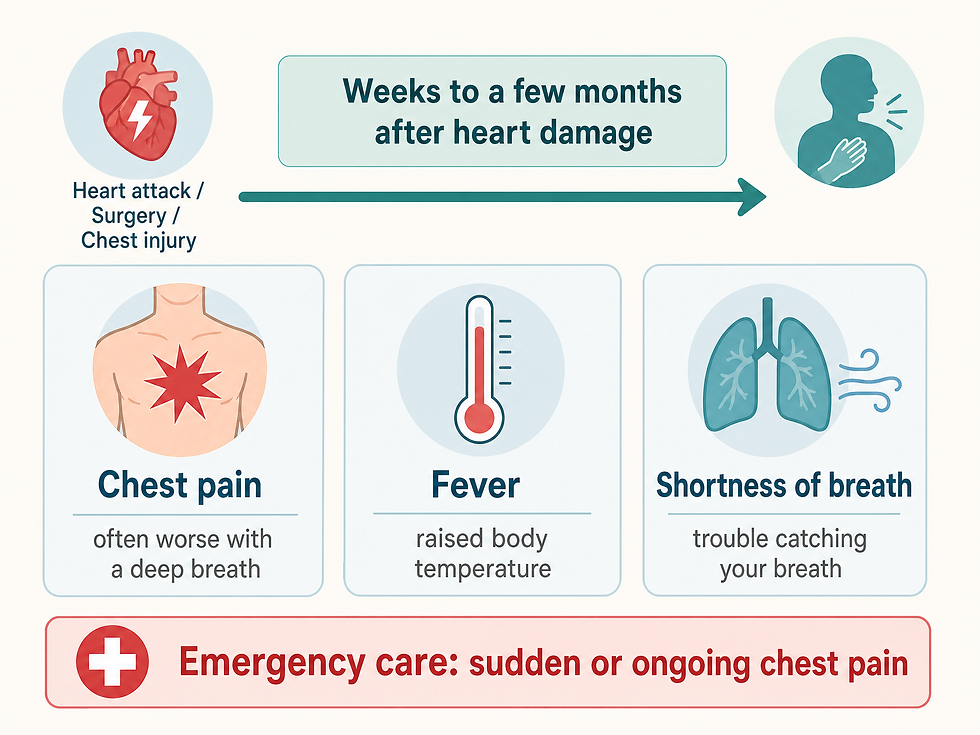
Symptoms of Dressler syndrome are likely to start weeks to a few months after a heart attack, surgery, or injury to the chest. This delayed timing is one of the condition's signature features, and it is what helps doctors distinguish it from other causes of chest pain.
Dressler's syndrome symptoms
The main symptoms include chest pain, which may get worse with deep breaths, fever, and shortness of breath. Because the chest pain can feel like chest pain from a heart attack, it should never be brushed off, especially in someone with a recent heart event.
When to see a doctor
Get emergency care for sudden or ongoing chest pain. This can be a symptom of a heart attack or another serious condition. Do not assume chest pain weeks after a heart attack is just inflammation, and do not assume the opposite, either. Let emergency clinicians make that call.
What causes Dressler's syndrome?
Experts think Dressler syndrome is caused by the immune system's response to heart damage. The body reacts to the injured tissue by sending immune cells and proteins called antibodies to clean up and repair the affected area. Sometimes this response causes swelling due to inflammation in the sac around the heart, the pericardium.
Heart attack: heart muscle is damaged by blocked blood flow, setting off the immune response
Heart surgery or procedures: the heart muscle or pericardium is injured during the operation
Serious chest injury: blunt chest trauma, such as from a car accident, damages the heart muscle
Risk factors
Damage to the heart muscle increases the risk of Dressler syndrome. The three main sources of such damage are a chest injury, some types of heart surgery, and a heart attack.
Possible complications
A complication of Dressler syndrome is fluid buildup in the tissues surrounding the lungs, called pleural effusion.
Rarely, Dressler syndrome can cause more serious complications. Cardiac tamponade happens when swelling of the pericardium causes fluid to build up in the sac, putting pressure on the heart. The pressure forces the heart to work harder, and the heart does not pump blood as well as it should. Constrictive pericarditis happens when ongoing or recurring swelling causes the pericardium to become thick or scarred, reducing the heart's ability to pump blood.
Can Dressler's syndrome be prevented?
Some studies suggest that taking the anti-inflammatory medicine colchicine soon after heart surgery may help prevent Dressler syndrome. Prevention decisions belong with your healthcare team, based on your specific surgery and heart history.
How is Dressler's syndrome diagnosed?
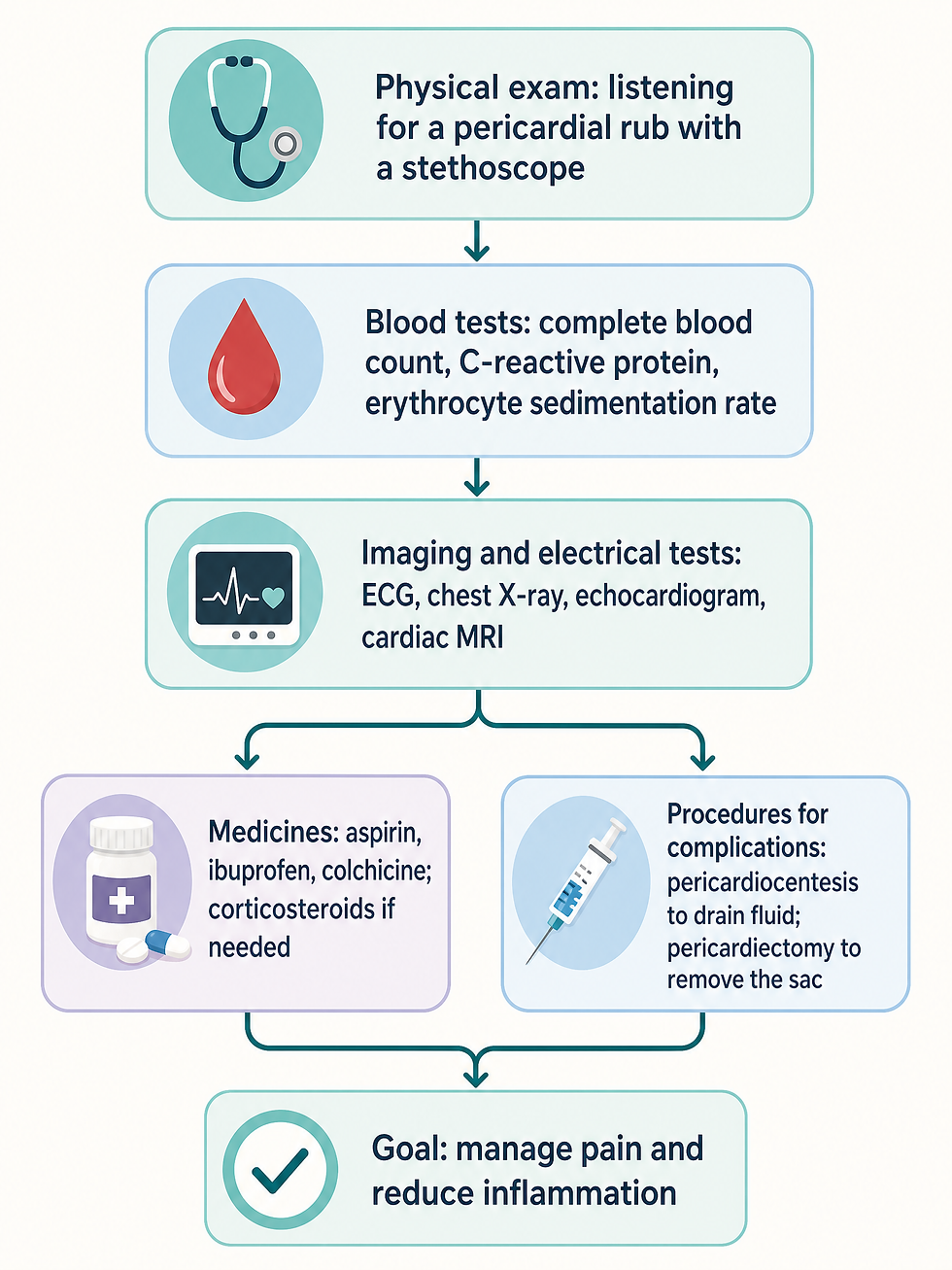
Diagnosis starts with a physical exam. Your healthcare professional listens to your heart with a stethoscope. A sound called a pericardial rub can happen when the pericardium is inflamed or when fluid has collected around the heart.
Complete blood count: most people with Dressler syndrome have an increased white blood cell count
Inflammation blood tests: C-reactive protein level, made by the liver; a higher level can signal inflammation linked with the syndrome. Erythrocyte sedimentation rate measures how fast red blood cells sink; faster sinking suggests more inflammation
Electrocardiogram (ECG or EKG): electrical activity of the heart, checked with sticky electrodes on the chest and sometimes arms and legs; certain signal changes can suggest pressure on the heart, but similar changes occur after heart surgery, so other test results are needed to confirm
Chest X-ray: fluid around the heart or lungs, and whether fluid stems from a different condition such as pneumonia
Echocardiogram: sound-wave images showing whether fluid is collecting around the heart
Cardiac MRI: still or moving pictures of blood flow through the heart; can show thickening of the pericardium
Because its symptoms can resemble a heart attack and its electrical changes can resemble post-surgery changes, doctors use several tests together rather than any single result.
Treatment options
The goals of treatment for Dressler syndrome are to manage pain and lower inflammation. Treatment usually involves medicines, and surgery may be needed if complications happen.
Medicines
The main treatment is medicine to lower inflammation, including nonsteroidal anti-inflammatory drugs (NSAIDs) such as aspirin, ibuprofen, and colchicine. If Dressler syndrome happens after a heart attack, aspirin is usually preferred over other NSAIDs. Indomethacin also may be given.
If those medicines do not help, the next step might be corticosteroids, which lower inflammation by turning down the immune system. Corticosteroids can have serious side effects, and they might interfere with the healing of damaged heart tissue after a heart attack or surgery. For those reasons, they tend to be used only when other treatments do not work.
Surgery or other procedures
Other treatments may be needed to treat complications. For cardiac tamponade, the excess fluid can be removed with a needle or a small tube called a catheter, in a treatment called pericardiocentesis, usually done with a local anesthetic that numbs the area. For constrictive pericarditis, treatment might involve surgery to remove the pericardium, called pericardiectomy.
Preparing for emergency care
If you are being seen in the emergency room for chest pain, you might be asked when your symptoms began, and how bad the pain is on a scale of 1 to 10. You may be asked whether anything makes your symptoms worse, such as hurting more when you take a deep breath, and where the pain is and whether it spreads beyond your chest.
Be ready to answer whether you have recently had a heart attack, heart surgery, or blunt trauma to your chest, whether you have a history of heart disease, and what medicines you take. Having this information ready, especially the date of any recent heart event, can speed up diagnosis.
Bottom line
Dressler's syndrome is an inflammatory condition of the sac around the heart that follows heart muscle damage, most often a heart attack, surgery, or blunt chest injury. It is not a heart attack itself, but it is serious enough to need proper medical care.
Its telltale signs are chest pain, fever, and shortness of breath appearing weeks to months after the injury, and its chest pain can mimic a heart attack closely. Diagnosis relies on combining a stethoscope finding, inflammation blood tests, and imaging rather than any single test.
Most people are treated with anti-inflammatory medicines such as aspirin, ibuprofen, or colchicine, with surgery reserved for rare complications like fluid pressure on the heart.
Your next step: If you have had a heart attack, heart surgery, or serious chest injury and develop new chest pain, fever, or shortness of breath weeks later, contact your healthcare team promptly. For sudden or ongoing chest pain, seek emergency care immediately. Bring your heart event history and medicine list to every visit, and ask your team whether anti-inflammatory prevention makes sense after any future heart surgery.
FAQ
What is the difference between Dressler's syndrome and a heart attack?
A heart attack is caused by blocked blood flow to the heart muscle, while Dressler's syndrome is inflammation of the sac around the heart that develops weeks to months after heart damage has already occurred. Dressler's chest pain can feel similar to a heart attack, which is why any sudden or ongoing chest pain needs emergency evaluation.
When do Dressler's syndrome symptoms start?
Symptoms typically begin weeks to a few months after a heart attack, heart surgery or procedures, or a serious chest injury such as trauma from a car accident.
Can Dressler's syndrome be cured?
The goals of treatment are to manage pain and lower inflammation. Most cases are treated successfully with anti-inflammatory medicines such as aspirin, ibuprofen, or colchicine. If complications develop, procedures such as draining excess fluid (pericardiocentesis) or removing the pericardium (pericardiectomy) can address them.
Is Dressler's syndrome dangerous?
Usually it responds to anti-inflammatory treatment, but rare complications can be serious. Cardiac tamponade occurs when fluid builds up in the sac and puts pressure on the heart, and constrictive pericarditis occurs when the sac becomes thick or scarred and limits pumping. Both are treated with procedures if they occur.
Who is at risk of Dressler's syndrome?
Anyone with damage to the heart muscle is at higher risk, most commonly people who have had a heart attack, certain types of heart surgery, or a serious chest injury. Some studies suggest colchicine taken soon after heart surgery may help prevent it.
References
This article is for general informational purposes and is not a substitute for professional medical advice, diagnosis, or treatment. Always consult a qualified healthcare professional about any medical condition. For sudden or ongoing chest pain, seek emergency care immediately.
Comments