Depression and Sex: How Depression Affects Libido, Function and Satisfaction — and What Providers Can Do About It

Updated: 2 days ago
Medically reviewed by Dr. Baraa Alnahhal, MD · Last reviewed: September 2026
Quick Answer
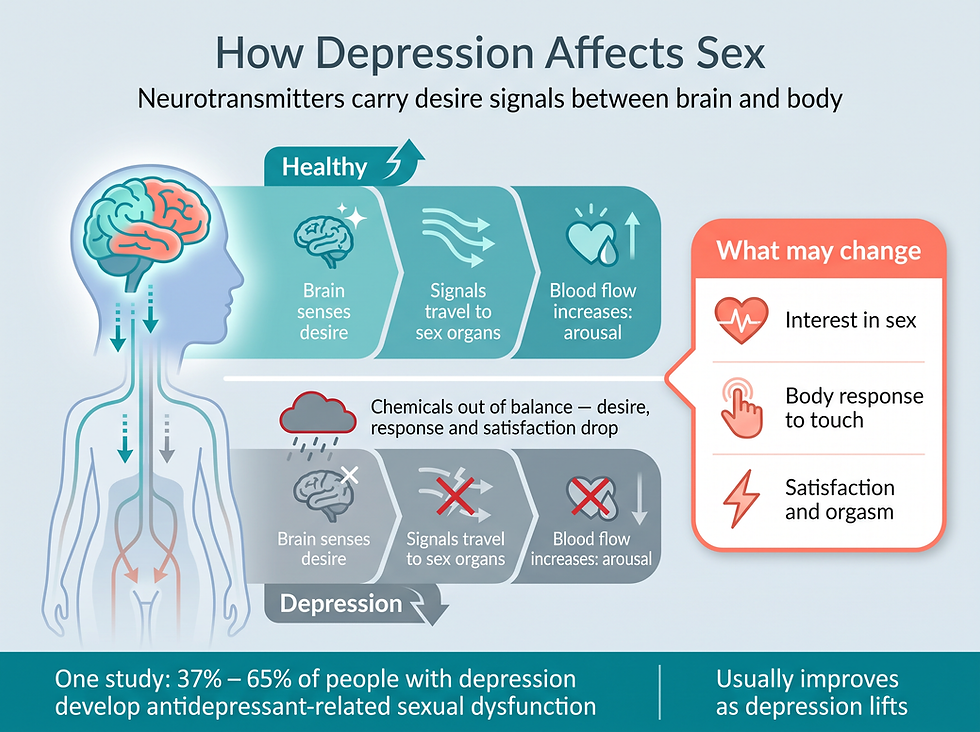
Depression can lower sexual desire, dull arousal, and make orgasm harder to reach — because sex-related brain chemicals fall out of balance when you're depressed. The same is true for many antidepressants, especially SSRIs: one study found 37% to 65% of people with depression developed medication-related sexual dysfunction. The good news is that these effects usually improve as depression lifts, and providers can adjust medication doses, switch to lower-risk antidepressants (such as bupropion or mirtazapine), and prescribe symptom-specific treatments for libido, arousal, and orgasm problems.
TL;DR
Depression and sex are closely linked in both directions: depression itself reduces pleasure, desire, and arousal, and the medications that treat it can make sexual problems worse. Symptoms — low libido, vaginal dryness, erectile difficulties, delayed ejaculation, weak or absent orgasm — tend to improve as depression eases. Providers can adjust or switch medications and target each specific sexual symptom. Limitation statement: this article is based on a single clinical source; the only statistic available in that source (37%–65% antidepressant-related sexual dysfunction) comes from one cited study, so no broader prevalence figures are claimed here.
What Is the Link Between Depression and Sex?
All sexual sensation starts in the brain. Chemicals called neurotransmitters carry messages between your brain and your sex organs. When the brain senses desire, the body responds by increasing blood flow to these organs. That prepares you for sexual activity by triggering arousal — an erection or vaginal lubrication.
Depression throws those sex-related chemicals out of balance. When that happens, three things can change: your interest in sex, the way your body responds to touch and movement, and your level of satisfaction including your ability to orgasm.
Depression also strips pleasure from things you once enjoyed — sex included. This is why sexual symptoms often track the mood itself.
Is depression linked to lack of sex?
Yes. It is quite common for people with depression to have low sexual desire — or none at all. Because the body may not respond to sexual situations in the same way, people with a penis may have trouble getting an erection. People with a vagina may experience vaginal dryness. Low levels of some brain chemicals can also dull feelings of pleasure.
These symptoms tend to improve as depression eases. But some medications used to treat depression can make sexual problems worse.
Can depression cause a high sex drive?
Some people with depression experience increased interest in sex. This is much less common, and research on why it happens is limited. Possible explanations include the experience of depression itself, the way the body responds to antidepressants, or simply the return of desire as you start feeling better.
A word of caution: symptoms like acting without thinking or having trouble controlling urges can raise the risk of high-risk sexual activity. Report any change in sex drive or sexual behavior to your provider.
What Signs Might Indicate Depression Is Impacting Your Sex Life?
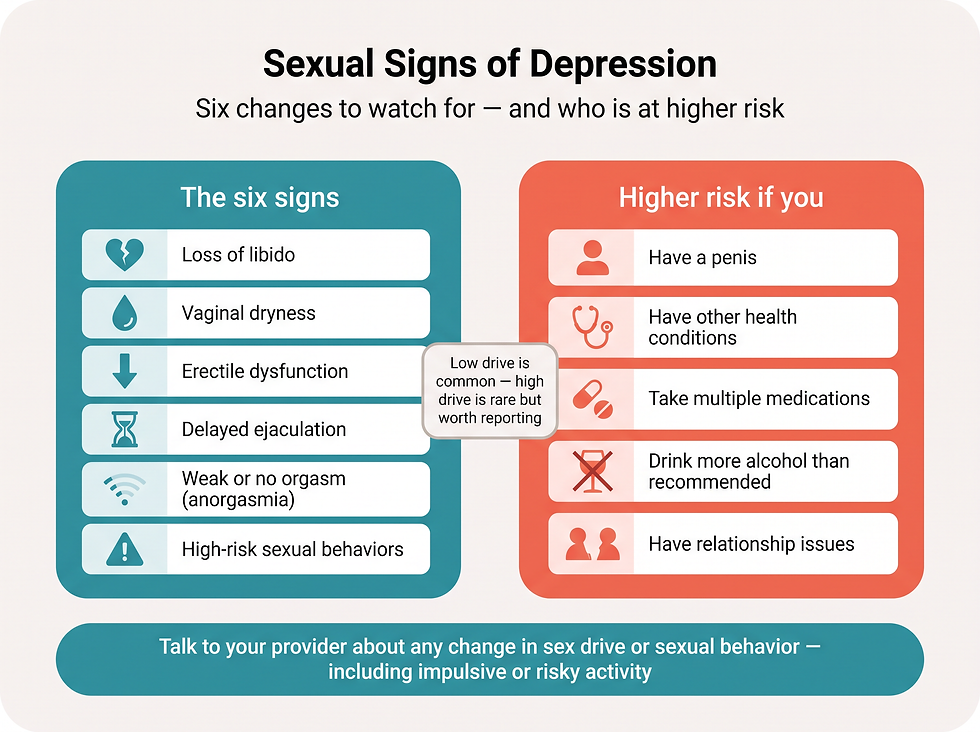
Six changes in your sex life may point to depression as the driver:
Symptom | What It Looks Like |
Loss of libido | Reduced or absent interest in sex |
Vaginal dryness | Reduced lubrication, discomfort |
Erectile dysfunction | Problems getting or maintaining an erection |
Delayed ejaculation | Significantly slowed or blocked climax |
Weak or no orgasm | Diminished climax or anorgasmia (no orgasm) |
High-risk sexual behaviors | Impulsive or risky sexual activity |
Who Is at Higher Risk?
Anyone with depression can experience sex-related symptoms, but the odds are higher if you have a penis, have other physical health conditions, take multiple medications, drink more alcohol than recommended, or are dealing with relationship issues.
Risk Factor | Why It Matters |
Having a penis | Higher odds of sex-related symptoms in depression |
Other physical health conditions | Adds to sexual symptom risk |
Multiple medications | Drug interactions compound the effect |
Alcohol above recommendations | Alcohol itself impairs sexual function |
Relationship issues | Emotional strain reduces desire and satisfaction |
Do Antidepressants Cause Sexual Side Effects?
Many antidepressants are highly effective at easing depressive symptoms, but they often carry sexual side effects. Medications like SSRIs can block the normal communication between your brain and your sex organs. Other antidepressants that work on different brain chemicals may be less likely to cause sexual problems.
If your current antidepressant causes side effects, talk to your provider — a different option may be available.
Antidepressants More Likely to Affect Sex
The following are known to negatively affect desire, arousal, or orgasm:
Generic Name | Brand Name |
Citalopram | Celexa |
Escitalopram | Lexapro |
Fluoxetine | Prozac |
Paroxetine | Paxil, Pexeva |
Sertraline | Zoloft |
Venlafaxine | Effexor XR |
Antidepressants Less Likely to Cause Sexual Side Effects
Generic Name | Brand Name |
Bupropion | Wellbutrin |
Mirtazapine | Remeron |
Nefazodone | Serzone |
Vilazodone | Viibryd |
A note from the clinical source: “If you have depression, you may lose interest in things you used to enjoy, and your senses may dull. This can take a toll on your sex life. And it's not ‘just sex.’ Sex can affect your mood, self-esteem and relationships. While you might be uncomfortable discussing sex with your healthcare provider, they actually want to know!”
The clinical experts behind this content stress that your sexual health offers important clues about your overall well-being. Being open about changes in desire or enjoyment of sex helps your provider give you better care.
How Are Depression-Related Sexual Difficulties Diagnosed?
Your provider will start with a thorough review of your health history, symptoms, and current medications. They will also want to confirm that another condition isn't causing the changes. This may include a physical exam and tests to check for conditions affecting the reproductive system, hormone imbalances, nutritional deficiencies, and thyroid disease.
Diagnostic Step | What It Rules Out |
Health history and medication review | Medication-induced sexual dysfunction |
Physical exam | Conditions affecting the reproductive system |
Hormone testing | Hormone imbalance |
Nutritional assessment | Vitamin and mineral deficiencies |
Thyroid testing | Thyroid disease |
How Do Providers Treat Depression-Related Sexual Difficulties?
Your mental healthcare team will build a treatment plan that manages your depression with the least possible side effects — sexual and otherwise. Options include adjusting your medication dose, switching to a different medication, adding talk therapy to help manage emotions, and recommending lubricants or stimulation devices that may help you reach orgasm.
Will Medications Help?
It depends on the specific sexual problem you are experiencing. Some treatments produce near-immediate results, while others take regular use over time to make a real difference.
Sexual Symptom | Treatment Options |
Low libido | Bupropion; hormone replacement therapy may help after menopause |
Vaginal dryness | Vaginal creams or suppositories |
Erectile dysfunction | Sildenafil (Viagra), vardenafil (Levitra), tadalafil (Cialis), avanafil (Stendra), among others |
Delayed ejaculation | Buspirone (BuSpar) or cyproheptadine (Periactin) |

Can You Prevent Sexual Problems If You're Depressed?
Because depression itself causes sexual problems, complete prevention isn't always possible. But several habits can increase your enjoyment of sex:
Self-Care Step | How It Helps |
Talk with your provider | Reporting sexual side effects opens up better medication options |
Be open with your partner(s) | Honesty about what you feel mentally and physically reduces pressure |
Avoid drugs, alcohol, and tobacco | All of these can impair sexual function |
Add physical activity | Exercise increases blood flow throughout the body, which may boost arousal |
Make time for nonsexual touching | Holding hands and cuddling build connection without sexual pressure |
Spend more time on foreplay | Arousal may simply take longer |
Use water-based lubricants | Helps with vaginal dryness |
What You Should Do Now
Depression affects sex through the same brain chemicals that drive mood — and the antidepressants that treat it can compound the effect. The pattern is consistent: interest fades, arousal slows, orgasm weakens, and both partners may misread the change as personal rejection.
That misreading is exactly what honest conversation prevents. The clinical source is explicit that providers want to hear about sexual changes, and that partners often feel hurt or assume lost interest when the real cause is chemical. Telling your provider about any change in sex drive or behavior — low or high — gives them the clues they need to adjust treatment.
If depression is affecting your sex life, start with a conversation. Ask your provider about adjusting your medication, switching to a lower-risk antidepressant, or adding a symptom-specific treatment. There are more options than most people realize, and most sexual symptoms improve as the depression itself eases.
Talk to your provider if sexual symptoms persist, worsen, or appear after starting or changing medication. Contact your provider right away about any impulsive or high-risk sexual behavior, or any sudden change in urges you cannot control.
Sources
The information in this article comes from a medically reviewed clinical reference last updated on Nov 11, 2025, and the peer-reviewed studies cited within it. Full reference list: Croft (2017) on serotonin and female desire disorder, Lorenz et al. (2016) on antidepressant-induced female sexual dysfunction, Jacobsen et al. (2020) on switching antidepressants, Lorenz & Meston (2012) on exercise and arousal, Montejo et al. (2019) on management strategies, the National Institute of Mental Health depression resource, and Strohmaier et al. (2011) on serotonergic antidepressant dysfunction.
External References
For authoritative background, see the National Institute of Mental Health's depression information, the National Alliance on Mental Illness, and the Depression and Bipolar Support Alliance for support resources.
Medical disclaimer: This article is for general educational purposes only and is not a substitute for professional medical advice, diagnosis, or treatment. Always consult a qualified healthcare provider about your individual circumstances.
Frequently Asked Questions
What is the connection between depression and sex?
Depression changes how neurotransmitters — the chemicals that carry messages between your brain and your sex organs — work. When these chemicals fall out of balance, desire, arousal, and satisfaction can all decline.
Does depression cause low sex drive?
Yes, it is quite common. People with depression frequently experience low libido or no libido at all, along with a body that no longer responds to sexual situations the way it used to.
Can depression cause erectile dysfunction?
Yes. Because the body may not respond to sexual situations normally during depression, people with a penis may have trouble getting an erection. This can also stem from antidepressant side effects.
Can depression cause vaginal dryness?
Yes. Reduced sexual response during depression can lead to vaginal dryness, and low levels of certain brain chemicals can also dull pleasure.
Why do antidepressants cause sexual side effects?
Antidepressants like SSRIs can prevent normal communication between your brain and your sex organs. This can reduce desire, arousal, or the ability to orgasm.
How common are antidepressant sexual side effects?
One cited study found that between 37% and 65% of people with depression developed antidepressant-associated sexual dysfunction. This is the only prevalence figure available in the clinical source.
Which antidepressants are most likely to cause sexual problems?
Citalopram (Celexa), escitalopram (Lexapro), fluoxetine (Prozac), paroxetine (Paxil, Pexeva), sertraline (Zoloft), and venlafaxine (Effexor XR) are known to negatively affect desire, arousal, or orgasm.
Which antidepressants are less likely to cause sexual side effects?
Bupropion (Wellbutrin), mirtazapine (Remeron), nefazodone (Serzone), and vilazodone (Viibryd) are less likely to cause sexual side effects.
Can you switch antidepressants if sexual side effects occur?
Yes. Antidepressants that focus on different brain chemicals may be less likely to cause sexual problems. Talk to your provider — a different option may be available.
Does your provider adjust the dose or switch the medication?
Providers may adjust the dose of your current medication or switch to a different one, along with adding talk therapy or recommending aids like lubricants or stimulation devices.
Can depression cause a high sex drive?
Some people with depression experience increased interest in sex, though this is much less common. Possible reasons include the depression experience itself, the body's response to antidepressants, or the return of desire as you feel better.
Is increased sex drive during depression dangerous?
Symptoms like acting without thinking or trouble controlling urges can raise the risk of high-risk sexual activity. Let your provider know about any change in sex drive or sexual behavior.
Will sexual symptoms improve if my depression gets better?
Yes. These symptoms tend to improve as your depression eases — though some medications can make them worse, so treatment choices matter.
What tests do providers run for depression-related sexual difficulties?
Providers review your health history, symptoms, and medications, then may run a physical exam and tests to rule out reproductive system conditions, hormone imbalances, nutritional deficiencies, and thyroid disease.
Can hormone imbalance cause sexual problems in depression?
Hormone imbalance is one of the conditions providers specifically test for, because it can independently affect sexual function and may be mistaken for — or worsen — depression-related symptoms.
Can thyroid disease affect sex drive?
Yes, and it is one of the conditions providers check when diagnosing sexual difficulties, since thyroid problems can mimic or compound depressive and sexual symptoms.
What medication helps low libido during depression?
For low libido, providers may recommend bupropion. If you have experienced menopause, hormone replacement therapy may also help.
What treats vaginal dryness related to depression or medication?
Vaginal creams or suppositories can increase lubrication, and water-based lubricants are a helpful everyday aid.
What medications treat erectile dysfunction caused by depression or antidepressants?
Providers may prescribe sildenafil (Viagra), vardenafil (Levitra), tadalafil (Cialis), avanafil (Stendra), among others.
What helps delayed ejaculation from antidepressants?
Providers may prescribe buspirone (BuSpar) or cyproheptadine (Periactin) to help with delayed ejaculation.
Do sexual side effect treatments work quickly?
It depends. Some treatments produce near-immediate results, while others need to be taken regularly for a while before a real difference appears.
Can exercise improve sexual function when you're depressed?
Yes — exercise increases blood flow throughout the body, which may help you feel more aroused. Research cited by the clinical source supports this for people taking antidepressants.
How can partners cope when depression affects sex?
The clinical source stresses honesty: partners may feel hurt or assume lost interest when the real cause is chemical. Telling them what's going on helps both of you, and exploring nonsexual intimacy and what feels good can rebuild connection.
Can sexual problems from depression be prevented?
Not completely, since depression itself causes them — but talking with your provider, being honest with your partner, avoiding alcohol and tobacco, exercising, and using lubricants can all help.
When should you contact a provider about sex and depression?
Let your provider know about any change in sex drive or sexual behavior, any sexual side effects after starting or changing medication, and any impulsive or high-risk sexual activity.
Comments