Congenital Urological Anomalies: Types, Symptoms, Causes, Diagnosis and Treatment — What You Need to Know

Updated: 2 days ago
Medically reviewed by Dr. Baraa Alnahhal, MD · Last reviewed: September 2026
TL;DR: Congenital urinary abnormalities are conditions present at birth or very early in infancy that affect the kidneys, bladder, or ureters. Some forms, like spina bifida, can also involve the spinal cord and cause bladder problems. The eight major types range from common (undescended testicles in boys; vesicoureteral reflux in girls) to rare (bladder exstrophy, prune belly syndrome). Some are painless and found only on imaging; others cause pain, burning with urination, an unusual urine stream, blood in the urine, recurrent UTIs, or poor growth. Causes are probably a combination of environmental factors and genetic mutations (most notably in the PAX2 and HNF1B genes). Diagnosis usually begins with prenatal ultrasound and continues with imaging and lab tests after birth. Some children need no treatment at all, while others need tailored, sometimes lifelong monitoring.
Quick Answer: What Are Congenital Urological Anomalies?
Congenital urological anomalies (also called congenital urinary abnormalities) are irregularities in the urinary and reproductive (genitourinary) systems that develop during fetal development or very early in infancy. They can involve the kidneys, urinary bladder, or ureters, the tubes that carry urine from the kidneys to the bladder.
There are eight major types described in clinical reference material, including hydronephrosis, vesicoureteral reflux (VUR), undescended testicles, hypospadias, and posterior urethral valves. Many are detected on prenatal ultrasound, often because of low amniotic fluid after about 20 weeks of pregnancy. Some conditions need no treatment; others may require antibiotics, dialysis, or even a kidney transplant. Treatment is tailored to each child's specific condition.
When Should You Go to the ER?
If your child has a known urinary abnormality, seek emergency care immediately if any of the following occur:
Sudden or intense pain in the stomach, back, or sides.
Fever higher than 100.5 degrees Fahrenheit (38 degrees Celsius).
Changes in pee: peeing more or less than usual, inability to pee, pain when peeing, or blood in the pee.
These signs can indicate infection or blockage that needs urgent attention.
What Are Congenital Urological Anomalies?
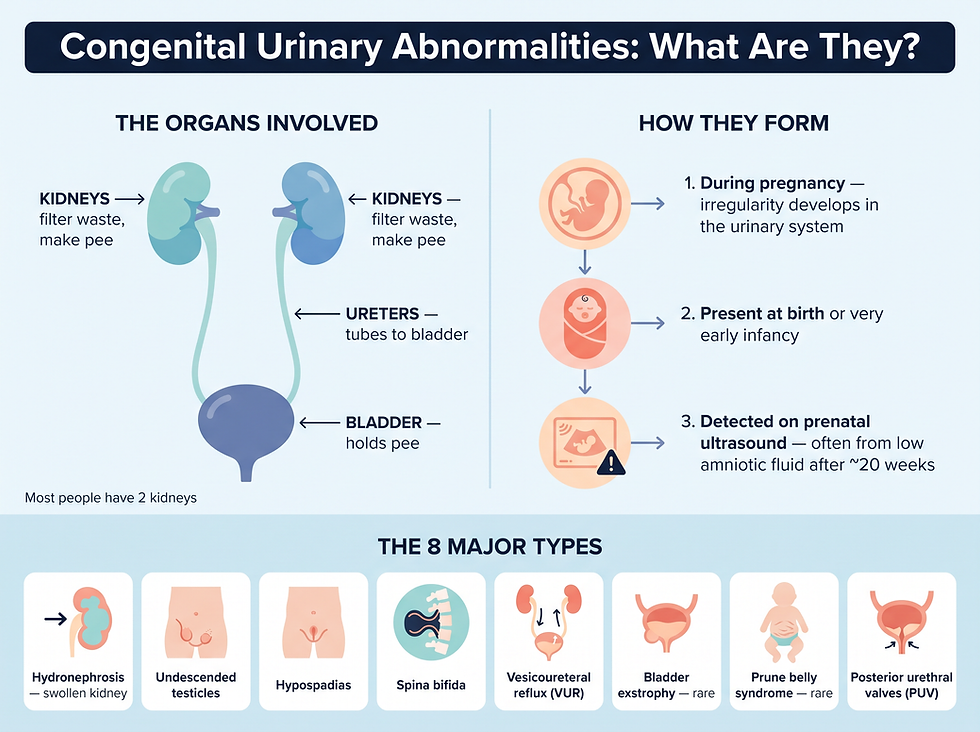
Congenital urinary abnormalities describe irregularities in the urinary and reproductive (genitourinary) systems. A congenital condition means it occurs during fetal development or very early in infancy. Another name for them is congenital urinary anomalies. They can affect three main organs:
Kidneys: filter salt, water, toxins, and waste products from the blood and help make urine (pee). Most people have two kidneys.
Urinary bladder: a stretchy organ that holds pee.
Ureters: tubes of muscle that transport pee from the kidneys to the bladder.
What Are the Major Types?
There are eight major urinary abnormalities described in clinical reference material:
Hydronephrosis: one or both kidneys swell (distend) because something prevents pee from flowing from the kidneys to the bladder.
Undescended testicles (cryptorchidism): testicles develop in the abdomen during pregnancy and typically drop into the scrotum; in this condition they don't drop shortly after birth.
Hypospadias: the urethra, the tube carrying pee and sperm to the outside of the body, develops on the underside of a baby's penis instead of at the tip.
Spina bifida: the brain, spinal cord, and/or the surrounding membranes (meninges) don't develop completely during fetal development; severe forms can cause partial or complete paralysis and may result in a neurogenic bladder.
Vesicoureteral reflux (VUR): pee flows back up the ureters and sometimes into the kidneys, instead of only flowing out of the body.
Bladder exstrophy: a rare condition in which the bladder develops inside out; a baby releases pee through an opening in the abdomen instead of the urethra.
Prune belly syndrome (Eagle-Barrett syndrome): a rare condition where abdominal muscles are weak or absent, making the belly look wrinkly or prune-like, often with undescended testicles and urinary tract abnormalities.
Posterior urethral valves (PUV): affects babies with a penis; extra flaps of membrane in the back of the urethra block pee, which may backflow and swell the bladder and damage the ureters and kidneys.
Which Abnormalities Are Most Common?
Undescended testicles are the most common urinary tract abnormality in boys. Vesicoureteral reflux is one of the most common urinary tract abnormalities in girls.
What Are the Symptoms?
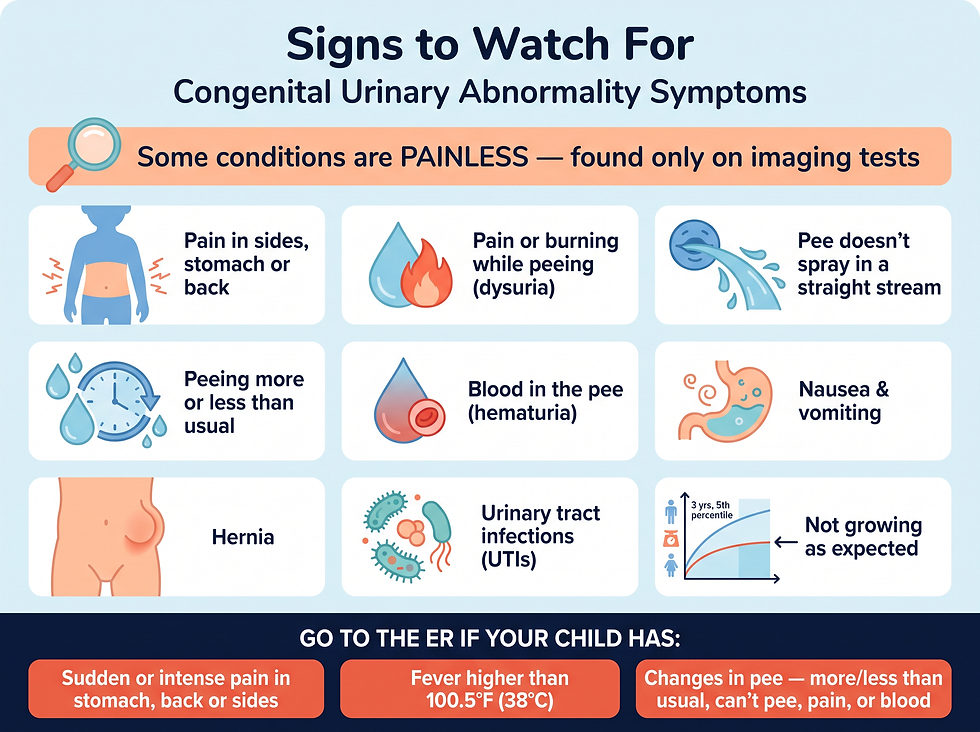
It depends on the type of urinary abnormality. Some conditions are painless, and a healthcare provider can only detect them with imaging tests. Common urinary abnormality symptoms may include:
Pain in the sides, stomach, or back: persistent or recurrent aching.
Pain or burning while peeing (dysuria).
Abnormal urine stream: pee that doesn't spray in a straight stream.
Changes in frequency: peeing more or less than usual.
Blood in the pee (hematuria): visible or detected in testing.
Nausea and vomiting: may accompany pain or infection.
Hernia: an abnormality in the abdominal wall.
Urinary tract infections (UTIs): recurrent or persistent infections.
Not growing as expected: poor growth or failure to thrive.
What Causes Congenital Urinary Abnormalities?
The cause is complicated. Urinary abnormality causes are probably a combination of environmental factors and genetic mutations. Environmental factors may include:
Maternal diabetes: the mother has diabetes.
Vitamin or mineral deficiency: a lack of certain vitamins or minerals during pregnancy, including folate and iron.
Certain medications: medications that can damage the kidneys, including antiseizure medications.
The most common genetic mutations associated with urinary abnormalities involve the PAX2 and HNF1B genes. These genes help create the kidneys, urinary tract, and other tissues as a fetus develops.
Who Is at Higher Risk?
A baby may have a greater chance of having a urinary abnormality if there's a biological family history of kidney or urinary tract problems.

How Are Congenital Urinary Abnormalities Diagnosed?
Healthcare providers usually diagnose congenital urinary abnormalities during prenatal ultrasounds. These use sound waves to check the health and development of a fetus and detect problems, such as a lack of amniotic fluid, called oligohydramnios.
This matters because, during typical development, pee makes up most of the amniotic fluid after about 20 weeks of pregnancy. If a provider notices low amniotic fluid during pregnancy, they may suspect a urinary problem.
If a urinary abnormality isn't diagnosed before birth, it may be suspected during infancy or childhood based on symptoms. Providers can confirm it with testing, including:
Ultrasound: a noninvasive imaging test that takes images or video of organs and tissues.
Urinalysis (urine test): can confirm an infection.
Blood tests: help determine how well the kidneys filter blood (estimated glomerular filtration rate, or eGFR).
CT scan: a noninvasive test using many X-rays to create detailed images of bones and tissues.
MRI: a noninvasive test using a magnet, radio waves, and a computer for detailed images of organs and structures.
Voiding cystourethrogram (VCUG): an imaging test that takes detailed images of the bladder while it fills and empties.
Renal scan (kidney scan): a type of nuclear medicine imaging; a small amount of radioactive material helps produce detailed images.
Urodynamic testing: a catheter test that determines how well the bladder functions.
How Are Congenital Urinary Abnormalities Treated?
It depends on the type of urinary abnormality. Some conditions may not require treatment at all. Others may require a range of treatments, including:
Antibiotics: to treat or prevent infections.
Dialysis: if kidney function is severely impaired.
Kidney transplant: if kidneys fail and dialysis is not sufficient.
Depending on the condition, a medical team will review your child's medical history, evaluate the present condition, and tailor the best healthcare plan for their needs.
Can Congenital Urinary Abnormalities Be Prevented?
You can't prevent all urinary abnormalities. But you can promote a healthy pregnancy by:
Scheduling and attending regular appointments with a healthcare provider for ongoing monitoring of the pregnancy.
Talking to your provider about medications and supplements you're taking, since some medications can affect fetal development.
Taking a daily prenatal vitamin with at least 400 mcg of folic acid, because folate deficiency is a known environmental factor.
Avoiding alcohol, tobacco, and unprescribed drugs.
What Is the Outlook?
The outlook depends on the type of urinary abnormality and the extent of the symptoms. Some children may require regular medical monitoring for the rest of their lives. Your child's care team will work with you to develop an individual plan that helps your child lead a safe, healthy, and independent life.
As your child gets older, they may encounter health and quality-of-life issues, including:
Urinary and bowel incontinence.
UTIs.
Damage to the bladder, kidneys, and/or ureters.
Kidney failure: severe kidney damage may cause this, and treatment may require dialysis or a kidney transplant.
Genital effects: the condition may affect the function and appearance of the genitals, which may affect the ability to conceive a biological child (fertility).
Congenital urinary abnormalities can also affect your child psychosocially and psychologically. Your child's care team can provide support and help make the transition to adolescence and adulthood less stressful.
What Questions Should I Ask My Child's Provider?
What congenital urinary abnormality does my child have?
How will their urinary abnormality affect their life?
Is my child at a greater risk for other health conditions?
Does my child need treatment?
What's the best treatment?
What complications should I look out for?
What long-term effects might my child have?
Conclusion
Congenital urological anomalies are irregularities in the urinary and reproductive systems present from fetal development or early infancy. They range from common conditions like undescended testicles and vesicoureteral reflux to rare, serious conditions like bladder exstrophy and prune belly syndrome.
Many are detected before birth on routine prenatal ultrasound, often flagged by low amniotic fluid after about 20 weeks of pregnancy. The causes are likely a mix of environmental factors (maternal diabetes, folate or iron deficiency, certain medications) and genetic mutations, most commonly in the PAX2 and HNF1B genes. Treatment varies widely: some children need no intervention at all, while others require antibiotics, surgery, dialysis, or a kidney transplant.
While some children may need lifelong monitoring and may face challenges like incontinence, UTIs, or kidney damage, a tailored care plan can help your child lead a safe, healthy, and independent life. If you're pregnant or have a newborn with any of the symptoms described here, don't wait: seek an evaluation from a healthcare professional. And if your child has a known urinary abnormality and develops sudden pain, fever above 100.5°F, or changes in urination, go to the nearest emergency room.
Talk to your child's pediatrician or a pediatric urology specialist about any concerns. Early detection and a coordinated care team make a real difference.
Frequently Asked Questions (FAQ)
What is a congenital urinary abnormality?
It's an irregularity in the urinary and/or reproductive (genitourinary) systems that develops during fetal development or very early in infancy. Another name is congenital urinary anomaly.
Which organs can be affected?
The kidneys, the urinary bladder, and the ureters (tubes that carry pee from the kidneys to the bladder).
What are the most common types?
Undescended testicles are the most common urinary tract abnormality in boys. Vesicoureteral reflux (VUR) is one of the most common in girls.
What is hydronephrosis?
A condition where one or both kidneys swell because something prevents pee from flowing from the kidneys to the bladder.
What is vesicoureteral reflux (VUR)?
A condition where pee flows backward up the ureters and sometimes into the kidneys, instead of flowing out of the body.
What are posterior urethral valves (PUV)?
A condition affecting babies with a penis where extra flaps of membrane in the back of the urethra block pee, which may backflow to the bladder and damage the ureters and kidneys.
What is bladder exstrophy?
A rare condition where the bladder develops inside out. The baby releases pee through an opening in the abdomen instead of the urethra.
What is prune belly syndrome?
A rare condition (also called Eagle-Barrett syndrome) where abdominal muscles are weak or absent, making the belly look wrinkly or prune-like. It often comes with undescended testicles and urinary tract abnormalities.
How does spina bifida relate to urinary problems?
Spina bifida occurs when the brain, spinal cord, and/or meninges don't develop completely. Severe forms can cause partial or complete paralysis, which may result in a neurogenic bladder along with other problems.
What are undescended testicles (cryptorchidism)?
Testicles develop in the abdomen during pregnancy and normally drop into the scrotum shortly after birth. In this condition, they don't drop.
What is hypospadias?
A condition where the urethra, the tube carrying pee and sperm to the outside, develops on the underside of a baby's penis instead of at the tip.
What causes congenital urinary abnormalities?
Probably a combination of environmental factors and genetic mutations. Environmental factors include maternal diabetes, lack of folate or iron during pregnancy, and certain kidney-damaging medications (including antiseizure drugs). The most common genetic mutations involve the PAX2 and HNF1B genes.
Can a family history increase the risk?
Yes. A baby has a greater chance of having a urinary abnormality if there's a biological family history of kidney or urinary tract problems.
How are they usually diagnosed?
Most often during prenatal ultrasounds. A provider may suspect a urinary problem if there's not enough amniotic fluid, since pee makes up most of the amniotic fluid after about 20 weeks of pregnancy.
What tests are done after birth?
Ultrasound, urinalysis, blood tests (eGFR), CT scan, MRI, voiding cystourethrogram (VCUG), renal scan, and urodynamic testing, depending on the suspected condition.
What is a VCUG?
A voiding cystourethrogram is an imaging test that takes detailed images of the bladder while it fills and empties.
Do all children need treatment?
No. Some conditions may not require treatment at all. Others may need antibiotics, dialysis, or a kidney transplant. The medical team tailors the plan to each child.
What should I do if my child has a known abnormality and gets a fever?
Go to the nearest emergency room if your child has a urinary abnormality and develops sudden or intense pain in the stomach, back, or sides; a fever higher than 100.5°F (38°C); or changes in pee (more or less than usual, inability to pee, pain when peeing, or blood in pee).
Can these conditions cause incontinence?
Yes. As a child gets older, they may experience urinary and/or bowel incontinence, along with recurrent UTIs.
Can they cause kidney failure?
Yes. Severe kidney damage may cause kidney failure, which may require dialysis or a kidney transplant.
Can they affect fertility?
The condition may affect the function and appearance of the genitals, which may affect the ability to conceive a biological child.
Do they affect mental health?
Yes. Congenital urinary abnormalities can affect a child psychosocially and psychologically. The care team can provide support and help with the transition to adolescence and adulthood.
Can they be prevented?
Not all of them. But promoting a healthy pregnancy helps: regular prenatal appointments, discussing medications with your provider, taking a prenatal vitamin with at least 400 mcg of folic acid, and avoiding alcohol, tobacco, and unprescribed drugs.
Will my child need lifelong monitoring?
Some children require regular medical monitoring for the rest of their lives, depending on the type and severity of the abnormality.
What should I ask my child's doctor?
Ask what abnormality your child has, how it will affect their life, whether they need treatment, what the best treatment is, what complications to watch for, and what long-term effects they may have.
Sources
Medical disclaimer: This article is for general informational purposes only and does not constitute medical advice, diagnosis, or treatment. Always seek the advice of your physician or another qualified health provider with any questions you may have regarding a medical condition, especially concerning a newborn or child. Never disregard professional medical advice or delay seeking care because of something you have read here. If your child has a known urinary abnormality and develops sudden or intense pain in the stomach, back, or sides; a fever higher than 100.5°F (38°C); or changes in urination, go to the nearest emergency room immediately.
Comments