Arthrodesis (Joint Fusion): Procedure, Recovery, and Long-Term Benefits

Updated: 2 days ago
Medically reviewed by Dr. Baraa Alnahhal, MD · Last reviewed: September 2026
Editorial note: This article is for general education only. It is not medical advice, a diagnosis, or a treatment plan. Always consult a qualified healthcare professional for personal medical decisions.
TL;DR
Arthrodesis, commonly called joint fusion, is a surgical procedure in which two bones in a joint are permanently joined to become one. It is used mainly to treat severe arthritis or bone fractures when nonsurgical options fail. It reduces the range of motion in the affected area, but it provides lifelong relief from chronic pain and restores joint stability.
Quick Answer: What Is Arthrodesis?
Arthrodesis is a permanent surgical fusion of two bones within a joint. The surgeon removes damaged cartilage and secures the bones with metal fasteners so they grow together during healing. It is most commonly performed on the ankles, spine, and wrists to eliminate severe, chronic pain caused by arthritis or injury, offering a stable, pain-free alternative when other treatments have failed.
Arthrodesis is a significant operation designed for joint symptoms that have not responded to conservative management. By permanently uniting the bones, it removes the friction and instability that cause chronic pain, which is why it remains a cornerstone of orthopaedic care for end-stage arthritis and complex fractures.
Understanding the Procedure
The goal of arthrodesis is to turn a painful, unstable joint into a solid, immobile, but pain-free structure. During surgery, the surgeon removes the damaged cartilage that once cushioned the joint. Once the bone surfaces are prepared, they are held together with hardware such as pins, plates, or screws. Over the following months, the body’s natural healing causes the two bones to fuse into a single, continuous bone.
Surgery time varies with the joint treated. Complex spinal fusions may take up to five hours, while procedures on smaller joints such as the fingers or toes are considerably shorter. Depending on complexity, you may go home the same day or stay overnight for monitoring.
Why Joint Fusion Is Performed
Severe arthritis is the most frequent reason for arthrodesis. When cartilage wears away completely, bone-on-bone contact causes intense pain and inflammation. Beyond arthritis, joint fusion is a vital option for severe bone fractures that cannot be repaired by other means. It is also used for specific spinal conditions such as herniated disks or spondylolisthesis, and to protect ligaments and nerves from further damage caused by a failing joint.
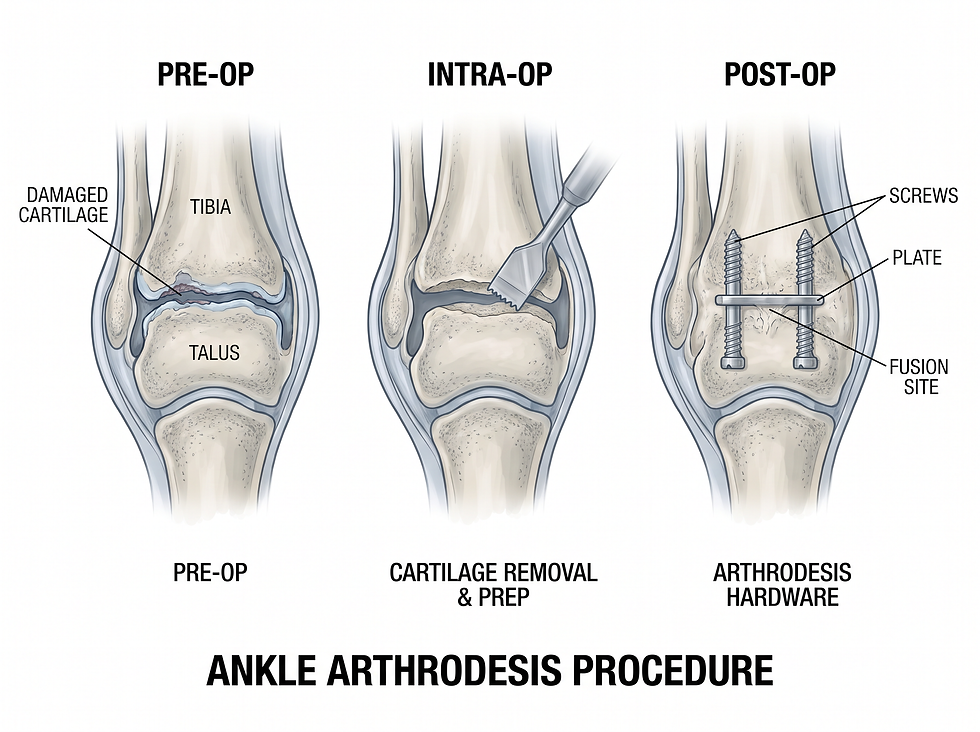
Figure 1: A medical illustration showing how the joint surfaces are prepared and how internal hardware holds the bones together while they fuse.
Benefits and Potential Risks
The biggest advantage of arthrodesis is permanent relief from chronic pain. Once the joint is fused, the source of the pain — movement of damaged joint surfaces — is removed. Most patients can return to routine physical activities, including exercise and sports, with a much higher quality of life.
Because the bones are joined, there is a permanent reduction in range of motion at that joint. Other risks include standard surgical complications such as infection or bleeding, and a specific risk called nonunion, where the bones fail to fuse correctly. In some cases, revision surgery may be needed.
Pain relief: typically permanent and lifelong once fully healed.
Mobility: permanent reduction in range of motion at the fused site.
Stability: significantly increased joint strength and stability.
Complications: potential for nonunion, infection, or hardware issues.
The Path to Recovery
Recovery from arthrodesis is gradual and can span from a few months to over a year, depending on the joint and your overall health. Pain management is a critical part of early recovery, using prescription medications and over-the-counter options such as NSAIDs. Resume activities slowly, following the strict protocol from your surgical team so the fusion stays stable during the critical healing window.

Figure 2: The recovery timeline, from early immobilization to the gradual resumption of physical activities.
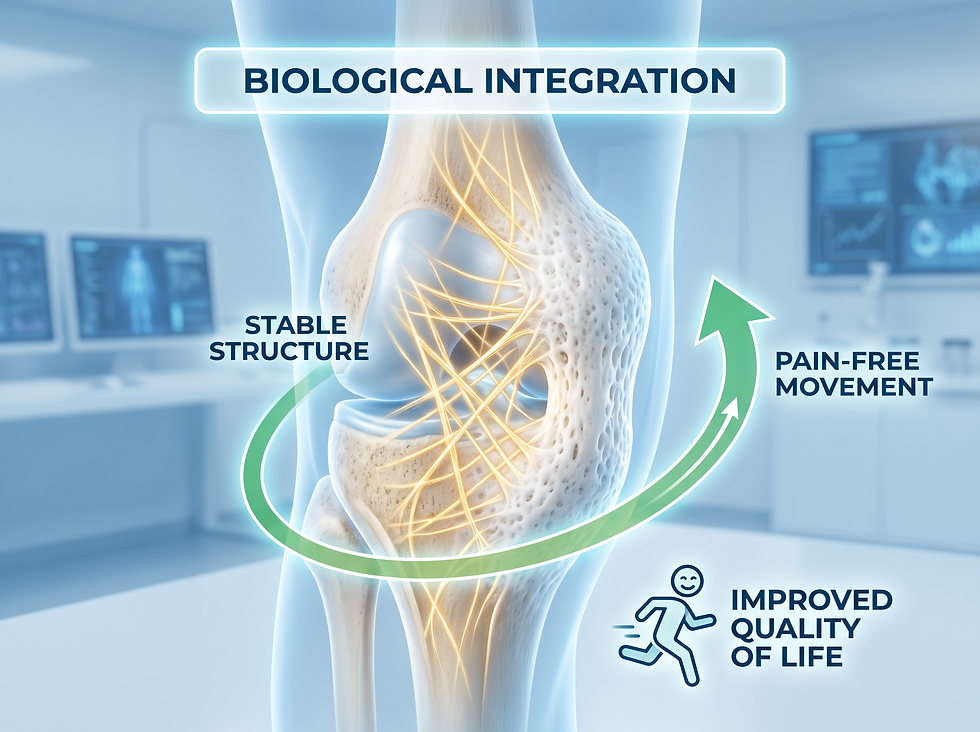
Figure 3: The long-term goal of joint fusion — pain-free stability and restored quality of life.
Conclusion
Arthrodesis is a transformative procedure for people living with severe joint dysfunction. It involves a trade-off in flexibility, but the resulting stability and freedom from pain often let patients reclaim lives that were previously limited by symptoms. Consultation with an orthopaedic specialist is essential to decide whether joint fusion is the right path for your specific condition.
If chronic joint pain limits your daily activities, do not wait for it to worsen. Contact an orthopaedic specialist to discuss whether arthrodesis or other advanced treatments can help you return to a pain-free life.
Key Takeaways
Arthrodesis permanently fuses two bones in a joint, removing the painful movement between damaged surfaces.
It is used mainly for severe arthritis and fractures that have not responded to other treatments.
The trade-off is a permanent loss of motion at the joint; risks include nonunion, infection, and hardware problems.
Recovery takes months to over a year, with a cast or brace early on and a gradual, surgeon-guided return to activity.
Smoking raises the risk of nonunion, so quitting before surgery helps the fusion heal.
Related Reading
Frequently Asked Questions
Is arthrodesis the same as joint replacement?
No. Arthrodesis fuses bones together to stop movement, while joint replacement uses an artificial joint to maintain movement.
Will I be able to walk normally after an ankle fusion?
Most patients walk with a nearly normal gait, as other joints in the foot often compensate for the lack of ankle motion.
How long does the fusion process take?
Initial healing takes weeks, but complete biological fusion of the bones can take several months to a year.
What is nonunion in joint fusion?
Nonunion occurs when the two bones fail to grow together properly, which may require a follow-up surgery.
Can I play sports after a joint fusion?
Yes. Most people can return to sports and exercise once their surgeon confirms the fusion is solid.
Is arthrodesis considered major surgery?
Yes. Most joint fusions are classified as major procedures because of their complexity and the use of internal hardware.
What kind of anesthesia is used?
Surgeons typically use general anesthesia to put you to sleep, or regional anesthesia to numb the specific area.
Will I need a cast after surgery?
Many patients need a cast or brace for several weeks to keep the joint immobile while the bones begin to fuse.
Can a fused joint be “unfused” later?
Generally, no. Arthrodesis is intended to be a permanent, lifelong solution.
What are the signs of infection after surgery?
Watch for fever, increased swelling, redness, warmth, or unusual drainage from the incision site, and contact your surgical team if you notice them.
Does smoking affect joint fusion?
Yes. Smoking significantly increases the risk of nonunion by reducing blood flow to the healing bone.
When can I drive after a joint fusion?
It depends on the joint fused and which side of the body it is on; your surgeon will give you a specific timeline.
Will the metal hardware stay in my body forever?
In most cases, the pins or screws stay in permanently unless they cause irritation or other issues.
How painful is the recovery?
Pain is expected in the first few weeks, but it is managed with a combination of prescription and over-the-counter medications.
What happens if I need a revision surgery?
A revision may be needed if the bones do not fuse or if there are hardware problems; it involves a second procedure to stabilize the area.
References
Medical disclaimer: The information provided in this article is for educational purposes only and is not intended as medical advice. Always seek the advice of your physician or other qualified health provider with any questions you may have regarding a medical condition or treatment.
Comments