Anasarca: Why Severe Body-Wide Swelling Happens, What Causes It, and How It Is Treated

Updated: 2 days ago
Medically reviewed by Dr. Baraa Alnahhal, MD · Last reviewed: September 2026
TL;DR: Anasarca is severe, generalized edema — a massive fluid buildup in the tissues of several body parts at the same time, including the face, belly, genital areas, lungs, and limbs. It happens when the normal balance of fluid moving between blood vessels and tissues breaks down: either too much fluid leaks out of capillaries into tissue, or lymphatic drains cannot remove enough fluid. The causes almost always trace back to the heart, liver, or kidneys — such as heart failure, nephrotic syndrome, or cirrhosis — and treatment focuses on the underlying condition, most often with diuretics ("water pills"). With successful treatment, anasarca can be reversed, though the outlook depends on the underlying cause.
Quick Answer
What it is: Generalized edema — severe fluid buildup in several body parts at once (face, belly, lungs, limbs).
Why it happens: The balance of fluid between blood vessels and tissues fails — excess leaks from capillaries, or lymphatic drains can't keep up.
Main causes: Heart failure, kidney disease (nephrotic syndrome, glomerulonephritis, kidney failure), and liver disease (cirrhosis, liver failure), plus certain medications.
How it is treated: Diuretics to remove excess salt and water, plus treatment of the underlying cause — compression therapy, elevated legs, albumin infusions, dialysis, or lymphatic massage depending on the cause.

What Is Anasarca?
Anasarca is generalized edema (swelling). It is a severe buildup of fluid in the tissues of several parts of your body at the same time, such as your face, belly, genital areas, lungs, and limbs.
Anasarca happens when something throws off the balance of fluids moving between your blood vessels and the tissues around them. You may have too much fluid leaving your capillaries and going into nearby tissue, or you may have lymphatic drains that are not removing enough fluid to keep the balance.
This imbalance is similar to a lawn after a heavy rain. The soil cannot hold all the water, so the water rises above the soil. When your blood vessels are not holding the fluids they are supposed to, the fluids flood nearby tissues and make them swell.
With this much water retention, you may notice that your rings fit more tightly or that it is hard to put on your shoes. Unlike ordinary swelling, anasarca causes these kinds of issues in multiple places in your body at once.
Key Fact | Detail |
Definition | Severe, generalized edema affecting several body parts at once |
Affected areas | Face, belly, genital areas, lungs, arms and legs |
Core mechanism | Fluid balance between capillaries and tissues is disrupted |
Typical origins | Heart, liver, or kidneys; can also develop after surgery |
Everyday clue | Rings tighten and shoes become hard to put on in multiple places |

What Are the Symptoms of Anasarca?
Anasarca produces swelling and puffiness you can see and feel in several parts of your body. Skin in these areas may look stretched or shiny. Because the fluid has real weight, your body weight typically rises above normal.
The swelling can limit arm and leg movement, and fluid may collect in the belly (ascites) or the lungs (pulmonary edema). Fatigue is common. In the most severe cases, urine output drops significantly (oliguria) or stops entirely (anuria).
Symptom | What It Looks Like |
Multi-site swelling | Puffiness in several body parts; skin stretched or shiny |
Weight gain | Higher-than-normal weight from excess fluid |
Limited movement | Arms and legs hard to move due to swelling |
Ascites | Fluid buildup in the belly |
Pulmonary edema | Fluid buildup in the lungs |
Fatigue | Ongoing tiredness |
Reduced urine | Low urine output (oliguria) or no urine (anuria) |
What Causes Anasarca?
Anasarca causes begin in your heart, liver, or kidneys. You can also develop anasarca after surgery. Because the swelling is a downstream effect of these systems, finding the root cause is the central task of diagnosis and treatment.
Organ System | Conditions That Can Cause Anasarca |
Heart | Heart failure |
Kidneys | Glomerulonephritis, nephrotic syndrome, kidney failure |
Liver | Cirrhosis of the liver, liver failure |
Medications | Some steroid hormones; blood pressure medicines (antihypertensives) |
Nutrition | Malnutrition — foods very low in calories and protein for an extended time |
Inflammatory | Rheumatoid arthritis (RA) and other inflammatory conditions |
Lymphatic | Lymphatic system issues |
Digestive | Certain GI diseases, like celiac disease |
Other | Hypothyroidism, infections, allergic reactions, and post-surgical development |
What Are the Complications of Anasarca?
Severe fluid retention can lead to serious complications. Stretched, fluid-saturated skin is vulnerable to ulcers and infections such as cellulitis. Sluggish circulation raises the risk of deep vein thrombosis (DVT). Fluid can collect around the heart (pericardial effusion), and fluid in the lungs can progress toward acute respiratory distress syndrome (ARDS). In the most serious situations, organs may stop working well.
Complication | Description |
Skin ulcers and infections | Including cellulitis of stretched, edematous skin |
Deep vein thrombosis (DVT) | Blood clots in deep veins |
Pericardial effusion | Fluid buildup around the heart |
Acute respiratory distress syndrome (ARDS) | Severe lung complication |
Organ dysfunction | Organs not working well |
How Is Anasarca Diagnosed?
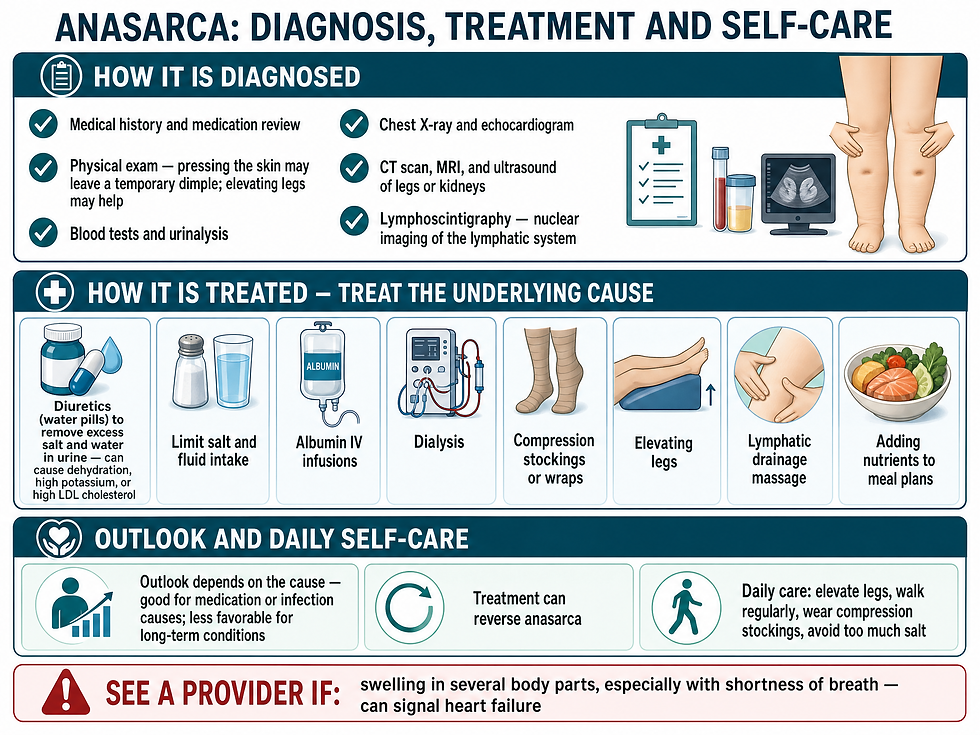
A provider will ask about your medical history and the medicines you take. They will ask how long you have had symptoms and whether you have had them before, and they will perform a physical exam. Sometimes your body position — such as elevating your legs — helps with the swelling. If a provider presses on your skin, it may leave a temporary dimple, and these kinds of details help find the cause of anasarca.
Providers confirm the picture with lab tests and imaging:
Test | What It Checks |
Medical history and medication review | Identifies drug and condition triggers |
Physical exam | Skin dimpling (pitting), effect of elevation on swelling |
Blood tests | Kidney, liver, and protein function |
Urinalysis | Protein and other markers in urine |
Chest X-ray | Fluid in the lungs and heart enlargement |
Echocardiogram (Echo) | Heart pumping function |
CT scan | Internal fluid collections and organ structure |
Ultrasound | Legs and kidneys |
MRI | Detailed imaging of affected areas |
Lymphoscintigraphy | Nuclear medicine imaging of the lymphatic system |
How Is Anasarca Treated?
Anasarca treatment involves managing the condition that causes it. Treatment is not one-size-fits-all — it varies from person to person because providers treat the underlying cause.
Treatment for anasarca often includes taking diuretics, sometimes called "water pills." These medicines help your body move excess salt and water into your urine so they can leave your body. Diuretics make you urinate more often, especially in the first few hours after taking them. In some people, they can cause dehydration, high potassium (hyperkalemia), or high LDL ("bad") cholesterol (hypercholesterolemia).
Depending on the cause of anasarca, other treatments may include limiting how much fluid and salt you consume, adding certain nutrients to your meal plans, albumin infusions through an IV in your arm, dialysis, compression therapy (stockings or wraps you wear), elevating your legs, and lymphatic drainage massage.
Treatment | How It Helps |
Diuretics ("water pills") | Move excess salt and water into urine; possible side effects include dehydration, high potassium, and high LDL cholesterol |
Limiting fluid and salt | Reduces how much fluid the body can retain |
Nutrient additions | Corrects malnutrition-related protein deficits |
Albumin IV infusion | Restores blood protein to help hold fluid in vessels |
Dialysis | Removes fluid when kidneys cannot |
Compression therapy | Stockings or wraps push fluid out of tissues |
Elevating legs | Gravity-assisted fluid drainage |
Lymphatic drainage massage | Manual support for the lymphatic drainage system |
What Is the Outlook (Prognosis)?
The outlook for anasarca is different from person to person, depending on the cause and how quickly treatment works. If treatment is successful, a provider can reverse anasarca.
The outlook is good for people who get anasarca from medication or an infection. The prognosis is not as good for people who get anasarca because of a long-term condition.
Can Anasarca Be Prevented?
You can prevent anasarca by managing the conditions that can cause it. Follow your healthcare provider's instructions for changing daily habits or taking medications correctly.
How Do You Take Care of Yourself?
In addition to taking prescribed medications, you can elevate your legs, get regular physical activity like walking, wear compression stockings, and avoid consuming too much salt.
When Should You Contact a Healthcare Provider?
Contact your provider if you have swelling in several parts of your body, especially if you have shortness of breath. These are signs of heart failure. The severe swelling of anasarca means there is something more serious going on — it is not only uncomfortable but limits how much you can move around. The sooner you contact your provider, the sooner you can learn the cause and get relief.
Useful questions to ask your provider include: What is causing this swelling? What is the best treatment for me? How can I reduce the amount of salt in the meals I eat? How often should I wear compression stockings?
Conclusion
Anasarca is the body's loudest signal that the fluid balance system has broken down — swelling that rings up in the face, belly, lungs, limbs, and genital areas simultaneously. It is never an isolated problem: it points to the heart, liver, or kidneys, occasionally to medications, malnutrition, or an inflammatory condition.
The practical takeaways are straightforward. Watch for the telltale combination of multi-site swelling, shiny stretched skin, rapid weight gain, and reduced urine output. Expect a diagnosis built on history, examination, blood and urine tests, and imaging from chest X-ray to lymphoscintigraphy. And expect treatment to attack the root cause — with diuretics doing the immediate work of draining excess salt and water, supported by salt and fluid limits, compression, elevation, albumin, dialysis, or massage as the situation demands.
CTA: If you notice swelling in several parts of your body at once — especially with shortness of breath — contact a healthcare provider promptly rather than waiting it out. Bring a full list of your medications, note when the swelling started and how your weight has changed, and ask directly: what is causing this, and what is the best treatment for my situation?
FAQ
What is anasarca?
Anasarca is generalized edema — a severe buildup of fluid in the tissues of several parts of the body at the same time, such as the face, belly, genital areas, lungs, and limbs. Unlike ordinary swelling, it affects multiple areas simultaneously.
What causes anasarca?
The causes almost always begin in the heart, liver, or kidneys: heart failure, kidney disease (glomerulonephritis, nephrotic syndrome, kidney failure), and liver disease (cirrhosis, liver failure). It can also result from medications like steroid hormones and blood pressure drugs, malnutrition, rheumatoid arthritis, lymphatic system issues, celiac disease, hypothyroidism, infections, allergic reactions, or develop after surgery.
Why does the body swell so much?
Fluid normally moves in and out of blood vessels in balance, with lymphatic drains removing the excess. In anasarca, either too much fluid leaks out of the capillaries into nearby tissue, or the lymphatic drains cannot remove enough fluid — like soil after heavy rain that cannot hold the water, so it rises above the ground.
What are the warning signs of anasarca?
Look for puffiness and swelling in several body parts at once with skin that looks stretched or shiny, weight gain from excess fluid, limited arm and leg movement, ascites (fluid in the belly), fatigue, pulmonary edema (fluid in the lungs), and low urine output or no urine.
Can anasarca be reversed or cured?
Yes — if treatment of the underlying cause is successful, a provider can reverse anasarca. The outlook is good when the cause is a medication or an infection, but less favorable when it stems from a long-term condition.
How is anasarca treated?
Providers treat the condition causing it. Diuretics ("water pills") are common and help the body remove excess salt and water through urine. Other options include limiting salt and fluid, albumin IV infusions, dialysis, compression stockings or wraps, elevating the legs, lymphatic drainage massage, and adding nutrients to meal plans.
What complications can anasarca cause?
Complications include skin ulcers and infections such as cellulitis, deep vein thrombosis (DVT), pericardial effusion (fluid around the heart), acute respiratory distress syndrome (ARDS), and organs not working well.
When should you see a doctor about swelling?
Contact a healthcare provider if you have swelling in several parts of your body, especially with shortness of breath, since these can be signs of heart failure. The sooner you get evaluated, the sooner you can learn the cause and get relief.
References
Glomerulonephritis (GN): Symptoms, Causes, Treatment. https://my.clevelandclinic.org/health/diseases/16167-glomerulonephritis-gn
Nephrotic Syndrome: What It Is, Causes, Symptoms & Treatment. https://my.clevelandclinic.org/health/diseases/5989-nephrotic-syndrome
Cirrhosis of the Liver: Causes, Symptoms & Treatment. https://my.clevelandclinic.org/health/diseases/15572-cirrhosis-of-the-liver
Heart Failure: Understanding Heart Failure. https://my.clevelandclinic.org/health/diseases/17069-heart-failure-understanding-heart-failure
Edema (Swelling): Symptoms, Causes & Treatment. https://my.clevelandclinic.org/health/diseases/12564-edema
Diuretics (Water Pills): How They Work, Types & Side Effects. https://my.clevelandclinic.org/health/treatments/21826-diuretics
Kidney Failure: Causes, Symptoms & Treatment. https://my.clevelandclinic.org/health/diseases/17689-kidney-failure
Liver Failure: Symptoms, Causes & Treatment. https://my.clevelandclinic.org/health/diseases/17819-liver-failure
Disclaimer: This article is for general educational purposes only and is not a substitute for professional medical advice, diagnosis, or treatment. Always consult a qualified healthcare provider for guidance specific to your situation.
Comments