Amplified Musculoskeletal Pain Syndrome (AMPS) in Children: Causes, Signs, and the Path to Full Recovery

Updated: 2 days ago
Medically reviewed by Dr. Baraa Alnahhal, MD · Last reviewed: September 2026
TL;DR
Amplified musculoskeletal pain syndrome (AMPS) is a chronic condition in children where overactive "fight-or-flight" nerves amplify pain signals, producing severe pain that is out of proportion to any injury — which may have already healed. The main symptom is intense pain (constant or on-and-off) that may be triggered even by light touch, accompanied by symptoms like swelling, skin changes, rapid heart rate, and fatigue. There is no blood test for AMPS; diagnosis relies on history, exam, and imaging. Intensive treatment combining physical therapy, exercise, counseling, and sometimes medications re-trains the pain pathways, and most children fully recover — though pain often gets worse before it gets better, and function improves before pain does.
Quick Answer
What it is: AMPS is a long-term condition in which overactive autonomic (fight-or-flight) nerves constrict blood vessels, limiting oxygen to muscles and bones and amplifying pain — often with no ongoing tissue damage.
Who it affects: Children; it can start suddenly or build over weeks, sometimes after inflammation, illness, injury, or mental stress — and sometimes for no known reason.
Key sign: Severe pain that is more intense and lasts longer than expected, including pain from light touch (allodynia), plus possible swelling, skin changes, rapid heart rate, stiffness, fatigue, or dizziness.
Outlook: Most children fully recover with intensive physical therapy, exercise, and counseling; pain usually worsens before improving, function recovers first, and only a few children need repeat treatment.

What Is Amplified Musculoskeletal Pain Syndrome in Children?
Amplified musculoskeletal pain syndrome (AMPS) is a long-term (chronic) condition that causes severe pain in children and affects their ability to do regular activities. Your child may experience pain all the time in one or more parts of their body, or the pain may come and go.
AMPS sometimes occurs after a child's body is stressed by something like inflammation, illness, or injury. For many children with AMPS, the original cause has healed or gone away, and there is no ongoing tissue or organ damage. Healthcare providers believe certain nerves that automatically respond to danger or stress become overactive, causing the child to feel more extreme — amplified — pain.
Most children with this type of pain recover fully with physical therapy and counseling to strengthen their bodies and nervous systems. Early diagnosis is important for effective treatment, so your child can enjoy an active, healthy life.
How Is Pain Different in AMPS?
Children usually experience pain when illness or injury damages their bodies — and that pain follows a normal sequence:
| Step | Normal Pain Pathway | | --- | --- | | 1 | Injured tissue sends a signal through pain nerves to the spinal cord | | 2 | The spinal cord alerts the brain | | 3 | The brain recognizes the signal as pain | | 4 | The pain signals go away once the injury heals |
With AMPS, the pain signal takes a different path — a short circuit:
| Step | AMPS Short Circuit | | --- | --- | | 1 | The signal mistakenly travels to the body's alarm system — the "fight-or-flight" (autonomic) nerves that control involuntary functions like blood flow, breathing, heart rate, and muscle tension | | 2 | Blood vessels constrict (get smaller) | | 3 | Smaller blood vessels limit blood flow and oxygen to nerves, muscles, and bones, leading to a buildup of lactic acid and decreased ability to heal and recover | | 4 | These factors cause intense, severe pain | | 5 | The severe pain and inability to participate in activities can lead to secondary issues like weakness, deconditioning, malnutrition, and dizziness after a position change |
The defining difference: in normal pain, the signal fades as the injury heals. In AMPS, the amplified pain persists well beyond healing.
What Are the Symptoms of AMPS in Children?
The main symptom of AMPS is pain. The pain may be constant or come and go (intermittent), affecting one or more areas of your child's body. Your child may develop symptoms suddenly or over time, even weeks after experiencing an injury or illness.
Your child may have difficulty using the affected area, or movement may worsen the pain. In some cases, even touching your child lightly can cause pain, which can feel sharp or burning. Children with AMPS have pain that is more intense and lasts longer than it should.
| Symptom | Description | | --- | --- | | Severe pain | Constant or on-and-off, in one or more body areas | | Allodynia | Pain from light touch — can feel sharp or burning | | Difficulty using the area | Movement may worsen the pain | | Swelling (edema) | In affected areas | | Skin changes | Texture, temperature, or color changes | | Rapid heart rate (tachycardia) | Elevated pulse | | Mobility issues | Stiffness, tremors (shaking), coordination problems | | Fatigue and headache | Often accompanies the pain | | Dizziness and nausea | Including abdominal pain | | Tingling or numbness | In the affected region | | Anxiety or depression | Emotional effects of chronic pain | | Dysphagia | Difficulty eating or swallowing (in some cases) |

Does My Child Imagine the Pain?
You may wonder if your child really experiences this type of pain, especially if they don't have an injury or illness. Healthcare providers recommend taking your child's symptoms seriously. Your pediatrician can make an accurate diagnosis and guide effective treatment. AMPS pain is real — it comes from misfiring nerves, not imagination.
What Causes AMPS in Children?
Healthcare providers don't know the exact cause of amplified musculoskeletal pain syndrome. Your child may develop AMPS symptoms after some type of stressor to the body, including inflammation, injury, illness, or mental stress. Symptoms may also occur for no known reason.
| Factor | Role | | --- | --- | | Physical stressors | Inflammation, injury, or illness can trigger onset | | Mental stress | Stress at school or home may contribute | | Age | May affect whether a child develops the condition | | Genetics | May affect susceptibility | | Hormones | May affect susceptibility |
How Is AMPS Diagnosed?
Diagnosing amplified musculoskeletal pain can be difficult due to its many symptoms that may develop over time. Your pediatrician reviews your child's medical and family history and asks about recent illnesses, injuries, or stressful episodes at school or home. Your child's provider also does a physical exam and tries to rule out other causes, like infections or fractures.
Importantly, there is no blood test for AMPS. Instead, diagnosis relies on a combination of history, exam, and imaging:
| Test | What It Looks For | | --- | --- | | Physical exam and history | Symptom pattern, onset triggers, ruling out infection or fracture | | Bone scan | Decreased blood flow in affected areas | | MRI (magnetic resonance imaging) | Edema (swelling) or muscle wasting/thinning (atrophy) | | Nerve tests | Pain or sensitivity issues; how the peripheral nervous system is working | | X-ray | Osteoporosis (bone thinning) |
What Conditions Have Similar Symptoms?
Several other conditions can look like AMPS, including chronic pain, idiopathic (unknown cause) musculoskeletal pain — which can be diffuse (all over the body) or localized (in one part) — and myofascial pain syndrome.
What Are the Types of AMPS?
There are several types of AMPS based on the kind of pain they cause and the area of the body they affect:
| Type | Description | | --- | --- | | Localized amplified pain | Affects one area | | Diffuse amplified pain | Total-body pain, also called juvenile fibromyalgia; typically causes more symptoms than localized pain | | Intermittent amplified pain | Pain that comes and goes | | Complex regional pain syndrome (CRPS) | A regional form of amplified pain |
Is AMPS an Autoimmune Disease?
Healthcare providers don't think that AMPS is an autoimmune disease. However, children with autoimmune diseases — like asthma — are more likely to develop AMPS.
How Is AMPS in Children Treated?
Treatment for AMPS involves pain management and retraining pain pathways so they properly signal pain. The care team works with you and your child to restore your child's ability to participate in daily life.
Pain medications can help symptoms, but they don't cure AMPS. Medications help your child participate in treatment and stay active in daily life. In most cases, AMPS is treated at home or as an outpatient; some children with severe symptoms or underlying medical conditions may require inpatient treatment.
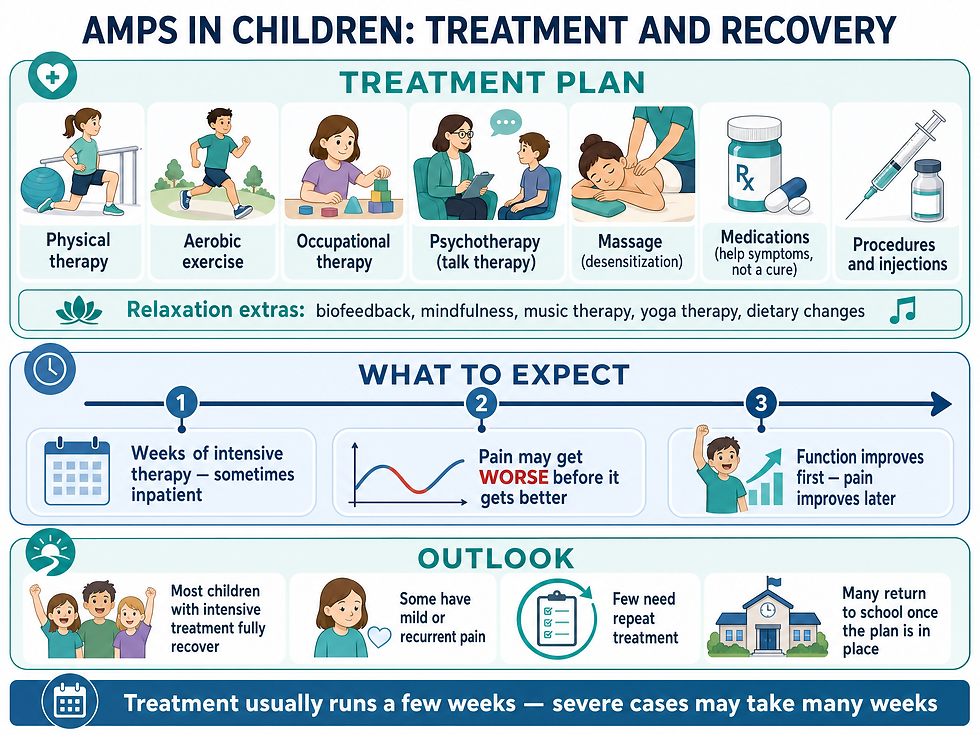
| Treatment Component | Purpose | | --- | --- | | Intense physical therapy | Rebuild strength and function | | Aerobic exercise | Strengthen the body and nervous system | | Occupational therapy | Restore daily-function skills | | Psychotherapy (talk therapy) | Address pain coping and emotional health | | Massage therapy | Desensitization — so physical contact feels less painful | | Medications | Relieve symptoms so the child can engage in therapy (not a cure) | | Procedures and injections | For targeted pain relief | | Wellness techniques | Biofeedback, mindfulness, music therapy, yoga therapy, and dietary changes |
Who Is on the Care Team?
A skilled team of specialists typically works with you and your child to diagnose and treat AMPS. The team may include your pediatrician plus a pediatric pain specialist, child psychologist or psychotherapist, massage therapist, occupational therapist, physical therapist, recreational therapist, yoga or music therapist, and a nurse.
How Long Does Treatment Last?
Treatment depends on your child's symptoms and their severity. In some cases, your child may need only a few weeks of therapy; in more severe cases, treatment can last for many weeks. Stress and other factors at school or home may contribute to your child's symptoms — in that case, your child may need ongoing counseling to maintain good physical and mental health.
What Should I Expect During Treatment?
With treatment, your child gradually returns to daily activities but may continue to feel pain. Two things are important for parents to understand: pain usually gets worse with treatment before it gets better, and it may not resolve for several months. Function usually has to improve first before pain improves.
| Milestone | What Happens | | --- | --- | | Early weeks | Intensive therapy begins; pain may increase | | Function first | Movement and activity improve before pain eases | | Several months | Pain gradually resolves | | School return | Many children can attend school and activities once a treatment plan is in place |
Your pediatrician works closely with you and your child to ensure treatment progresses as it should. Talk to your child's care team if you have any questions or concerns.
What Is the Outlook for AMPS?
In most cases, children who receive intensive treatment for AMPS fully recover. Some may experience mild pain or pain that occurs again (recurrent pain). Few children need repeat treatment.
| Outcome | Frequency | | --- | --- | | Full recovery with intensive treatment | Most cases | | Mild or recurrent pain | Some children | | Repeat treatment needed | Few children |
Can AMPS Be Prevented?
Although some life events may trigger AMPS, it is not possible for your child to avoid all stress, injuries, and illnesses throughout their life. The best approach is prevention through early action: see your provider if your child complains of pain that doesn't get better.
If you notice unusual symptoms in your child — even if they haven't had a recent illness or injury — see your pediatrician. Healthcare providers can check your child and figure out the right diagnosis and treatment.
Living With AMPS: When to Seek Care
Talk to your pediatrician if your child develops new or worsening symptoms. While AMPS pain usually gets worse before it gets better during treatment, alert your provider if you have concerns or questions. Your child's care team can support you and your child in your health journey.
Conclusion
Amplified musculoskeletal pain syndrome is one of the most misunderstood conditions in pediatrics — and the most common question ("Is my child imagining this?") has a clear answer: the pain is real, driven by overactive nerves rather than any ongoing injury. That distinction matters, because it points directly to the treatment that works.
AMPS doesn't respond to rest or time alone. It responds to intensive, active rehabilitation: physical therapy, aerobic exercise, occupational therapy, counseling, and desensitization — with medications serving as a bridge to participation rather than a cure. Parents should expect the counterintuitive phase where pain worsens before it improves, and function recovers ahead of pain. What awaits on the other side is encouraging: most children fully recover and return to an active, healthy life.
CTA: If your child has severe pain that doesn't match any injury — especially pain from light touch, swelling, or skin changes — see your pediatrician and ask about amplified musculoskeletal pain syndrome. Early diagnosis unlocks the treatment path that helps most children recover fully, and it's the fastest route back to school, sports, and normal life.
FAQ
What is amplified musculoskeletal pain syndrome (AMPS)?
AMPS is a chronic condition in children that causes severe pain due to improper nerve signaling. Overactive autonomic ("fight-or-flight") nerves constrict blood vessels, limiting blood flow and oxygen to muscles, nerves, and bones, which amplifies pain. The pain may be constant or come and go, affecting one or more parts of the body.
Does my child really feel this pain, or is it imagined?
The pain is real. Healthcare providers recommend taking AMPS symptoms seriously even when there is no visible injury or illness. The pain comes from misfiring nerves — an amplified pain signal — not from imagination, and a pediatrician can diagnose it and guide effective treatment.
What are the main symptoms of AMPS in children?
The main symptom is severe pain that is more intense and lasts longer than expected — sometimes triggered even by light touch (allodynia). Other symptoms can include swelling, skin color or temperature changes, rapid heart rate, stiffness, tremors, coordination problems, fatigue, headache, dizziness, nausea, tingling or numbness, and anxiety or depression.
What causes AMPS in children?
The exact cause is unknown. AMPS may develop after the body experiences a stressor such as inflammation, injury, illness, or mental stress — but symptoms can also appear for no known reason. Age, genetics, and hormones may influence whether a child develops the condition.
Is AMPS an autoimmune disease?
No. Healthcare providers don't believe AMPS is an autoimmune disease, although children with autoimmune conditions such as asthma are more likely to develop AMPS.
How is AMPS diagnosed? Is there a blood test?
There is no blood test for AMPS. Diagnosis relies on medical and family history, a physical exam, and ruling out other causes like infection or fracture. Providers may also order bone scans (decreased blood flow), MRI (swelling or muscle wasting), nerve tests, and X-rays (osteoporosis) to support the diagnosis.
How is AMPS treated, and how long does treatment last?
Treatment combines pain management and retraining of pain pathways: intense physical therapy, aerobic exercise, occupational therapy, psychotherapy, massage for desensitization, medications, and sometimes procedures or injections. Wellness techniques like biofeedback, mindfulness, music therapy, and yoga therapy can help too. Treatment typically lasts a few weeks for milder cases and many weeks for severe cases, and may be outpatient or inpatient.
Will my child recover from AMPS?
In most cases, yes. Children who receive intensive treatment for AMPS usually fully recover, though some experience mild or recurrent pain and few need repeat treatment. Parents should expect pain to get worse before it gets better, and function to improve before pain does.
References
American College of Rheumatology. Amplified Musculoskeletal Pain Syndrome (AMPS). Last updated 2/2023. https://rheumatology.org/patients/amplified-musculoskeletal-pain-syndrome-amps
Dougherty BL, Zelikovsky N, Miller KS, Rodriguez D, Armstrong SL, Sherry DD. Longitudinal Impact of Parental Catastrophizing on Child Functional Disability in Pediatric Amplified Pain. J Pediatr Psychol. 2021;46(4):474-484. https://www.ncbi.nlm.nih.gov/pmc/articles/PMC8056213/
Hoffart CM, Wallace DP. Amplified pain syndromes in children: treatment and new insights into disease pathogenesis. Curr Opin Rheumatol. 2014;26(5):592-603. https://pubmed.ncbi.nlm.nih.gov/25010441/
Kaufman EL, Tress J, Sherry DD. Trends in Medicalization of Children with Amplified Musculoskeletal Pain Syndrome. Pain Med. 2017;18(5):825-831. https://pubmed.ncbi.nlm.nih.gov/27497319/
Pediatric Orthopaedic Society of North America. Amplified Musculoskeletal Pain Syndrome (AMPS). https://orthokids.org/conditions/amplified-musculoskeletal-pain-syndrome-(amps%29/
Sherry DD. An overview of amplified musculoskeletal pain syndromes. J Rheumatol Suppl. 2000;58:44-48. https://pubmed.ncbi.nlm.nih.gov/10782856/
Sherry DD, Sonagra M, Gmuca S. The spectrum of pediatric amplified musculoskeletal pain syndrome. Pediatr Rheumatol Online J. 2020;18(1):77. https://www.ncbi.nlm.nih.gov/pmc/articles/PMC7552512/
Weiss JE, Stinson JN. Pediatric Pain Syndromes and Noninflammatory Musculoskeletal Pain. Pediatr Clin North Am. 2018;65(4):801-826. https://pubmed.ncbi.nlm.nih.gov/30031499/
Disclaimer: This article is for general educational purposes only and is not a substitute for professional medical advice, diagnosis, or treatment. Always consult a qualified healthcare provider — such as your child's pediatrician — for guidance specific to your child's health.
Comments