Alcohol Septal Ablation: A Minimally Invasive Treatment for HCM

Updated: 2 days ago
Medically reviewed by Dr. Baraa Alnahhal, MD · Last reviewed: September 2026
TL;DR
Alcohol septal ablation (ASA) is a minimally invasive procedure designed to treat hypertrophic cardiomyopathy (HCM), a condition where thickened heart tissue obstructs blood flow. By injecting a small amount of alcohol into a specific heart artery, doctors can shrink the enlarged tissue, restoring normal circulation and relieving symptoms like shortness of breath and fatigue.
Quick Answer Alcohol septal ablation is a nonsurgical procedure that treats hypertrophic cardiomyopathy by injecting isopropyl alcohol into a septal artery via a catheter. This targeted delivery causes the abnormally thickened heart muscle cells to shrink, effectively clearing the path for blood to flow out of the heart. It is primarily used for patients who experience persistent symptoms despite medication and may not be suitable candidates for open-heart surgery.
Alcohol septal ablation represents a significant advancement in interventional cardiology, offering a viable alternative to traditional surgical interventions. For many patients, particularly those over the age of 65 or those with complex health profiles, this procedure provides a path to improved cardiac function with reduced physical trauma and a faster recovery period compared to open-heart alternatives.
Overview and Mechanism
Hypertrophic cardiomyopathy (HCM) is an inherited condition affecting approximately 1 in 500 people. It causes the muscular wall between the heart’s chambers, known as the septum, to become abnormally thick and stiff. This thickening can significantly restrict the heart’s ability to pump blood effectively to the rest of the body, leading to chronic physical limitations and emotional distress.
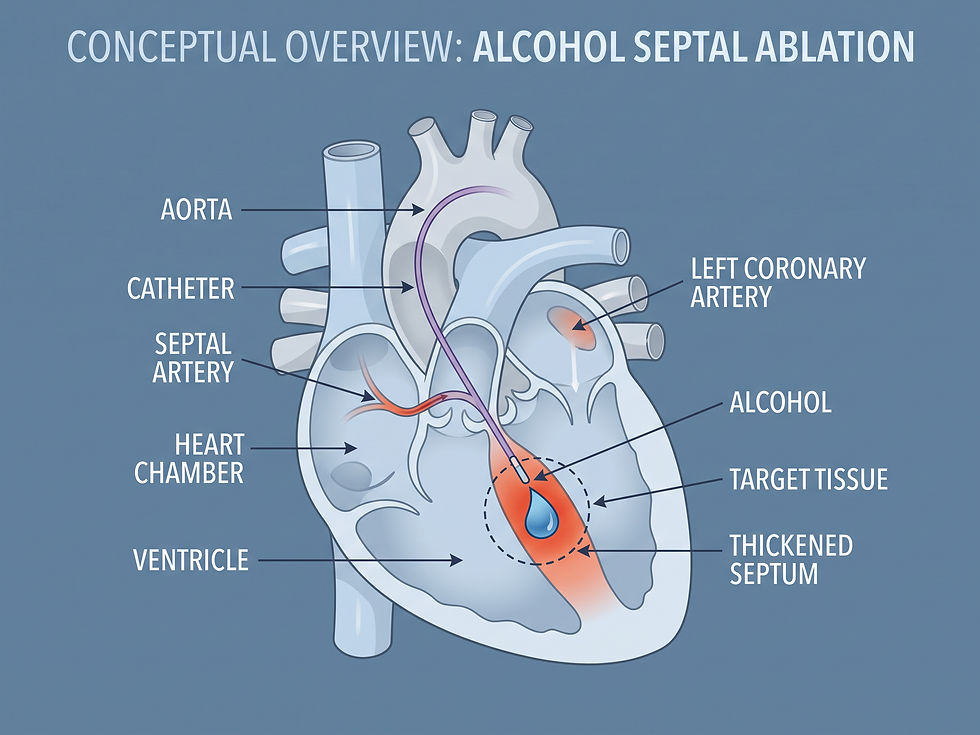
The fundamental mechanism of alcohol septal ablation involves the intentional induction of localized cellular death. Using a thin, flexible catheter threaded through the blood vessels to the heart, a cardiologist injects a small amount of isopropyl alcohol into the artery supplying the thickened septal tissue. This targeted “controlled heart attack” in a minute area causes the problematic tissue to shrink and stop contracting, thereby widening the pathway for blood flow.
Feature | Alcohol Septal Ablation (ASA) | Septal Myectomy |
Invasiveness | Minimally invasive (catheter-based) | Open-heart surgery (incision) |
Anesthesia | Sedation (patient remains awake) | General anesthesia |
Recovery Time | Approximately one week | Several weeks to months |
Typical Candidate | Patients over 65 or high surgical risk | Younger, healthier patients |
The Procedure: What to Expect
The procedure is performed in a hospital setting and typically lasts between one and two hours. While patients remain awake, they receive medications to ensure comfort and relaxation throughout the process. The medical team monitors the heart’s electrical activity and the catheter’s position using real-time X-ray imaging to ensure precision and safety.
Access is usually gained through an artery in the wrist or at the top of the thigh. Once the catheter reaches the target septal artery, the alcohol is injected. Patients may feel some temporary discomfort during this specific phase. To ensure safety, a temporary pacemaker wire is often inserted through a vein in the neck to monitor and support the heart rhythm for 48 to 72 hours following the intervention.
Recovery and Long-Term Outlook
Immediate post-procedure care involves a hospital stay of two to three days for continuous heart rhythm monitoring. If the thigh was used for access, patients must remain flat for several hours to prevent bleeding. Most individuals experience significant symptom relief almost immediately and can return to their usual daily activities within one week.
Milestone | Expected Timeline |
Hospital Stay | 48 to 72 hours |
Immediate Relief | Often felt right after the procedure |
Return to Light Activity | Within 3 to 5 days |
Full Activity Resumption | Approximately 1 week |

Benefits and Clinical Risks
The primary advantage of alcohol septal ablation is its ability to relieve HCM symptoms without the need for major surgery. It is associated with fewer complications and a significantly shorter recovery period than surgical alternatives. However, as with any cardiac intervention, there are specific risks that patients should discuss with their healthcare provider.
Potential complications, though uncommon, include bleeding or infection at the insertion site, the formation of blood clots, or tears in the heart tissue. A specific risk associated with this procedure is “heart block,” a disruption of the heart’s electrical signals that may occasionally require the placement of a permanent pacemaker.

Conclusion
Alcohol septal ablation has emerged as a vital, minimally invasive option for patients living with symptomatic hypertrophic cardiomyopathy. By providing a precise and effective means of reducing heart muscle thickness with significantly reduced physical impact, it offers a path toward recovery that prioritizes both clinical outcomes and patient quality of life. As interventional techniques continue to refine, ASA remains a cornerstone in the management of complex heart conditions.
Next Steps for Your Health
If you have been diagnosed with hypertrophic cardiomyopathy and continue to experience symptoms despite medication, consult with your cardiologist or a heart specialist. They can provide a comprehensive evaluation, discuss whether alcohol septal ablation is appropriate for your specific condition, and outline the expected benefits and risks based on your unique health profile.
Frequently Asked Questions
What is the main goal of alcohol septal ablation?
The primary goal is to shrink thickened heart muscle in patients with hypertrophic cardiomyopathy to restore normal blood flow and relieve symptoms.
Is alcohol septal ablation a type of surgery?
No, it is a minimally invasive, nonsurgical procedure performed using a catheter rather than a large surgical incision.
How does the alcohol work in this procedure?
Small amounts of isopropyl alcohol are injected into the septal artery, causing the abnormally thick heart muscle cells to die and shrink.
Will I be asleep during the procedure?
Patients are typically awake but receive sedation and pain medication to remain relaxed and comfortable throughout the process.
How long does the procedure take?
The actual procedure usually lasts between one and two hours in a hospital setting.
Why is a temporary pacemaker used?
A temporary pacemaker wire is used for 48 to 72 hours to monitor and support your heart rhythm, as the procedure can temporarily affect electrical signals.
How long is the hospital stay?
Most patients remain in the hospital for two to three days for continuous monitoring of their heart rhythm and vital signs.
When will I feel relief from my symptoms?
Many patients report a significant improvement in symptoms like shortness of breath and fatigue almost immediately after the procedure.
What is the typical recovery time?
Most people can return to their usual daily activities and work within approximately one week following the procedure.
Can anyone with HCM have this procedure?
It is generally recommended for patients who have symptoms despite taking medication and are often over age 65 or at higher risk for open surgery.
What is heart block?
Heart block is a potential complication where the heart’s electrical signals are disrupted, which may occasionally require a permanent pacemaker.
Are there restrictions on activity after the procedure?
You may need to lie flat for a few hours if the leg artery was used, but light activity can usually be resumed within a few days.
Is the procedure painful?
You may feel some discomfort when the alcohol is injected, but medications are provided to manage pain and help you relax.
How common is hypertrophic cardiomyopathy?
HCM is the most common type of inherited heart disease, affecting approximately 1 out of every 500 people.
What tests are needed before the procedure?
Common pre-procedure tests include a complete blood count (CBC), echocardiogram, electrocardiogram (EKG), and chest X-ray.
Medical Disclaimer: This content is for informational purposes only and does not constitute medical advice. Always seek the advice of a qualified healthcare provider with any questions regarding a medical condition or treatment.
Comments